

US Stocks Rise on News of Narrowed Tariff Range
Summary
- US stocks started higher on news that President Trump's reciprocal tariff plan is limited to some countries.
- The S&P 500, Nasdaq Composite, and Dow Jones Industrial Average each rose, leading a rebound in investor sentiment.
- Bitcoin and Ethereum also showed an upward trend, and attention is focused on how Trump's reciprocal tariff plan will affect investor sentiment.
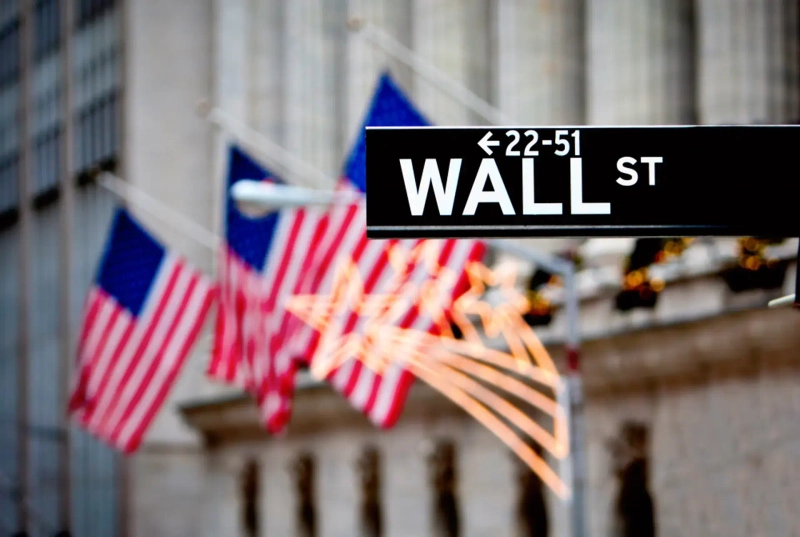
US stocks started higher on the 24th (local time) following reports that President Trump's reciprocal tariff plan, to be announced on April 2, will be narrowed to some countries considered the 'Dirty 15.'
As of 10:15 AM Eastern Standard Time, the S&P 500 rose 1.5%, the Nasdaq Composite increased 1.9%, and the Dow Jones Industrial Average also rose 1.2%.
The yield on the 10-year Treasury note rose 7 basis points (1bp=0.01%) from the previous trading day to 4.31%.
NVIDIA's stock price rose about 2.1%, and Tesla, which had recorded weekly declines for nine consecutive weeks, rose more than 5% to trade at $262.
Bitcoin rose 2.8% to reach $87,534.67, while Ether increased 4.6% to $2,083.48.
Initially, Trump stated that the reciprocal tariffs targeted all countries imposing tariffs on US imports. However, according to US media reports over the weekend, the range of countries subject to tariffs is expected to narrow, with some industry-specific tariffs likely to be excluded.
According to Bloomberg, Trump's reciprocal tariff range is expected to be imposed on countries known as the 'Dirty 15,' including the European Union, Mexico, Japan, South Korea, Canada, India, and China. These countries were mentioned as trade violators, according to an official from the Trump administration.
President Trump told reporters last Friday that there could be flexibility in the reciprocal tariff plan.
Tobin Marcus of Wolfe Research noted, "Given that the April 2 reciprocal tariff package is designed to exclude sector-specific tariffs and accumulate all tariffs, the total scale and maximum rates for target sectors will be significantly reduced." He pointed out, "While the market reaction to the cap on the April 2 reciprocal tariffs may be negative, the scale will not be so severe, and the sectoral impact will not be concentrated."
However, the impact on countries subject to reciprocal tariffs is expected to vary from the perspective of the US market.
Meanwhile, investors, including Nicolas Julien, head of global bonds at Candriam, expect US Treasury yields to fall further as recent US economic indicators show that confidence in the national economy is eroding.
This week, the consumer confidence index will be released on the 25th, and on Friday, the Personal Consumption Expenditures (PCE) index, a price indicator watched by the Federal Reserve, will be announced.
Gennadiy Goldberg, head of US rate strategy at TD Securities, initially said, "The news that the reciprocal tariffs targeting the entire world will be narrowed seems to be leading a rebound in investor sentiment." However, he pointed out that with increasing uncertainty, the market is on a sharp edge.
Guest reporter Kim Jung-ah kja@hankyung.com

Korea Economic Daily
hankyung@bloomingbit.ioThe Korea Economic Daily Global is a digital media where latest news on Korean companies, industries, and financial markets.