

"US Stock Market 'Up to 8%' Drop" vs "Rebound Imminent"... Divergent Outlooks
Summary
- Global investment banks have shown divergent views on the outlook for the US stock market.
- European institutions warned of further declines in US stocks and expressed concerns about uncertainties such as tariffs.
- On the other hand, Wall Street predicted that the recent selling pressure has calmed the overheating and that a rebound could occur in the short term.
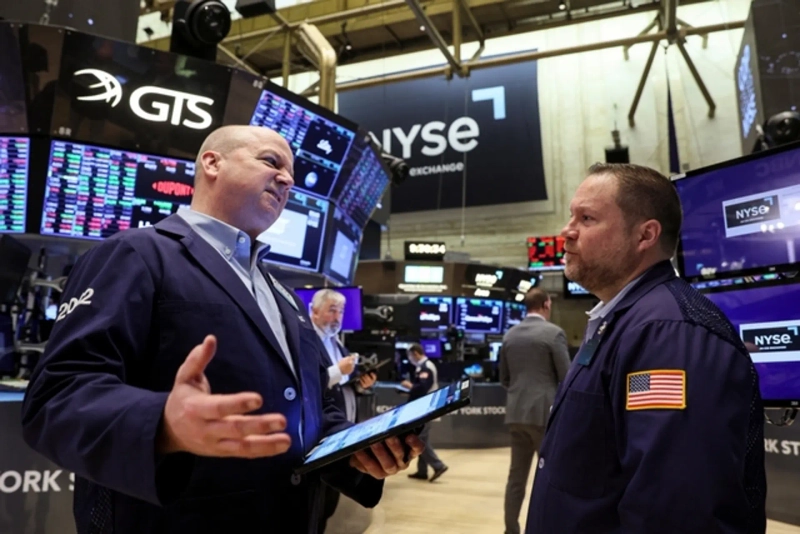
Global investment banks have shown contrasting views on the outlook for the US stock market. European institutions such as Switzerland's UBS and the UK's HSBC warned of further declines in US stocks, while US-based JP Morgan and Morgan Stanley suggested that the selling pressure is nearing its end. The difference in perspectives on the impact of tariffs has led to these divergent views.
According to Bloomberg News on the 25th (local time), differences have emerged in institutional outlooks for US stocks due to uncertainties surrounding tariffs announced by US President Donald Trump, economic slowdown, and inflation. When asked whether the S&P 500 index, which has shown a rebound curve over the past week, could rise further, institutions provided contrasting answers.
European institutions expressed concerns about 'uncertainty' and viewed a rebound in the US stock market as difficult. UBS predicted that the S&P 500 index could fall by about 8%, and HSBC downgraded the rating of US stocks by two notches to 'neutral', taking a skeptical view of the market.
Max Kettner, a strategist at HSBC, stated in a letter to clients, "What we consider most important is how much this unusually high uncertainty clears up after April 2," and analyzed that "the probability seems quite low." He further pointed out, "Ongoing tariff-related controversies could have a worse impact on major US economic indicators and real economic data." In fact, the US Conference Board's consumer confidence index for March, announced on this day, fell by 7.2 points to 92.9, the lowest level in four years.
Kettner also explained, "Confidence in stocks is being shaken by volatility due to tariff uncertainty," and "the risk to the stock market is further highlighted by concerns that US tariffs could provoke retaliation from other countries and that the AI boom that has driven the stock market's rise over the past two years may have come to an end."
Banu Baweja, UBS's chief strategist, predicted that warning signs have already appeared in US economic indicators and that the S&P 500 index could drop to 5300. This is an 8.25% decline from the closing price of 5,776.65 on that day.
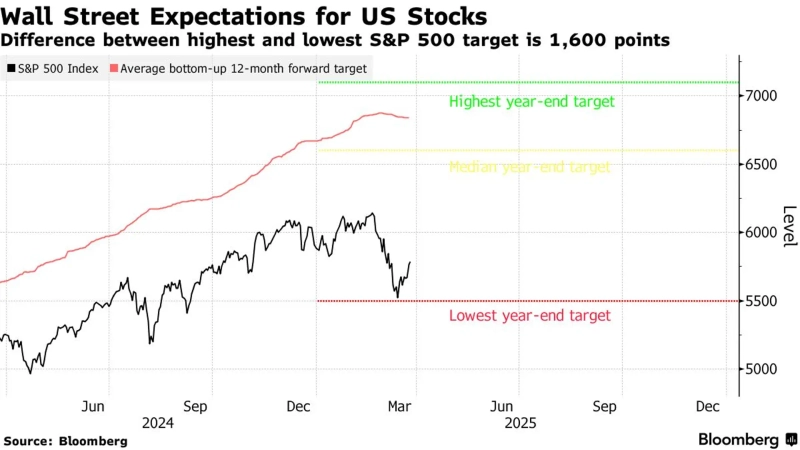
Conversely, optimism is emerging on Wall Street. JP Morgan stated, "The recent selling pressure has calmed the overheated situation from the rapid rise in stocks over the past few years," and "the possibility of a further sharp decline in the short term is small." Morgan Stanley diagnosed that "the market could rebound in the short term after pessimistic investor sentiment."
The average year-end S&P 500 forecast tracked by Bloomberg is 6539, suggesting a 13% additional upside from the closing price on that day. The most optimistic forecast is Oppenheimer's 7100, while the most pessimistic is Stifel's 5500.
Reporter Han Gyeong-je

Korea Economic Daily
hankyung@bloomingbit.ioThe Korea Economic Daily Global is a digital media where latest news on Korean companies, industries, and financial markets.