

Not Only the U.S.…The World is Raising 'Trade Barriers'
Summary
- Countries around the world are reportedly expanding protectionism by strengthening tariffs on steel and graphite products.
- Import restriction measures by countries have increased by 75% compared to the early days of Trump's first term.
- Economic experts warn that these movements could negatively impact the global economy, reminiscent of the Smoot-Hawley Tariff Act era of the 1930s.
EU Reduces Duty-Free Quotas on Steel Imports
India Imposes Temporary Tariffs on Chinese and Vietnamese Steel
Japan Imposes High Anti-Dumping Tariffs on Chinese Graphite Electrodes
"G20's Import Restriction Measures, Largest Since 1946"
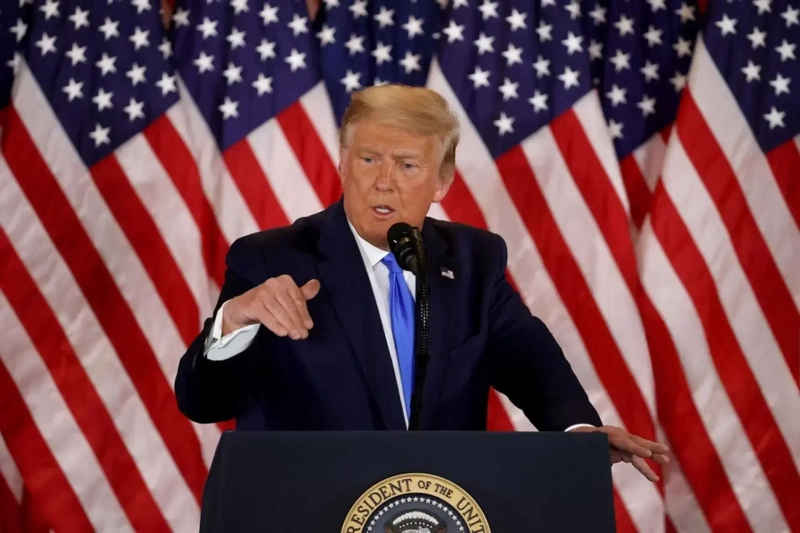
The tariff war triggered by U.S. President Donald Trump is expanding globally. As countries find it difficult to sell products in the U.S. due to high tariffs, they are trying to redirect their supplies to other regions, prompting the European Union (EU) and India to start imposing tariffs as well.
Experts warn that this movement could reenact the spread of protectionism ignited by the U.S. Smoot-Hawley Tariff Act of 1930. The analysis is gaining traction that the protectionist barriers are unlikely to lower easily, especially with geopolitical tensions and national security intertwined.
EU, India, and Japan Expand Tariffs Across the Board
After the second Trump administration began imposing tariffs, countries around the world responded by strengthening tariffs on steel imports. This was because the U.S. government first implemented a 25% tariff on steel imports among various tariff policies. Other trade measures, such as tariffs on Mexico and Canada, are on hold. As a result, major steel-importing countries like the EU and India are preparing for an influx of low-priced Chinese steel products that have lost price competitiveness in the U.S.
On the 25th (local time), the EU finalized a safeguard amendment to protect its steel industry and published it in the official gazette. The core of the current steel safeguard is to reduce the allocated import volume at low or duty-free rates by up to 15%. Previously, if the allocated quota was not exhausted within a quarter, additional exports could be made duty-free for the unexhausted volume in the next quarter, but from July, the rollover system will be completely abolished for some product groups.
On the 18th, the Indian Customs Department announced that it would impose a 12% temporary tariff on Chinese and Vietnamese steel entering below a certain price. Although India is the world's second-largest steel producer, it has recently been importing large quantities of steel from China and Japan. South Africa also announced on the 19th that it faces numerous challenges due to the influx of low-priced or substandard imports and will gather industry opinions to raise tariffs.
Japan Imposes High Tariffs on Chinese Graphite
The Japanese government decided to impose a high anti-dumping tariff of 95.2% on Chinese graphite electrodes for four months from March 29 to July 28. The existing tariff rate for the item was between 2.1% and 3.3%.
Graphite electrodes are a key material in eco-friendly steel processes used to melt scrap metal in electric furnaces. They are essential for manufacturing electric vehicle batteries and advanced semiconductors.
This measure follows an investigation by the Japanese government since April 2023, before the second Trump administration took office. It began when major Japanese graphite electrode manufacturers such as SEC Carbon, Tokai Carbon, and Nippon Carbon filed anti-dumping complaints with the Japanese government.
However, there is an interpretation that Japan's imposition of high anti-dumping tariffs is in line with recent sanctions against China by various countries. This is due to concerns that Chinese products sanctioned by other countries could flood into Japan.
Import Restrictions Up 75% Compared to Trump's First Term
As countries strengthen protectionism, import restriction measures, including tariffs, have increased by 75% compared to about 10 years ago. The Wall Street Journal (WSJ) reported on the 25th, citing data from the Swiss non-profit organization Global Trade Alert, that the Group of 20 (G20) countries are implementing a total of 4,650 import restriction measures as of March 1. This is a 75% increase compared to the early days of Trump's first term in 2016 and nearly ten times more than at the end of 2008.
In particular, the average tariff rate in the U.S. has reached 8.4%, the highest level since 1946. During the first Trump administration in 2016, it was only 1.5%. Economists and historians warn that these recent movements could form the largest protectionist trend since the U.S. Smoot-Hawley Tariff Act of 1930, which ignited global tariff increases.
The Smoot-Hawley Act was a protectionist law enacted in the U.S. in 1930, aimed at protecting American industries during the Great Depression by imposing significant tariffs on imports. At that time, the U.S. government imposed high tariffs of over 40% on more than 20,000 imported goods. However, this led to retaliatory tariffs from other countries, reducing global trade volume and exacerbating the Great Depression.
The WSJ pointed out that "the spread of trade conflicts shrinks consumption, investment, and employment," adding that "in the U.S., consumer confidence has declined, stock prices have fallen, and corporate investment intentions have decreased."
New York Correspondent Shin-Young Park / Reporter Hye-In Lee nyusos@hankyung.com

Korea Economic Daily
hankyung@bloomingbit.ioThe Korea Economic Daily Global is a digital media where latest news on Korean companies, industries, and financial markets.