

Trump: "25% Tariff on Cars Starting Next Month... $1 Trillion Revenue Expected"
Summary
- U.S. President Donald Trump announced that starting next month, a 25% tariff will be imposed on finished cars produced outside the U.S.
- President Trump stated that this measure is expected to generate more than $100 billion in new tariff revenue annually for the U.S.
- South Korea is likely to be significantly affected, especially in the automotive sector, and Hyundai Motor Group discussed tariff exemptions related to U.S. investment plans.
Uncertainty Remains on Tariffs for Parts Imports
Secretary of Commerce: "Will Be Imposed Starting the 3rd"
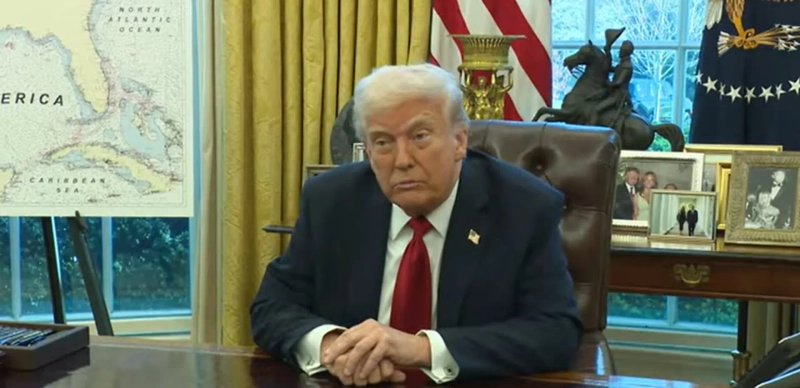
U.S. President Donald Trump announced on the 26th (local time) at the White House that a 25% tariff will be imposed on finished cars produced outside the U.S. starting from the 2nd of next month.
President Trump signed an executive order at the White House that day to promote the growth of the automotive industry. It is at a level similar to what was initially expected.
President Trump stated, "We are imposing a 25% tariff on all cars not produced in the U.S.," adding, "There is no tariff on cars produced in the U.S." He emphasized, "We started with a basic tariff of 2.5%, and now we are raising it to 25%," noting that "companies are returning to the U.S. to avoid tariffs."
He said, "Signing the executive order on the automotive industry will lead to tremendous growth in the industry," and unlike the previous administration that pushed for electric vehicle mandates, he will allow the purchase of all types of cars. President Trump stated, "You should be able to buy an electric car, a gasoline car, a hybrid, or whatever you want."
Through these tariff measures, President Trump said, "In addition to promoting increased domestic car and truck manufacturing, the tariffs are expected to bring in more than $100 billion in new tariff revenue annually to the U.S." Furthermore, he claimed, "Ultimately, about $600 billion to $1 trillion could come in over a relatively short period," stating that "this revenue will start from a year later, starting immediately."
It is unclear whether car parts are also subject to the same tariffs. President Trump said, "If parts are made in the U.S. and the car is not, tariffs will not be imposed on those parts," adding, "We will have very strong monitoring." He added, "In most cases, I will have cars manufactured in one place," noting, "Currently, cars are made here and sent to Canada and Mexico."
He continued, "The good thing about 25 is that it's a single number," adding, "It doesn't fluctuate." This is interpreted as meaning the same tariff rate will apply to everyone. He stated, "I am signing today, and it will take effect on April 2nd," indicating that "collection will start in April." Regarding this, Secretary of Commerce Howard Lutnick explained to reporters, "The tariffs will take effect starting the 3rd." President Trump emphasized, "This measure will be permanent during my term."
Previously, the Trump administration said after a cabinet meeting on Monday that it would announce car tariffs "very soon." Countries are closely watching how the announcement of major item tariffs before the reciprocal tariffs scheduled for April 2nd will affect the reciprocal tariffs.
Our country is likely to be particularly affected, as cars are the largest export item to the U.S. Last year, we exported a total of $42.9 billion, about 63 trillion won worth of cars to the U.S. This is about one-third of the total export amount. Especially, the export amount to the U.S. accounts for about half of the total car exports, making it very significant. Hyundai Kia Motors Group accounts for a substantial portion of the export volume.
On Monday, Hyundai Motor Group announced a $21 billion investment plan in the U.S. with President Trump, and on that day, President Trump mentioned that Hyundai Motor Group would be exempt from tariffs. However, this is interpreted as being related to production volume within the U.S. It is currently difficult to expect that tariffs will be waived for exports made in Korea to the U.S. Starting steel production in the U.S. is just beginning, and it will take 3 to 4 years to complete, so the actual benefit of tariff exemption will come much later.
Hyundai Motor Group and our government have made every effort to be exempt from car tariffs, but there has been no significant result yet. The U.S. government is particularly firm on imposing tariffs on European cars, so it seems unlikely that many exemptions will be granted.
The key now is to ensure that reciprocal tariffs and item-specific tariffs like car tariffs are not simply added together. For example, if a 10% reciprocal tariff is imposed and a 25% car tariff is imposed, Korean cars produced in Ulsan exported to the U.S. may have to pay a 35% tariff, which could significantly reduce U.S. car demand. Our government and companies are expected to actively request adjustments to these parts.
Washington Correspondent: Sang-Eun Lee selee@hankyung.com

Korea Economic Daily
hankyung@bloomingbit.ioThe Korea Economic Daily Global is a digital media where latest news on Korean companies, industries, and financial markets.