

PiCK
"Inflation Could Be Prolonged"... Warnings Pour in on 'Trump Tariffs' [Fed Watch]
Summary
- According to Fed research, tariffs could increase inflation by 0.5 percentage points directly and 0.7 percentage points indirectly.
- Alberto Musalem, President of the Federal Reserve Bank of St. Louis, expressed concern about the sustainability of inflation due to tariffs and stated that interest rates could be maintained 'moderately restrictive' for a longer period.
- Neel Kashkari, President of the Federal Reserve Bank of Minneapolis, warned about the negative impact of tariffs on economic growth and the effect on expectations for interest rate cuts by the Fed.
"If Inflation Prolongs, More Restrictive Monetary Policy Possible"
Assuming Effective Tariff Rate of 10% in Fed Research
Direct Effect Raises Inflation by 0.5%P, Indirect Effect by 0.7%P
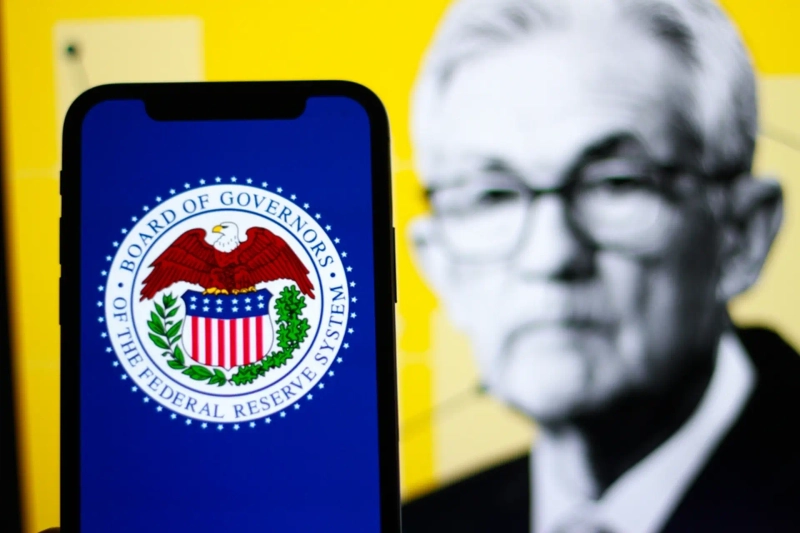
Concerns are growing over the Trump administration's continuous tariff drive. The Federal Reserve is no exception. Alberto Musalem, President of the Federal Reserve Bank of St. Louis, said on the 26th (local time), "It is unclear whether the inflationary impact of tariffs will be temporary."
After last week's Fed monetary policy decision meeting, Chairman Powell mentioned that the inflation effect would be temporary. The market took this as a dovish signal. However, President Musalem's remarks pointed out that Chairman Powell's comments were overly optimistic.
President Musalem mentioned that while there may be a one-time price increase due to tariffs, he also referred to secondary effects that could have a lasting impact. The implication is that the shadow of tariffs could prolong inflation. President Musalem supported the decision to hold rates steady at last week's Fed monetary policy meeting, stating that under the premise of a healthy labor market and the emergence of secondary effects of tariffs, rates may need to be maintained 'moderately restrictive' for longer or even consider a more restrictive policy stance.
He suggested that it is possible to keep rates at the current level or even raise them. Of course, if the labor market weakens and inflation stabilizes or eases, rates could be lowered, but the overall implication was that tariff policy could have a longer-lasting impact on inflation than expected.
President Musalem also introduced research by Fed staff, which indicated that if the U.S. effective tariff rate rises by 10%, the inflation rate could increase by up to 1.2 percentage points. Of this, the direct tariff effect is 0.5 percentage points, but the indirect tariff effect, the aforementioned secondary effect, is expected to be larger at 0.7 percentage points. This could make it difficult to achieve the Fed's 2% inflation target.
Neel Kashkari, President of the Federal Reserve Bank of Minneapolis, also made similar remarks. He said, "The potential for price increases due to tariffs and concerns about slowing economic growth are having opposing effects, so the Fed should maintain the current rate level for the time being." The market expects two to three rate cuts by the end of the year, but this dampened such expectations.
President Kashkari pointed out that while the effects of tariffs are indeed impacting, they also have a part in dampening the sentiment of households and businesses. It could make economic agents hesitant to spend money. He mentioned that the longer the uncertainty due to trade persists, the greater the impact on economic activity, although he added that once this uncertainty is resolved, confidence could quickly recover. Overall, like President Musalem, he leaned towards the view that tariffs are not a one-time event.
Reporter Lee Sang

Korea Economic Daily
hankyung@bloomingbit.ioThe Korea Economic Daily Global is a digital media where latest news on Korean companies, industries, and financial markets.