

Following Steel and Automobiles, Pharmaceuticals... The Expanding 'Tariff War' Front
Summary
- President Trump announced a 25% tariff on automobiles and parts, stating that foreign cars threaten U.S. national security.
- He plans to impose tariffs on pharmaceuticals and lumber in the future, causing major exporting countries to struggle with countermeasures.
- Several countries, including the EU and Canada, are strongly opposing President Trump's decision, considering retaliatory tariffs.
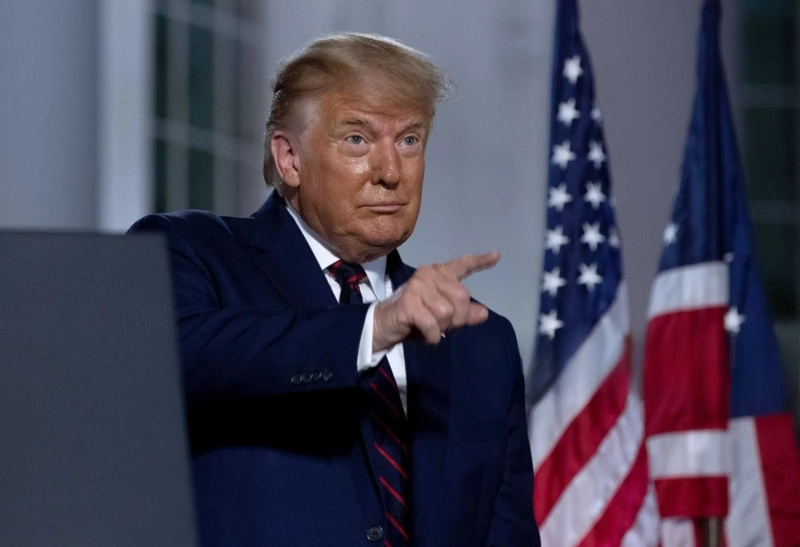
U.S. President Donald Trump announced that he would impose a 25% tariff on imported cars starting April 3. This is the third item-specific tariff following the 25% tariff imposed on imported steel and aluminum on the 12th. South Korea, which exports about one-third (34.7 billion dollars) of its exports to the U.S. in automobiles, cannot avoid the impact.
On the 26th (local time), President Trump said at the White House, "I will impose a 25% tariff on all cars not produced in the United States." He added, "Companies are returning to the U.S. to avoid tariffs." He also said, "The imposition of tariffs on imported cars is expected to increase tax revenue by 100 billion dollars annually." He announced that legislation is being pursued to deduct the entire interest cost of loans from taxes only for purchases of American-made cars.
The proclamation signed by President Trump stated that the car tariffs would be imposed from 0:01 a.m. Eastern Time on April 3 (1:01 p.m. Korean time on April 3). It also stated that car parts such as engines and transmission powertrains would be subject to a 25% tariff from the day they are published in the official gazette. The publication in the gazette will be done before May 3. Parts subject to the United States-Mexico-Canada Agreement (USMCA) are initially exempted from tariffs but will be subject to tariffs later.
President Trump is expanding the front of the tariff war against the world by pouring out item-specific tariffs and reciprocal tariffs all at once.
President Trump applied Section 232 of the Trade Expansion Act as the basis for imposing car tariffs. The proclamation mentioned the vulnerability of the global supply chain revealed during COVID-19, stating, "The import of cars and certain car parts threatens U.S. national security." It also said, "Foreign car businesses have grown with unfair subsidies and aggressive industrial policies," and "Only half of the vehicles sold in the U.S. are produced in the U.S., which threatens the domestic industrial base and national security."
The situation where automakers have supply chains connecting countries around the world and freely export and import is somewhat exaggerated as a national security crisis. However, President Trump's stance is firm. He said that the tariff measures on cars and parts would be "permanent" during his term. The content also included that if the value of exempted U.S. content is inflated to avoid tariffs, a 25% tariff would be retroactively applied to the entire value of the model. He also threatened to "strictly monitor" to prevent various tricks.
Although USMCA parts are initially exempted from tariffs, President Trump said, "Cars should be manufactured in one place," indicating that in the long term, car parts produced in Mexico and Canada should also be produced in the U.S.
Regarding the reciprocal tariffs scheduled for the 2nd of next month, he said he would impose them on "all countries" without exception. He had previously mentioned the possibility of exceptions, but on this day, he showed a more determined tone to push forward with the tariff policy.
He also announced a series of other item-specific tariffs. President Trump announced that pharmaceuticals, mainly manufactured in China and Ireland, would be subject to tariffs to "reclaim the pharmaceutical industry." He also said he would impose tariffs on lumber to prevent the use of foreign lumber.
Major car-exporting countries are struggling to come up with countermeasures. Ursula von der Leyen, President of the European Commission, expressed "deep regret" over this decision, saying, "The EU will seek a negotiated solution while protecting economic interests." The New York Times (NYT) predicted that this measure would particularly affect German car companies such as Volkswagen, Mercedes-Benz, and BMW.
Mark Carney, the new Prime Minister of Canada, described the tariff as a "direct attack" on Canada, mentioning "countermeasures for Canada's interests." The possibility of retaliatory tariffs is also being discussed. Japanese Prime Minister Shigeru Ishiba said, "We must think about what is most beneficial for national interests," and "We are strongly requesting that the 25% tariff not be applied to Japan." Brazilian President Luiz Inácio Lula da Silva said, "We cannot stand by believing that 'only they can tax other products,'" and "We will choose an approach that is good for Brazil."
President Trump, seemingly aware of the backlash, wrote on social media late at night, "If the EU cooperates with Canada to economically harm the U.S., I will impose much larger tariffs on both than currently planned."
Washington Correspondent Lee Sang-eun selee@hankyung.com

Korea Economic Daily
hankyung@bloomingbit.ioThe Korea Economic Daily Global is a digital media where latest news on Korean companies, industries, and financial markets.