

PiCK
"Trump Considers 20% Tariff on All Countries"... Moving Towards Universal Tariff?
Summary
- The Trump administration is considering shifting towards a universal tariff, indicating the possibility of imposing a 20% tariff on all trading partners.
- The import car tariff is planned to be maintained at 25%, creating pressure to increase production within the US.
- There is an expectation that increasing revenue through the introduction of a universal tariff could offset the revenue reduction from the Trump administration's tax cut policy.
US to Announce Country-Specific Tariffs on the 2nd... Rates Uncertain
WSJ: "White House Wants Simple Policy"
Universal Tariff Discussed Within Administration
Trump: "No Retraction of Auto Tariffs"
Hints at Third Term Possibility: "Not a Joke"
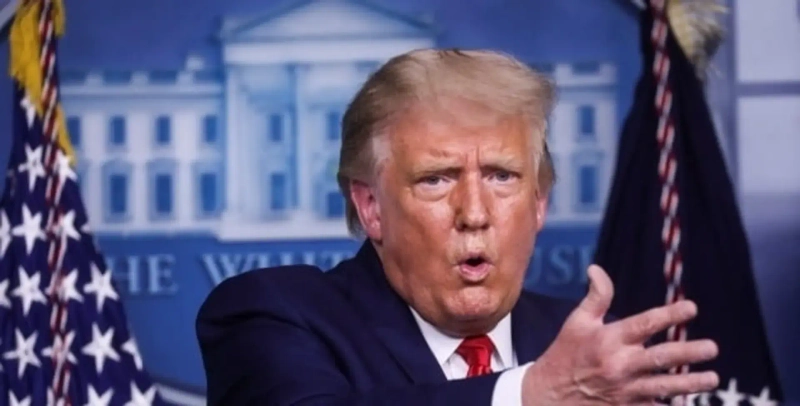
US President Donald Trump stated regarding the reciprocal tariffs scheduled for the 2nd, "We will start with all countries." This means imposing tariffs on all trading nations, not just a few known as the 'dirty 15.' In relation, the Wall Street Journal (WSJ) reported that within the Trump administration, the plan to impose a 20% tariff on all trading nations is gaining traction.
◇ Trump: "Tariffs on All Countries"
On the 30th (local time), President Trump, aboard Air Force One en route from Mar-a-Lago Resort in Florida to the White House, stated this in response to a question about how many countries would be included in the first tariff announcement. When asked if they plan to hit 10-15 countries first, he said, "I've never heard of the rumor about 10-15 countries," adding, "Basically, we are talking about all countries." During this process, he specifically mentioned 'Asian countries.' President Trump said, "Look at history and what happened to us," adding, "If you see how all Asian countries have treated the US both in trade and militarily, no one would say they treated us fairly or well."
Previously, Treasury Secretary Scott Bessant mentioned the dirty 15, suggesting a focus on countries with significant trade surpluses with the US or those involved in unfair trade practices when imposing reciprocal tariffs. However, President Trump's remarks today indicate a departure from this observation, stating that tariffs will be imposed on all countries. Kevin Hassett, Chairman of the White House National Economic Council (NEC), also said in a Fox News interview, "We have a large trade deficit with about 15 countries," adding, "That doesn't mean there aren't many other unfair trade practices worldwide."
Regarding specific tariff rates, the WSJ reported, "The Trump administration is contemplating whether to set different tariff rates by country or to introduce a universal tariff applying the same rate to all trading partners." It continued, "President Trump wants the tariff policy to be 'big and simple,' and the option of imposing a 20% universal tariff on all trading partners instead of reciprocal tariffs is being reconsidered among advisors." During last year's presidential campaign, President Trump declared a universal tariff on the world but decided to impose reciprocal tariffs considering the tariffs and non-tariff barriers of trading partners after taking office. According to the WSJ report, it suggests that the Trump administration is shifting back towards a universal tariff. The universal tariff plan is reportedly supported by the ruling Republican Party. The reason is that increasing government revenue through a universal tariff could offset the revenue reduction from the Trump administration's tax cut policy.
◇ 25% Tariff on Imported Cars Maintained
President Trump firmly stated "No" when asked if there was room to reconsider the 25% tariff on imported cars. He added, "If they produce cars in the US, they will make a lot of money," saying, "Outside the US, it's up to them, and I don't care much about it." This is pressure to increase production within the US to avoid car tariffs. President Trump also listed computers, semiconductors, and pharmaceuticals, saying, "As long as they produce products in the US, they will do very well."
He dismissed concerns that tariffs could lead to inflation and economic stagnation, causing stagflation in the US economy. President Trump said, "I haven't heard that term in years," adding, "The US will be more successful and prosperous than ever, and this will be America's golden age."
◇ Hints at Third Term Possibility
President Trump also hinted at the possibility of a third presidential term, which is prohibited by the US Constitution. In a phone interview with NBC News aired that day, he said about the possibility of a third term, "It's not a joke," adding, "I love working." He also said, "Many people want me to do it (a third term)." He continued, "I'm focused on the present, and it's too early to think about it," but when asked about plans related to a third term run, he said, "There is a way to do it." He did not specify the method. The 22nd Amendment to the US Constitution states, "No person shall be elected to the office of the President more than twice." The general interpretation is that 'more than twice' applies regardless of consecutive terms. To run for a third term, a constitutional amendment is necessary. An amendment requires a request from two-thirds of Congress or two-thirds of state governments and must be ratified by more than three-fourths of the states. Given the current situation where the Republican Party barely holds a majority in Congress, a constitutional amendment is impossible without Democratic cooperation.
Reporter Kim Dong-hyun 3code@hankyung.com

Korea Economic Daily
hankyung@bloomingbit.ioThe Korea Economic Daily Global is a digital media where latest news on Korean companies, industries, and financial markets.