

PiCK
The US Suddenly Criticizes Global Practices... Comprehensive Pressure Ahead of Reciprocal Tariffs
Summary
- The Donald Trump administration pointed out South Korea's defense offset trade as a trade barrier ahead of the announcement of reciprocal tariffs.
- South Korea's defense offset trade is a global practice in the defense industry, but it has not seen significant benefits from the technology transfer sector recently from the US.
- The various trade barrier criticisms from the US are part of comprehensive pressure for tariff imposition, and the South Korean government is discussing urgent measures in response.
Offset Trade, Accounts for One-Third of US Defense Exports... Korea Sees Little Benefit
National Sovereignty Issues Such as Nuclear Ownership, Personal Information Protection, and Core Technology Protection Also Treated as 'Trade Barriers'
Cloud Certification System Likely to Be a Negotiation Topic
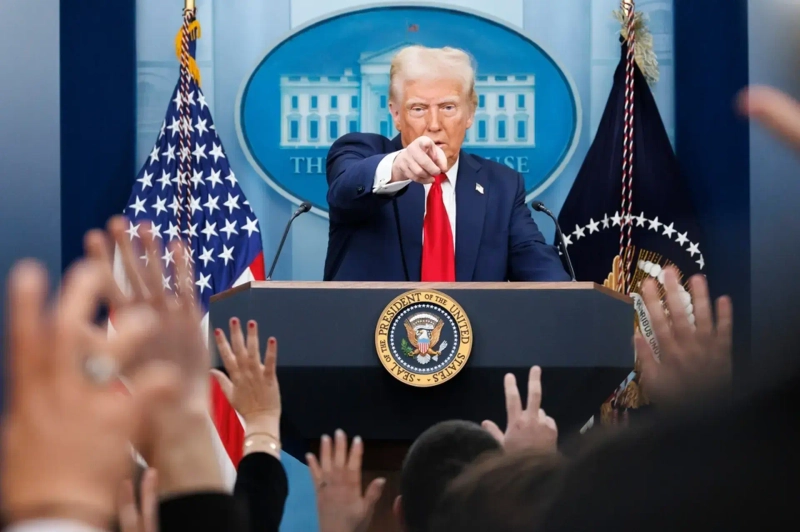
The Donald Trump administration has pointed out South Korea's defense offset trade, where technology transfer is received when purchasing foreign weapons, as a trade barrier ahead of the announcement of reciprocal tariffs.
The United States Trade Representative (USTR) stated in the '2025 National Trade Barriers Report' released on the 31st (local time) that the South Korean government "has pursued a policy of prioritizing domestic technology and products over foreign defense technology through the defense offset trade program." It also pointed out that "if the contract value exceeds $10 million (approximately 14.7 billion won), foreign contractors may be subject to offset trade obligations." This is the first time the USTR has specified offset trade as a trade barrier.
In the report, the USTR also pointed out that, according to the 2008 Korea-US beef market opening agreement, Korea only imports beef from cattle under 30 months of age, stating that "transitional measures have been maintained for 16 years." It also cited the continued ban on the import of processed beef such as beef patties, jerky, and sausages regardless of age as a trade barrier.
President Trump indicated that the reciprocal tariffs "will be quite low in some cases," suggesting that the rates may vary by country. Regarding the timing of the announcement, he said it would be "on the night of the 1st or during the 2nd" Eastern Time. US Treasury Secretary Scott Besant announced that it would be released at 3 PM Eastern Time on the 2nd (4 AM on the 3rd Korean time).
Acting President Han Duck-soo held the first meeting of the Economic Security Strategy Task Force with Samsung Group Chairman Lee Jae-yong, SK Group Chairman Chey Tae-won, Hyundai Motor Group Chairman Chung Eui-sun, and LG Group Chairman Koo Kwang-mo at the Prime Minister's residence in Samcheong-dong on the 1st to discuss response strategies to the US tariff imposition. Acting President Han said, "We will urgently prepare support measures that the government can provide in each industry, including the automotive industry, which is likely to face difficulties."
'Global Practice' Offset Trade
The day named 'Liberation Day' by President Donald Trump for the imposition of reciprocal tariffs is just a day away. Meanwhile, the addition of defense offset trade and restrictions on foreign ownership of nuclear power shares in the trade barriers report released by the US government on the 31st (local time) is interpreted as a prelude to tariff imposition.
In this year's report, the US newly identified South Korea's trade barriers related to security technologies, such as the regulation in the Industrial Technology Protection Act that prohibits the use of foreign companies' clouds and the Defense Business Act that mandates technology transfer when importing weapons, and the restriction on foreign ownership of nuclear power shares (Electricity Business Act).
The addition of offset trade is considered unexpected. Offset trade is a global practice in the defense industry. According to the offset trade impact report (2024) by the US Department of Commerce's Bureau of Industry and Security (BIS), the US signed 27 offset trade contracts worth $5.88 billion with 13 countries in 2022. This accounts for 32.8% of the total US defense industry export contract amount.
It is difficult for Korea to be singled out as a special problem in this regard. Korea, which introduced the offset trade system in 1982, achieved results such as co-developing the T-50 advanced trainer jet and securing submarine development capabilities while importing US weapons, but has not seen significant benefits recently. According to a report published by the Korea Institute for Industrial Economics and Trade in 2023, the value of offset trade obtained by Korea was about $7.99 billion from 2011 to 2015, but it plummeted to about $800 million from 2016 to 2020. The related industry explains that since 2010, the US has not been accommodating Korea's requests for technology transfer.
Among the various trade barriers identified in the report, there are many that are difficult to understand or that Korea finds hard to concede. A representative example is the criticism of the Industrial Technology Protection Act, which protects national core technologies. The report pointed out that the Ministry of Trade, Industry and Energy "maintains a list of national core technologies that could adversely affect national security if leaked overseas," and "technologies in the semiconductor, automotive, robotics, and aircraft sectors are included."
The limitation on the transfer of personal information outside Korea under the Personal Information Protection Act, and the prohibition of foreign ownership in the nuclear power sector are also matters of national sovereignty, significantly outside the scope of trade issues. Nevertheless, the inclusion of such content is interpreted as a measure to strengthen comprehensive pressure ahead of tariff imposition.
Cloud Certification System Likely to Be an Issue
Parts that US companies have long complained about are likely to be on the negotiation table. These include the issue of importing beef over 30 months old and the Cloud Security Certification System (CSAP) for public sector cloud service procurement. The Cloud Security Certification System was created by the Korea Internet & Security Agency in 2016 and was strengthened as a legal requirement with the amendment of the related law in 2022. Microsoft (MS), Google Cloud, and Amazon Web Services (AWS) have long argued that this system is an unnecessary barrier. However, they have recently obtained low-level CSAP certification, meeting the requirements for entry into the domestic public sector.
The fact that Korea is the only country in the world that restricts the export of location-based data, making it difficult for Google Maps to function properly, and the unclear emission composition requirements under the Air Quality Conservation Act, which pose difficulties for automobile companies, were also cited as trade barriers.
The Ministry of Trade, Industry and Energy is paying attention to the relatively small amount of content related to Korea in this report. It was written less aggressively compared to other countries. An official from the Ministry of Trade, Industry and Energy said, "The USTR mentioned 35 pages on the EU's trade barriers, 48 pages on China, and 11 pages on Japan, but only 7 pages on Korea," and "Although a total of 21 cases were mentioned, slightly more than last year (18 cases), it is less than the more than 40 cases in 2023."
Although the announcement of reciprocal tariffs is imminent, the specific details remain unclear. White House spokesperson Caroline Levitt said in a briefing that the reciprocal tariffs "will be imposed on all unfair countries." Although the possibility of universal tariffs was mentioned until just before the announcement, President Trump's remarks leaned more towards differentiation by country.
Washington Correspondent Lee Sang-eun/Reporters Kim Dae-hoon/Lee Seul-gi

Korea Economic Daily
hankyung@bloomingbit.ioThe Korea Economic Daily Global is a digital media where latest news on Korean companies, industries, and financial markets.