

Trump Tariff D-Day, Global Stock Markets Hold Their Breath
Summary
- The Trump administration's reciprocal tariff announcement is expected to bring uncertainty to global stock markets, increasing volatility.
- Financial experts urge diversification of asset allocation as risk aversion levels rise.
- Tariff implementation is expected to continue to pressure corporate profits and economic growth.
Mixed Asian Markets, Declines in Europe and US Futures
S&P500 Expected to Fluctuate 1.3% Intraday Today
Wall Street: "Uncertainty and Volatility Will Remain Even After Announcement"
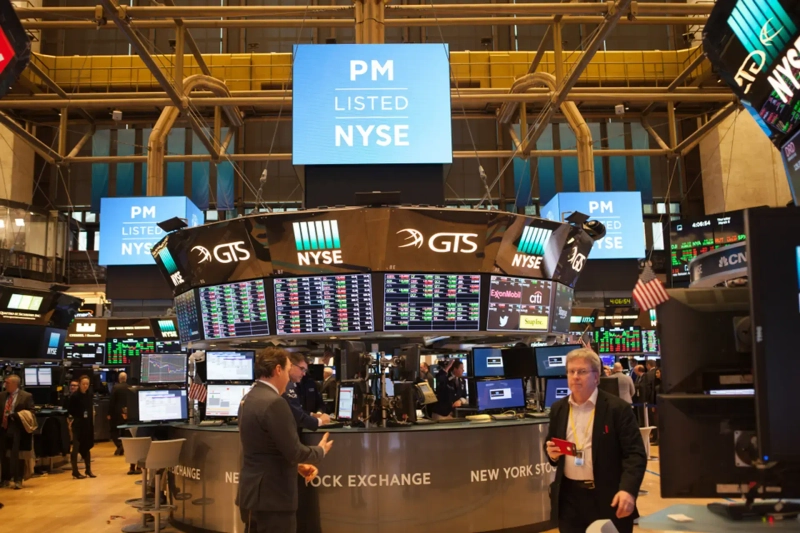
Markets worldwide, including Asia, Europe, and the US, are holding their breath ahead of the Trump administration's tariff declaration. In the worst uncertainty since the financial crisis and the pandemic, Wall Street expects the volatility index (VIX), known as the fear index, to reach 30 on the 2nd (local time).
On this day, Asian markets showed mixed results with Tokyo's Nikkei 225 rebounding by 0.2%, while Seoul's KOSPI fell by 0.6% and Hong Kong's Hang Seng Index dropped by 0.02%.
Europe's Stoxx 600 index started with a 0.7% decline.
US stock index futures are moving downward. S&P500 futures fell by 0.3%, and tech-heavy Nasdaq 100 futures also dropped by 0.4%. With a marked preference for safe assets, bond strength continued, keeping the US 10-year Treasury yield at 4.17%, the lowest since early March. Gold, after hitting a record high in the European market, traded slightly down at $3,125.
Options market traders expect the S&P 500 index to fluctuate about 1.3% intraday on the 2nd.
Trump plans to announce the tariff plan in the White House Rose Garden at 4 PM US market close (5 AM Korean time).
According to Bloomberg, the plan includes a tariff system applying flat rates by country and more customized reciprocal plans. The White House stated that the tariffs would take effect immediately, but Trump said he is open to negotiations afterward.
However, Wall Street expects volatility due to uncertainty to persist for some time after the reciprocal tariff announcement. The expectation is that long and contentious negotiations between the US and its trading partners will pressure corporate profits and burden economic growth, maintaining market anxiety.
Helen Jewell, Chief Investment Officer (CIO) of Equities for Europe, Middle East, and Africa (EMEA) at BlackRock, said, "There is tremendous uncertainty in the market, and there's nowhere to hide." She expects the risk due to uncertainty to remain in the market even after Trump's announcement.
Jack Ablin, CIO of Cresset Capital, told Reuters, "In the highest uncertainty since the financial crisis and the pandemic, it's important to diversify asset allocation beyond stocks and bonds."
The CBOE Volatility Index (VIX), known as Wall Street's fear index, rose to a two-week high of 24.80 on Monday and recorded 22.77 the previous day. Mark Spindel, CIO of Potomac River Capital, said, "It seems like the market is holding its breath," expecting the fear index to approach 30, indicating a high level of risk aversion.
Steve Sosnick, Chief Strategist at Interactive Brokers, said, "The devil will be in the details of the tariff plan announcement, but no one knows the details." He mentioned, "The US stock index is at the bottom of the correction range, making both a sharp rebound and a scary collapse possible at this unstable point."
The White House has not disclosed detailed information on the scale and scope of trade barriers in the global trade war that concerns businesses, consumers, and investors. White House spokesperson Caroline Levitt stated that reciprocal tariffs on countries imposing tariffs on US goods would take effect as Trump announces, and a 25% tariff on imported cars will take effect on April 3.
In addition to new tariffs, the Trump administration must also clarify whether to continue the tariff exemption on Mexican and Canadian products that took effect a month ago. In early March, the Trump administration decided to exempt cars and other products complying with the United States-Mexico-Canada Agreement from tariffs until April 2.
Moreover, a so-called secondary tariff of 25% on countries purchasing crude oil from Venezuela will take effect from this day. A 25% tariff on imported cars will take effect from the 3rd, and a 25% tariff on some auto parts will be implemented from May 3.
Guest reporter Kim Jung-ah kja@hankyung.com

Korea Economic Daily
hankyung@bloomingbit.ioThe Korea Economic Daily Global is a digital media where latest news on Korean companies, industries, and financial markets.