

US Increases Pressure on China with Semiconductor Export Ban Including AMD and Intel
Summary
- The US government announced that it has strengthened export restrictions to China, including AMD and Intel's AI semiconductors.
- Concerns have been raised that such US actions could accelerate China's technological self-reliance.
- US and allied semiconductor companies are experiencing economic losses due to reduced sales in China, which could lead to difficulties in covering R&D costs.
Additional Regulations Following Nvidia
Jensen Huang Heads to China Amid Revenue Concerns
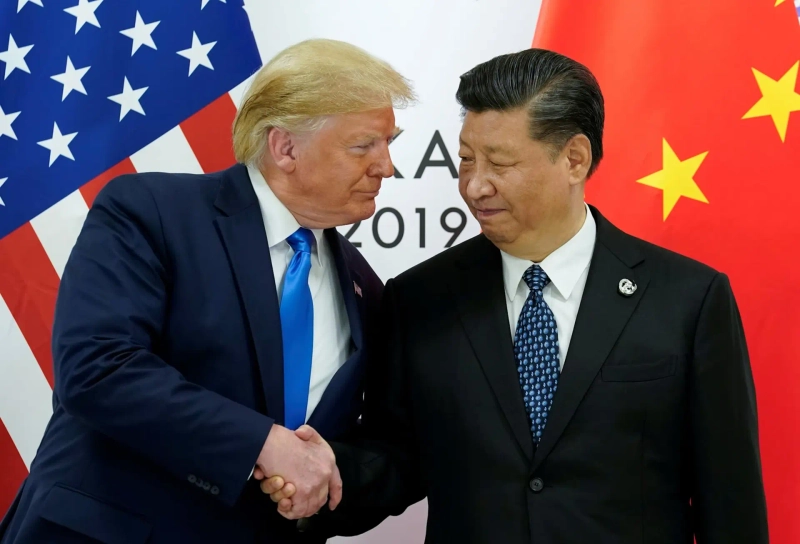
The US government has heightened its pressure on China by including AMD and Intel's artificial intelligence (AI) semiconductor chips in its export restrictions. The US is expanding its 'China containment strategy' beyond semiconductors to include oil and electric vehicles.
On the 16th (local time), AMD disclosed in a filing to the US Securities and Exchange Commission (SEC) that "the MI308 AI chip is subject to US government export controls," and "with no guarantee of export approval, we anticipate inventory and contract losses amounting to $800 million." Previously, the US Department of Commerce officially announced that separate approval is required for exporting high-performance AI chips to China. Intel's Gaudi series and Nvidia's H20 are also subject to export restrictions.
This strengthening of semiconductor regulations is directly linked to the US national security strategy, beyond mere technological control. On this day, the US House of Representatives' US-China Strategic Competition Special Committee stated in a report that Chinese AI startup DeepSeek "can engage in espionage and technology theft using US technology," labeling it a "national security threat." The report viewed DeepSeek as closely connected to the Chinese government. It noted that Liang Wenfeng, who leads DeepSeek, is associated with the Chinese state research institution 'Zhejiang Research Institute,' and that DeepSeek transmits user data to Chinese authorities and conducts information censorship and manipulation according to Chinese laws. It also pointed out the possibility of circumventing exports through a Singaporean entity and connections with Chinese telecom companies and ByteDance.
The committee stated that "DeepSeek possesses at least 60,000 Nvidia chips" and demanded that Nvidia submit records of AI chip sales to Asian countries exceeding 499 units since 2020 by April 30. In response, Nvidia denied the allegations, stating "we strictly comply with all export regulations," while the Chinese government dismissed the report as "absurd politicization."
Some express concern that such semiconductor export controls could accelerate China's technological self-reliance. The Center for Strategic and International Studies (CSIS) analyzed in a report released on the 14th that "while China's semiconductor ecosystem experienced disruption in the early stages of export controls, China has responded by pursuing self-reliance under government leadership, achieving notable technological advancements." It further noted that "US and allied semiconductor companies have suffered significant losses due to reduced sales in China, which could lead to an overall decline in competitiveness given the industry's high R&D costs," emphasizing that "direct investment in semiconductor research and talent development within the US is now more urgent."
In this context, Jensen Huang, CEO of Nvidia, visited China at the invitation of the China Council for the Promotion of International Trade (CCPIT). This marks his first visit in three months since January, reflecting concerns over declining sales in China.
The US has also added sanctions on Chinese oil companies. The Trump administration included Shandong Shengxing Chemical in the sanctions list for importing Iranian oil. Shengxing Chemical is reported to have purchased over $1 billion worth of oil through front companies linked to the Iranian Revolutionary Guard Corps (IRGC). US Treasury Secretary Scott Besant emphasized, "We will cut off the distribution network of Iranian oil and all entities supporting it."
The US is also moving to block the circumvention of exports of Chinese electric vehicles. Bloomberg News reported that the US is urging the Mexican government to increase tariffs on Chinese electric vehicles, aiming to block the 'bypass route' where Chinese companies produce electric vehicles in Mexico and export them to the US.
Reporter Hyein Lee hey@hankyung.com

JOON HYOUNG LEE
gilson@bloomingbit.ioCrypto Journalist based in Seoul