PiCK
"Pay coins and we’ll delete it"…As Meta looks the other way, victims of 'SNS doxxing' are mounting
Summary
- It reported that cases are continuing to emerge in which some SNS accounts demand virtual assets (cryptocurrencies, coins) in exchange for deleting posts after disclosing personal information.
- Experts said that a structure combining anonymity, overseas servers, and virtual-asset payments, along with lax platform oversight, is amplifying the spread of harm.
- Kim Young-seok, CEO of Bonanza Factory, stressed that to curb the growing virtual-asset-enabled crime, platforms need to make proactive blocking efforts and cooperate with investigative authorities.
Forecast Trend Report by Period


Indiscriminate doxxing of ordinary people and celebrities
Platform response remains inadequate even amid the spread of falsehoods
"Platforms need to make active efforts to cooperate with investigations"
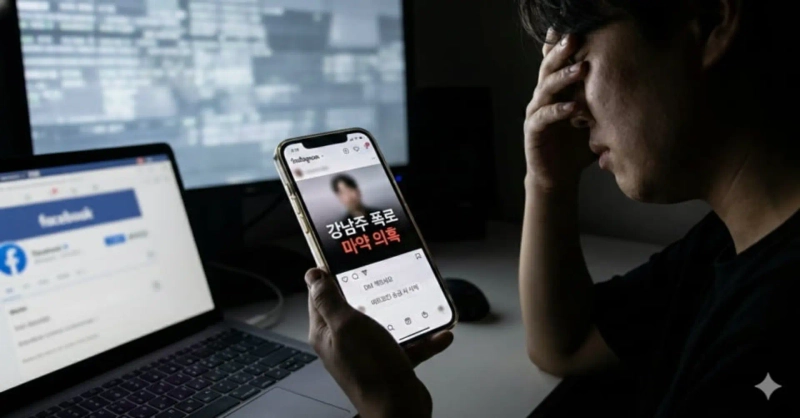
The controversy over doxxing on social networking services (SNS), which had died down after the 2016 “Gangnam Patch” case, is resurfacing. After the so-called “Gangnamju” and “Pyo Prosecutor,” who were active mainly on Meta-run platforms such as Instagram and Facebook, became a flashpoint last October, reports have continued to emerge of victims being asked to pay in coins in exchange for taking down posts alongside the disclosure of personal information.
According to the industry on the 3rd, signs have been detected that similar SNS accounts to “Gangnamju” and “Pyo Prosecutor” posted photos, names, and personal data of ordinary people or celebrities, then sent messages implying, “Send money and we’ll take it down,” when victims protested or asked for deletion.
A man in his 40s living in Seoul, identified only as Mr. A, discovered—after a report from an acquaintance—that a post containing his photo and real name had been uploaded on Instagram. The post included his face and content entirely unrelated to the facts. When Mr. A sent a message protesting, the account operator demanded money, saying, “If you send a certain amount, I’ll delete the post.” After Mr. A signaled a hard-line response, the operator deleted the account and disappeared.
In this way, they expose victims’ personal information alongside provocative keywords such as “illegal,” “drugs,” and “prostitution,” and upload posts portraying false allegations as if they were facts. Then, when victims who find the posts request deletion, they demand money.
Some victims say they were asked to pay not in cash but in virtual assets (cryptocurrencies, coins), and claims have also surfaced that posts were deleted after actual transfers. This method is similar to the past “Gangnam Patch” case. However, whereas Gangnam Patch largely focused on exposés related to workers in the nightlife industry, the recent wave of SNS doxxing—including Gangnamju and Pyo Prosecutor—stands out for targeting ordinary people or celebrities with no connection to the nightlife industry.
Victims are subjected to false exposés about things that never happened, but the measures they can take are extremely limited. In most cases, legal action is not possible because platforms do not identify the account holder, leaving the only option to report the post and wait until Meta removes it or suspends the account. Yet critics say that even when a reported account is shut down, similar accounts reappear, with cases continuing in which victims are repeatedly targeted until they make a transfer.
Amid this, the question of platform responsibility is resurfacing. While Instagram and Facebook policies prohibit defamation, threats, and privacy violations, critics say it is exceedingly rare to see swift action when such harm occurs in practice. As Meta fails to act on the spread of falsehoods and doxxing, numerous cases are emerging in which victims suffer damage to their social reputations and report severe psychological distress over false claims unrelated to them.
Experts broadly agree that the issue is difficult to dismiss as mere SNS misbehavior. They say that in a structure combining anonymity, overseas servers, and virtual-asset payments, poor platform oversight is exacerbating the spread of harm.
Attorney Kwak Jun-ho of Law Firm Cheong said, “It’s true that management is difficult because SNS platforms cannot see all information such as users’ chat histories,” but added, “For accounts where criminal conduct is confirmed, they should respond forcefully.”
Kim Young-seok, CEO of Bonanza Factory, which operates “Transight,” a solution for tracking wallets linked to crimes for domestic virtual-asset (cryptocurrency) exchanges and investigative authorities, said, “Virtual-asset-enabled crime is increasingly expanding into crimes that use SNS platforms,” adding, “To prevent the spread of these crimes, platforms need to make active efforts to block them and cooperate with investigative authorities.”

Uk Jin
wook9629@bloomingbit.ioH3LLO, World! I am Uk Jin.