

Trump to Announce Drug Tariffs Within Two Weeks... Backs Down on Movie Tariffs in a Day
Summary
- President Trump announced that he would unveil tariffs on pharmaceuticals within two weeks, drawing attention from the market.
- The Korean government stated that tariff measures on Korean pharmaceuticals are unnecessary and submitted this opinion to the U.S. Department of Commerce.
- It is analyzed that President Trump's retraction of the plan to impose a 100% tariff on imported films was due to backlash from the entertainment industry.
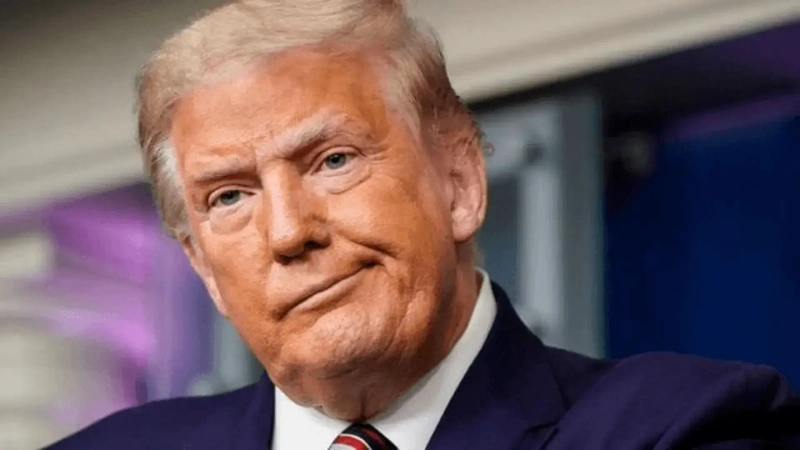
U.S. President Donald Trump announced that he would unveil drug tariffs within two weeks. His plan to impose a 100% tariff on imported foreign films was retracted within a day.
On the 5th (local time), President Trump, after signing an executive order to strengthen the domestic pharmaceutical industry at the White House, responded to questions from reporters about the drug tariff schedule, saying, "I will announce it within the next two weeks." He also stated, "There will be a major announcement regarding drug prices next week," adding, "We are being very unfairly extorted compared to other countries."
Last month, President Trump instructed the Department of Commerce to investigate the impact of drug imports on national security. The investigation into the impact on national security is an essential procedure for applying Section 232 of the Trade Expansion Act, which President Trump uses to impose tariffs on specific items. While pre-investigated content from the first term, such as steel, could be omitted, investigations on drugs, copper, lumber, semiconductors, etc., are still ongoing.
In this regard, the U.S. Department of Commerce has been collecting opinions since the 16th of last month until the 7th. The Korean government announced on the 4th that it had submitted an opinion to the Department of Commerce stating that tariff measures on Korean pharmaceuticals are unnecessary. Health and Welfare Minister Cho Kyu-hong said, "We will strengthen a pan-governmental response to minimize the impact on the biohealth industry, including pharmaceuticals, medical devices, and cosmetics."
According to the Korea Bio Association, last year, Korea exported pharmaceuticals worth $3.97 billion (approximately 5.51 trillion won) to the U.S. In particular, bio-pharmaceuticals accounted for 94.2% of the total. It is known that Celltrion is expanding production in the U.S. in this regard, and SK Biopharm is securing production facilities in the U.S. The Ministry of Health and Welfare and the Korea Health Industry Development Institute have been operating a biohealth industry tariff damage support center since the 25th of last month.
In the executive order, President Trump also instructed relevant agencies such as the Food and Drug Administration (FDA), Environmental Protection Agency (EPA), and Army Corps of Engineers to simplify regulations and expedite permits to quickly build pharmaceutical facilities in the U.S. He also stated that federal funds should not be invested in 'gain-of-function' research conducted to increase the transmissibility or lethality of viruses in countries like China. He reiterated his previous claim that COVID-19 was leaked from a laboratory in Wuhan, China. The origin of COVID-19 is still debated between animal origin theories, such as bats, and laboratory leak theories.
After the announcement of reciprocal tariffs early last month, the market reacted sensitively to the expansion of tariff policies, and President Trump, who had been focusing on 'adjusting the pace' for a while, mentioned a specific timeframe of 'within two weeks' again, drawing attention from the market with the drug tariff card.
Meanwhile, President Trump, regarding the 100% tariff measure on imported films he disclosed on Truth Social the previous day, stepped back, saying, "I will listen to the opinions of those in the film industry." As film production costs rise, the industry is moving filming locations to Canada, the UK, Eastern Europe, etc., and President Trump expected tariffs to bring them back.
However, it is interpreted that he changed his mind as the entertainment industry was greatly perplexed and the stock prices of Disney, Netflix, and theater companies plummeted. The Wall Street Journal (WSJ) reported that "In Hollywood, President Trump wanted to bring the film production industry to the U.S., but not in this way." They hoped for positive support such as tax incentives, not tariffs that could face backlash from other countries.
Washington Correspondent Lee Sang-eun selee@hankyung.com

Korea Economic Daily
hankyung@bloomingbit.ioThe Korea Economic Daily Global is a digital media where latest news on Korean companies, industries, and financial markets.