

OpenAI Withdraws Plan to Convert to For-Profit Corporation, Returns to Non-Profit Focus
Summary
- OpenAI announced that it has withdrawn its plan to convert to a for-profit corporation and will maintain its non-profit focus.
- The board chairman stated that even if considering a PBC structure, control will remain with the non-profit, actively supporting public benefit programs as a major shareholder.
- It was reported that after the release of ChatGPT, additional investments worth trillions of won are needed, raising the possibility of attracting investors.
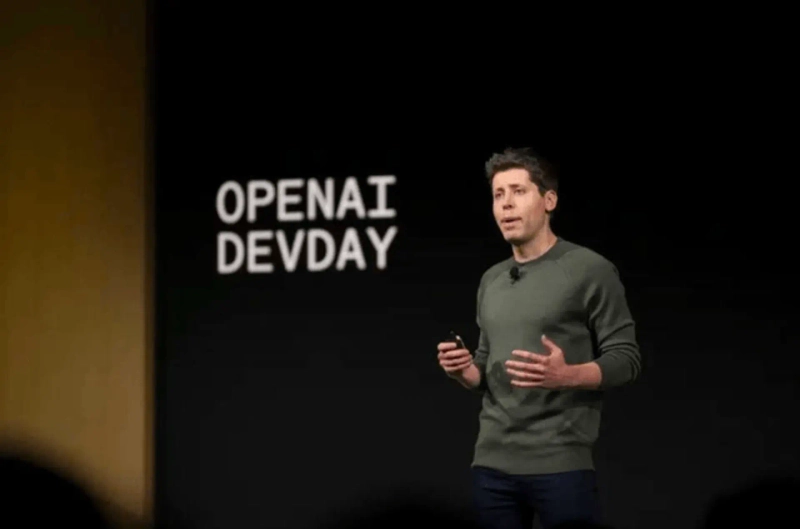
OpenAI, the developer of ChatGPT, has decided to withdraw its plan to convert to a for-profit corporation and will maintain its non-profit-centric system. This decision is interpreted as a return to the non-profit principle of 'AGI (Artificial General Intelligence) for the benefit of all humanity,' which was advocated at the time of the company's founding amidst the enormous funding pressures surrounding AI technology development.
The OpenAI board announced in a statement on the 5th (local time) that "even if we consider a Public Benefit Corporation (PBC) structure in the future, the non-profit organization will still retain control over OpenAI." A PBC is a corporate form that pursues not only profit but also public interest, but it lacks legal provisions mandating public interest and can raise capital like a regular corporation. In the board's statement, OpenAI emphasized that "the non-profit organization will maintain control over the PBC and will be able to actively support public benefit programs as a major shareholder."
In this regard, Brett Taylor, chairman of the OpenAI board, explained, "In the future, employees, investors, and non-profit organizations will all have shares, but control will remain entirely with the non-profit." He added, "This decision was made in close consultation with the Attorneys General of Delaware and California."
OpenAI was launched in 2015 as a non-profit organization by CEO Sam Altman and Tesla CEO Elon Musk, with the aim of building safe and beneficial AI for humanity. However, in 2019, it established a for-profit subsidiary and changed its structure to be controlled by the non-profit organization to raise investment funds. At that time, a profit cap was set. Then, after the release of ChatGPT, there was an explosive global demand, necessitating additional investments worth trillions of won. Consequently, at the end of last year, OpenAI announced its intention to abolish the existing profit cap structure and transition to a PBC, a corporate structure that pursues both profit and social contribution.
However, this move towards transition faced strong opposition both internally and externally. Elon Musk filed a lawsuit against OpenAI last year, claiming that it was pursuing profit in violation of its non-profit founding purpose. The U.S. District Court in California decided not to dismiss the case and will begin a full hearing next March. Additionally, 12 former OpenAI employees submitted a brief to the court last month, stating that "OpenAI should maintain its non-profit governance structure." Last year, Nobel laureate in physics Geoffrey Hinton and Meta CEO Mark Zuckerberg also reportedly expressed concerns about the transition to a for-profit corporation and conveyed their critical stance to the OpenAI board.
Regarding this, CEO Altman emphasized in a letter to employees, "Our (OpenAI's) mission is to ensure that the potential of AGI benefits all of humanity," and stated that "this decision was not due to legal disputes but arose from contemplation about what we exist for." He also acknowledged the reality that "AI can provide enormous benefits in key areas of life such as healthcare, education, and productivity improvement, but it may require resources amounting to trillions of dollars."
Meanwhile, according to Bloomberg News, if OpenAI does not transition to a for-profit corporation by the end of this year, major investor SoftBank Group may cut its total investment from $30 billion to $10 billion. It was reported that OpenAI might seek to attract investors to fill the gap.
Reporter Youngchoi Choi youngchoi@hankyung.com

Korea Economic Daily
hankyung@bloomingbit.ioThe Korea Economic Daily Global is a digital media where latest news on Korean companies, industries, and financial markets.