

U.S. March Trade Deficit Hits Record High of $140.5 Billion Due to Surge in Imports
Summary
- According to the U.S. Department of Commerce, the March trade deficit hit a record high of $140.5 billion.
- The deficit significantly widened as U.S. companies rushed to import pharmaceuticals, cars, and capital goods before tariff implementation.
- Economists warned that while import growth may ease from May, a decrease in exports is expected.
Companies Rush to Import Pharmaceuticals, Cars, and Capital Goods Before Tariffs
Economists Warn "Import Surge May Ease from May, Exports Could Also Decline"
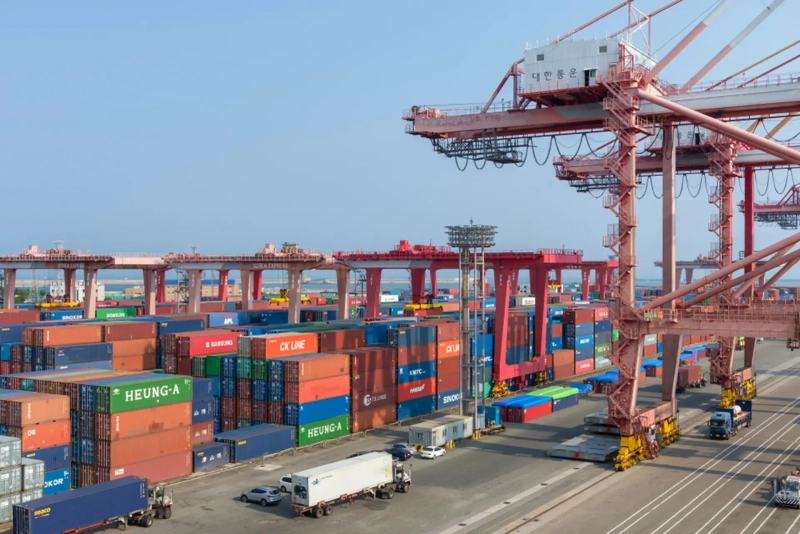
U.S. companies increased imports of goods such as pharmaceuticals, capital goods, and cars ahead of tariff implementation, leading to a record trade deficit in March.
On the 6th (local time), the U.S. Department of Commerce's Bureau of Economic Analysis announced that the U.S. trade deficit reached a record high of $140.5 billion in March, up 14% from the revised figure of $123.2 billion in February.
According to Reuters, economists surveyed by Reuters predicted the trade deficit would increase from the $122.7 billion reported in February to $137 billion.
The goods trade balance announced last week showed that the U.S. goods trade deficit in March was $162 billion, leading to expectations that the overall trade deficit would also reach a record high.
As President Trump imposed broad tariffs, including a 145% increase on Chinese imports, U.S. companies rushed to import goods to avoid rising costs.
Mutual tariffs with most of the U.S.'s trading partners were suspended for 90 days. However, tariffs on Chinese goods have been in effect since early April.
March imports surged 4.4% to a record high of $419 billion. Among these, goods imports increased by 5.4% to $346.8 billion. Exports rose 0.2% to a record high of $278.5 billion. Goods exports increased by 0.7% to $183.2 billion.
The U.S. government announced last week that the first-quarter trade deficit increased, causing the first-quarter Gross Domestic Product (GDP) to decrease by 4.83 percentage points compared to the previous quarter. As a result, the first-quarter GDP decreased by 0.3% for the first time since the first quarter of 2022.
Economists expect the import surge to ease by May, leading to a recovery in the second-quarter GDP. However, they warned that the decrease in imports could be offset by a decline in exports as other countries boycott U.S. goods and travel to the U.S. According to Reuters, punitive tariffs, immigration crackdowns, and protests over President Trump's remarks about annexing Canada and Greenland have led to a decrease in visitors to the U.S., including Canadian visitors.
Guest Reporter Kim Jung-ah kja@hankyung.com

Korea Economic Daily
hankyung@bloomingbit.ioThe Korea Economic Daily Global is a digital media where latest news on Korean companies, industries, and financial markets.