

Summary
- The New York stock market fell due to tariff issues between the US and China, increasing investor anxiety.
- It was reported that the EU might impose additional tariffs if negotiations with the US break down.
- The Fed is expected to keep interest rates unchanged, indicating continued uncertainty about future policies.
Palantir Plunges 11%, Nvidia and Tesla Also Decline
"Even with Lower Tariffs on China, It's the Highest Since the 60s, Burdening the US Economy"
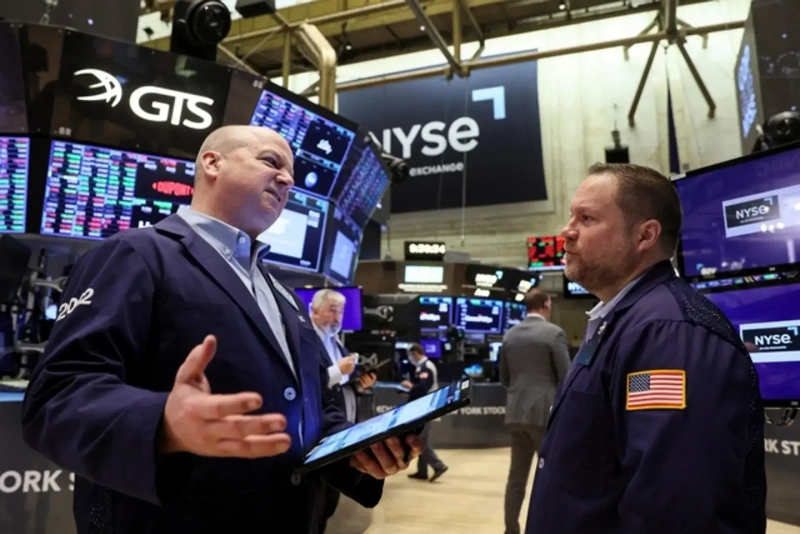
The US stock market started lower on the 6th (local time) as trade disputes resurfaced due to President Trump's mention of pharmaceutical tariffs and reports of additional tariffs on US products by the EU.
At 10:15 AM Eastern Standard Time, the S&P 500 index fell 0.7%, and the Nasdaq index fell 1%. The Dow Jones Industrial Average also dropped 0.6%.
The 10-year Treasury yield was almost unchanged at 4.34%. The dollar slightly fell against the euro and yen but continued to weaken against the Taiwan dollar and Hong Kong dollar.
Bitcoin fell 0.3% to trade at $93,957.14. The spot gold price rose 1.5% to $3,383.29 per ounce.
Bloomberg reported that the European Union (EU) plans to impose additional tariffs on about 100 billion euros ($158 trillion) worth of US products if the ongoing trade negotiations with the US break down.
Palantir Technologies, which announced its earnings the previous day, plunged 12% as concerns over excessive stock prices arose. Tesla fell 2.4% as it was announced that its sales in Europe also plummeted in April, and Nvidia fell 2.2%. Ford Motor Company fell more than 2% as it projected tariffs would reduce this year's profits by $1.5 billion.
According to data released by the Department of Commerce, the US trade deficit in March hit a record high of $140.5 billion.
Billionaire hedge fund manager Paul Tudor Jones said in an interview with CNBC that "even if Trump lowers tariffs on China to 50% or 40%, the US economy might hit a new low." Such tariffs are the largest tax increase since the 60s and are expected to cut the US growth rate by 2% to 3%.
Nicholas Soper, a strategist at Quintet Private Bank, also said, "Even if the US-China trade negotiations proceed successfully, tariffs will be much higher than before Trump's inauguration." Therefore, he emphasized, "Now is not the time to add risk."
The US Federal Reserve Board (Fed), which started a two-day Federal Open Market Committee (FOMC) meeting from this day, is expected to keep interest rates unchanged. Interest rate traders initially expected the first rate cut in June, but now have postponed the first cut to July. Until last week, they expected four cuts this year, but are now betting on a reduction to three cuts.
Michael Krautzberger, Chief Investment Officer (CIO) of AllianzGI's bond division, said, "Recent remarks by Chairman Powell suggest that the Fed is in a wait-and-see mode in the short term." He added that he is maintaining a low proportion of 'dollar assets' in his portfolio, anticipating headwinds against the US dollar.
Guest Reporter Kim Jung-ah kja@hankyung.com

Korea Economic Daily
hankyung@bloomingbit.ioThe Korea Economic Daily Global is a digital media where latest news on Korean companies, industries, and financial markets.