

Breaking
[Breaking News] Governor of People's Bank of China "Plan to Lower Reserve Requirement Ratio by 0.5%p"
Summary
- The People's Bank of China announced plans to lower the Reserve Requirement Ratio by 0.5 percentage points to supply 1 trillion yuan of long-term liquidity to the market.
- The policy interest rate will also be reduced by 0.1 percentage points, and the Loan Prime Rate (LPR) will be lowered by 0.1 percentage points accordingly.
- China plans to accelerate monetary policy easing along with active fiscal policies to boost the economy.
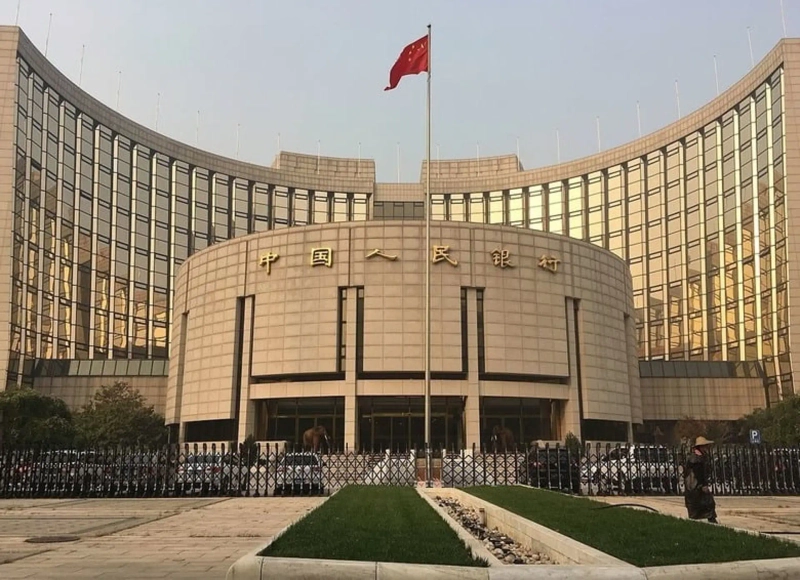
The People's Bank of China announced plans to lower the Reserve Requirement Ratio (RRR) and policy interest rates to stimulate domestic demand and stabilize market sentiment. However, it did not specify when the reductions would occur.
Pan Gongsheng, Governor of the People's Bank of China, stated at a press conference on the 'Package of Financial Policies to Support Market Sentiment' hosted by ministerial-level officials from the People's Bank of China, National Financial Regulatory Administration, and China Securities Regulatory Commission, "We will lower the RRR by 0.5 percentage points to supply 1 trillion yuan (approximately 192 trillion won) of long-term liquidity to the market," and "We will also reduce the policy rate by 0.1 percentage points."
China's current average RRR is around 6.6%. The authorities believe there is ample room for reduction. He explained that the 7-day reverse repurchase agreement (reverse repo) rate will be lowered from the current 1.5% to 1.4%, which will lead to a 0.1 percentage point reduction in the Loan Prime Rate (LPR). China's LPR serves as the 'de facto benchmark interest rate.'
Governor Pan also announced a 0.25 percentage point reduction in the rates of structural monetary policy tools. This includes lowering various special structural tool rates and the re-lending rates for rural and small business support from 1.75% to 1.5%, and reducing the Pledged Supplementary Lending (PSL) rate from 2.25% to 2%.
On this day, Governor Pan also unveiled interest rate reduction policies such as lowering the 'Housing Provident Fund' (a long-term savings jointly borne by companies and workers for home purchases) loan rate by 0.25 percentage points and reducing the interest rate on first home mortgage loans with a maturity of 5 years from 2.85% to 2.6%.
Amid ongoing domestic demand and real estate slumps, Chinese authorities have set 'more active fiscal policies' such as increasing the fiscal deficit ratio and issuing more local government special bonds, along with 'appropriately accommodative monetary policies' like lowering the RRR and interest rates as this year's macroeconomic stance.
Meanwhile, with the tariff war with the Donald Trump 2nd U.S. administration overlapping, there were continuous calls to accelerate the introduction of economic stimulus policies.
Governor Pan also proposed establishing a new re-lending of 500 billion yuan (approximately 96 trillion won) for domestic demand promotion and elderly care, and increasing the limit of 'Science and Technology Innovation and Technological Transformation Re-lending' from the current 500 billion yuan to 800 billion yuan (approximately 154 trillion won), an increase of 300 billion yuan.
Jin Young-gi, Hankyung.com reporter young71@hankyung.com

Korea Economic Daily
hankyung@bloomingbit.ioThe Korea Economic Daily Global is a digital media where latest news on Korean companies, industries, and financial markets.