

PiCK
US-China, Open Dialogue on Tariffs but... 'Different Dreams' Before Sitting at the Negotiation Table
Summary
- The US and China announced that they will officially enter into dialogue for the first time since the tariff war.
- China has taken measures to cut the benchmark rate and reserve requirement ratio to stimulate the economy.
- While the possibility of a big deal between the two countries is low, it was reported that ultra-high tariffs could be adjusted to a realistic level.
US-China Tariff Negotiations Begin... China Surprises with Rate Cut
Treasury Secretary Besant and Vice Premier He Lifeng
Official Dialogue in Switzerland This Week
China Cuts Benchmark Rate by 0.1%P
"Stimulus Card Amid Tariff War"
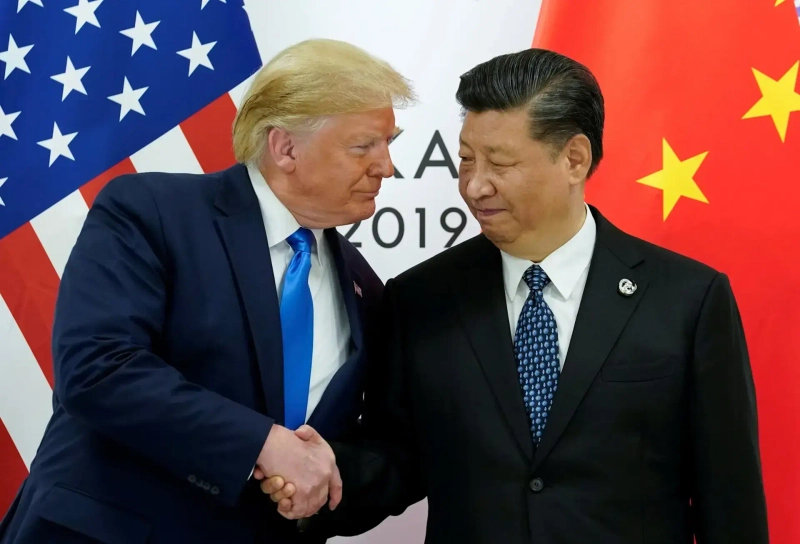
The US and China, which have been in a direct confrontation through mutual tariffs and retaliatory tariffs, are entering into dialogue for the first time since the tariff war. Attention is focused on whether the US and China will find a compromise in the tariff war.
The US Treasury Department announced on the 6th (local time) that Secretary Scott Besant plans to visit Geneva, Switzerland, on the 8th and meet with China's chief representative, Vice Premier He Lifeng, during his stay. The US Trade Representative (USTR) also announced that Representative Jamieson Greer plans to meet with the Chinese counterpart in Switzerland to discuss trade issues. China's Ministry of Foreign Affairs announced on the morning of the 7th, the same time as the US, that "Vice Premier He will visit Switzerland from the 9th to the 12th at the invitation of the Swiss government" and "will hold talks with Treasury Secretary Besant during this process."
It is analyzed that the dialogue has opened as concerns have grown that US-China trade is virtually cut off due to the aftermath of the tariff war, and both the US and Chinese economies are falling into recession. The Financial Times (FT) reported, "China's manufacturing sector has been hit by numerous export order cancellations, worker layoffs, and reduced factory production due to the fierce trade war with the US," and "the US and China have decided to hold talks to find a breakthrough to reduce harsh tariffs."
Ahead of the talks with the US, China announced plans to cut the benchmark rate and reserve requirement ratio. Pan Gongsheng, Governor of the People's Bank of China, stated, "We will cut the benchmark rate by 0.1% points from the 8th" and "will also cut the reserve requirement ratio by 0.5% points from the 15th to supply 1 trillion yuan (about 192 trillion won) of liquidity to the market."
First US-China Talks in Switzerland
Treasury Secretary Besant - Vice Premier He Lifeng "Don't Expect a Big Deal"
US Treasury Secretary Scott Besant and US Trade Representative (USTR) Representative Jamieson Greer are set to meet with the Chinese delegation in Switzerland this weekend, drawing attention to whether the US-China tariff war, which has shown a 'chicken game' aspect, can find an exit.
◇ Cautious US
On this day, the US and China each disclosed their meeting plans, but the content showed subtle differences. Secretary Besant stated in a press release that he would visit Switzerland to hold talks with China's chief representative (Vice Premier He Lifeng), expressing hope for productive dialogue while working to realign the international economic system to better align with US interests. The USTR's press release did not mention meeting with China at all. Both announcements generally pointed to 'tariff negotiations,' but avoided direct mention. Secretary Besant stated in a Fox News interview that talks with China would take place on the 10th to 11th, focusing more on "easing tensions" than on the trade negotiations themselves.
In contrast, China used more direct expressions, clearly stating its 'readiness for battle.' China's Ministry of Commerce stated, "Recently, high-level US officials have been spreading rumors of tariff adjustments and voluntarily providing information to China through various channels, hoping to engage in dialogue with China on tariff issues," and "agreed to contact the US, fully considering global expectations, China's interests, and the appeals of US industries and consumers." It also stated, "If negotiations are conducted under the guise of threats and intimidation, China will never respond."
◇ Aggressive China
It is interpreted that the opening of dialogue between the two countries, which had been engaged in a pride battle, was due to continuous requests from the economic circles of both countries. Companies like Walmart, Target, and Home Depot demanded an end to the tariff war, warning that goods would disappear from shelves and bankruptcies would surge.
President Trump, in a joint press conference with Canadian Prime Minister Mark Carney at the White House, argued that "not trading with China is beneficial to the US." He stated that the US trade deficit with China is 1 trillion dollars (about 1,395 trillion won), saying, "We are not losing 1 trillion dollars in any way."
While outwardly claiming that "negotiations are fake news" (China) and "not trading is beneficial to us" (US), it seems that both sides have been in continuous dialogue behind the scenes. As concerns about sudden supply chain disruptions and consumer dissatisfaction due to rising prices grew, President Trump mentioned at least three times since the second half of last month that tariffs on China could be lowered. This created an atmosphere where China could come to the negotiating table while maintaining its pride.
◇ Ultra-High Tariffs Likely to Decrease
The possibility of a 'big deal' between the two countries through a few meetings is not high. Eswar Prasad, a professor at Cornell University, told the New York Times (NYT), "The possibility of a comprehensive trade agreement is low, but even easing tensions itself would bring economic and political benefits to both governments."
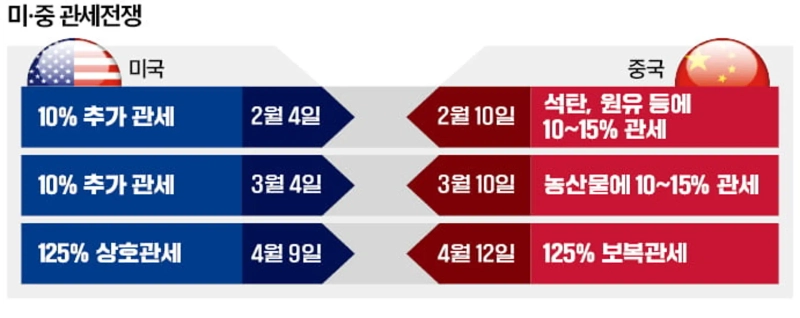
President Xi Jinping and President Trump have already exchanged tariffs and retaliatory tariffs during the Trump administration's first term. At that time, the two countries temporarily reached an agreement after exchanging tariffs and retaliatory tariffs, but soon resumed imposing tariffs, arguing that each side did not keep their promises, leading to fierce disputes. Even if both sides agree on major goals such as 'reducing the US trade deficit with China,' conflicts could erupt again at any time during the implementation process. The higher level of negotiations desired by the US compared to the past and China's growing size also make it difficult to reach an agreement. However, in this process, there is considerable room for ultra-high tariffs, such as the trade cutoff level of 125%, to be reduced to a more realistic level. Companies can buy some time for now.
Washington Correspondent Lee Sang-eun selee@hankyung.com

Korea Economic Daily
hankyung@bloomingbit.ioThe Korea Economic Daily Global is a digital media where latest news on Korean companies, industries, and financial markets.