

Current Account Surplus of $5.7 Billion in April... 24 Consecutive Months in the Black
Summary
- In April, the current account recorded a $5.7 billion surplus, marking 24 consecutive months in the black.
- In the stock market, foreigners recorded net selling for a ninth consecutive month, with the net amount reaching $9.18 billion — a significant rise from the previous month.
- While the trade surplus and increased IT exports are positive, the services deficit and weakened foreign investor sentiment indicate that caution is needed for investment.
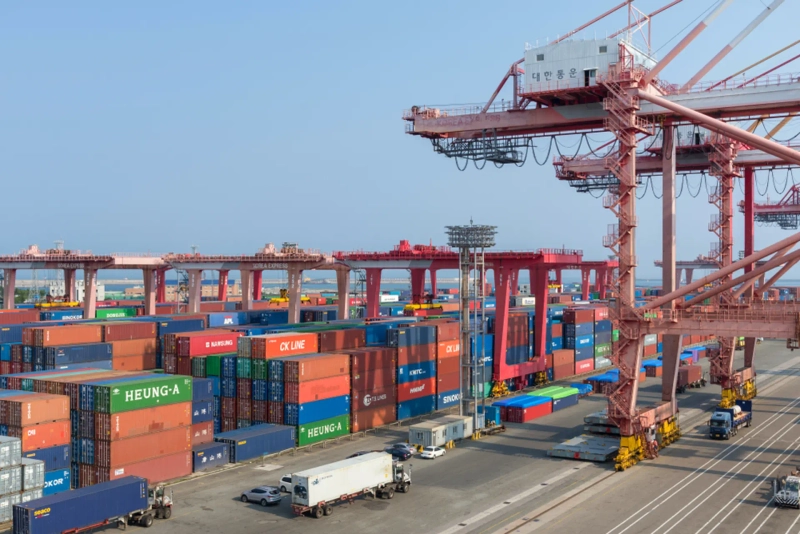
In April, the current account recorded a surplus of $5.7 billion, marking the 24th consecutive month in the black. While seasonal factors such as foreign dividend payments reduced the figure compared to the previous month, it increased year-over-year.
According to the Bank of Korea on the 10th, the current account in April totaled $5.7 billion. This is nearly half the $9.14 billion recorded the previous month, but a significant rise from the $1.49 billion surplus a year ago.
The goods balance posted a surplus of $8.99 billion, which is larger than last month's $8.49 billion. Exports stood at $58.57 billion, a 1.9% increase compared to the same month last year. Export growth in IT products such as semiconductors (16.9%) and wireless communication devices (6.3%) continued. Apart from passenger cars (-4.1%) and petroleum products (-13.8%), non-IT exports also increased.
Conversely, imports declined by 5.1%, reaching $49.58 billion. The fall in energy prices led to a 10.4% decrease in raw material imports. Consumer goods imports also fell by 2.1%, mainly driven by a decrease in grains (-11.5%).
The service account recorded a deficit of $2.83 billion, a wider gap than the previous month’s $2.21 billion deficit. This was largely due to a $1.51 billion deficit in other business services, mainly reflecting increased payments by domestic firms for R&D services.
Travel account posted a deficit of $500 million, an improvement from the previous month's $720 million deficit, attributed to increased domestic travel by foreigners. However, the transport account shifted from a $260 million surplus to a $10 million deficit, marking the first deficit in 15 months as container shipping rates fell.
The primary income balance recorded a $190 million deficit, with the dividend income balance showing a $650 million deficit. April is a month when domestic firms concentrate their dividend distribution. Nevertheless, with Korean nationals receiving more dividends from abroad, the deficit narrowed to about one-third of last year’s $1.93 billion deficit.
In the financial account, net assets grew by $4.51 billion. Direct investment increased by $3 billion, reflecting higher investment in key industries such as automobiles and secondary batteries. In the stock market, there was a ninth consecutive month of net selling by foreigners, with the scale reaching $9.18 billion — a significant increase from last month’s net selling of $4.5 billion. Meanwhile, net overseas stock investment by the government and nationals increased by $8.8 billion.
Reporter Jin-kyu Kang josep@hankyung.com

Korea Economic Daily
hankyung@bloomingbit.ioThe Korea Economic Daily Global is a digital media where latest news on Korean companies, industries, and financial markets.