

Stablecoins Emerge as 'Hidden Rate Regulator' in the U.S. Short-Term Treasury Market
Summary
- Stablecoin issuers are rising as a major source of demand for U.S. short-term Treasuries, reportedly resulting in a lowering effect on interest rates.
- Major stablecoins such as Tether (USDT) and USDC hold large volumes of short-term Treasuries, said to actually impact the level of interest rates.
- The Bank for International Settlements (BIS) has analyzed that an inflow of stablecoins lowers short-term Treasury rates, serving as a temporary rate adjustment mechanism.
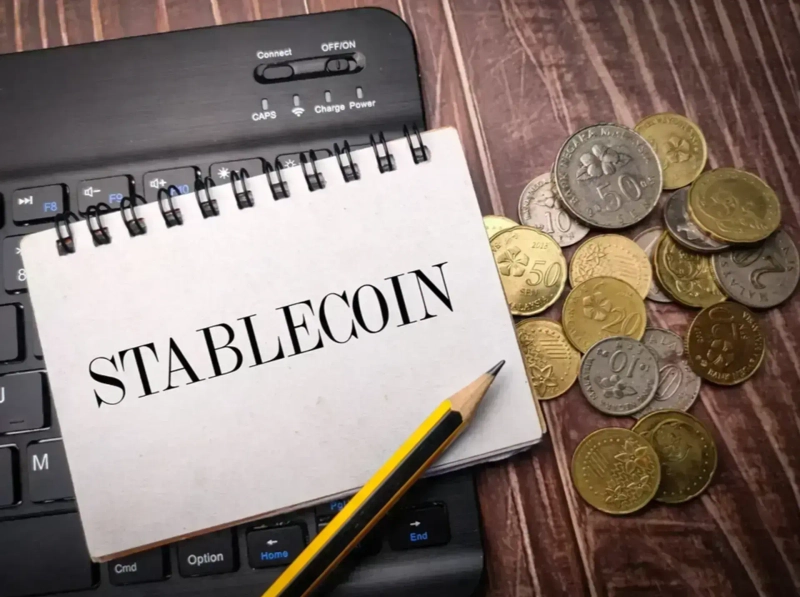
Stablecoin issuers are emerging as a key source of demand for U.S. short-term Treasury bills (T-Bills), resulting in a downward effect on interest rates. Major stablecoins such as Tether (USDT) and USDC place reserves matching their issuance in safe assets, and this structure is said to alter market liquidity and actually influence interest rate levels.
According to Reuters on the 25th (local time), at the 'Money Fund Symposium' held in Boston, it was predicted that stablecoins will become a main source of demand for U.S. short-term Treasury bills. Mark Cabana, Head of U.S. Rate Strategy at Bank of America, stated, "Stablecoin issuers tend to purchase short-term Treasuries and short-term Treasury coupons," and added, "We expect this to be a source of growing demand for Treasuries over the next 3 to 5 years, and at least for the next 10 years." As of May, the two leading stablecoins by market capitalization, Tether and USDC, each held about $98.52 billion and about $28.34 billion in short-term Treasury bills.
These short-term Treasury purchases have the effect of lowering the interest rates on short-term Treasuries. According to a report published in May by the Bank for International Settlements (BIS), "If there is a large net inflow into the stablecoin market over five days, the 3-month Treasury bill yield tends to fall by an average of 2–2.5bp." The report adds, "This effect is similar to one rate cut by the Fed, and stablecoin inflows serve as a temporary rate adjustment mechanism."
In this way, stablecoin issuance has evolved beyond merely circulating virtual assets (cryptocurrencies), functioning as a structural factor that influences liquidity policy and interest rate formation. Scott Bessent, U.S. Secretary of the Treasury, emphasized the ripple effect on financial markets, saying, "If the Genius Act is passed, stablecoin issuers will help reduce the federal government's interest cost on Treasuries through their purchases."

Heecheol Yang
heecheol@bloomingbit.ioHello, I'm a reporter at bloomingbit