

PiCK
US Stock Market Struggles to Rebound After Trump Hints at Tariff Flexibility
Summary
- President Trump suggested flexibility regarding the extension of tariff deadlines.
- The US stock market attempted a slight rebound from the previous day's sell-off, but ultimately turned downward.
- Some traders mentioned that if tariff concerns do not intensify, the market correction could be seen as a buying opportunity for individual investors.
Tesla rebounds 1.6% after a sharp drop
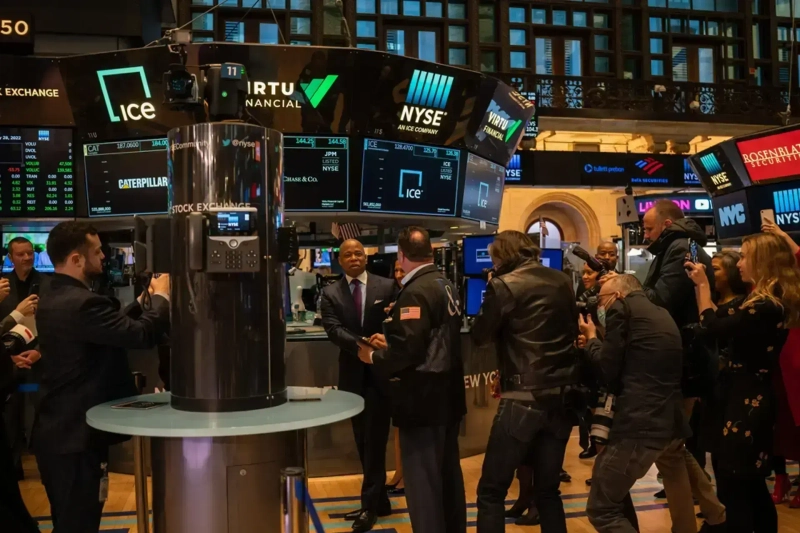
After President Trump suggested further postponement of tariff deadlines and indicated flexibility for countries willing to negotiate, the US stock market on the 8th (local time) attempted a rebound from the previous day's sell-off but ultimately turned downward.
The S&P 500 index, which opened slightly higher, was fluctuating at around the same level as the previous day at 10:20 a.m. Eastern Standard Time, while the NASDAQ Composite was attempting to rise within a range of 0.1%. The Dow Jones Industrial Average fell by 0.2%.
The yield on the 10-year US Treasury note rose 5 basis points (1bp=0.01%) to 4.433%, and the 2-year Treasury yield rose 1bp to 3.913%. The Bloomberg Dollar Spot Index increased by 0.2%.
President Trump, after sending letters imposing tariffs between 25% and 40% to 14 countries including Japan and South Korea, stated late the previous day that the August 1 deadline for tariff imposition was "not 100% settled." He added, "If they (the negotiating countries) call and say something different, I would be open to that."
Some traders in the US market expect that US tariffs may not be as strict as feared and the worst period of the trade war may have passed.
Tesla shares, which had plunged more than 6% the day before, rebounded by 1.6%. NVIDIA shares rose 0.2% to $158. Apple declined 0.4% after news that its AI chief was moving to Meta.
With President Trump's tax and spending bill confirming the reduction of tax credits for the clean energy sector by executive order, shares in clean energy companies such as Sunrun, First Solar, and Enphase Energy all weakened on the day.
Brett Kenwell of eToro said, "Trade-related news is getting attention, but the situation is different from late March or early April. As long as there is confidence that negotiations will continue or the deadline will be extended, the market can ignore tariff-related concerns."
He added, "Unless the situation actually worsens, a 5–10% decline could likely be seen by individual investors as a buying opportunity."
Contributing journalist Jung-ah Kim kja@hankyung.com

Korea Economic Daily
hankyung@bloomingbit.ioThe Korea Economic Daily Global is a digital media where latest news on Korean companies, industries, and financial markets.