

Weaker Dollar Emerging as a Stock Market Variable... "Alarming" vs "Manageable" [Analysis+]
Summary
- The article reports that the decline in the dollar's value and former President Trump's policies may act as variables in the domestic stock market.
- Past cases show that a weak dollar led to surges in emerging market asset prices. However, some analysts view this decline as manageable.
- Recently, increased strength of the Korean won has led to a rise in net purchases of domestic stocks by foreign investors.
Dollar Experiences Largest Drop in Value in 52 Years
Trump’s 'Dollar Shaking' Erodes Credibility
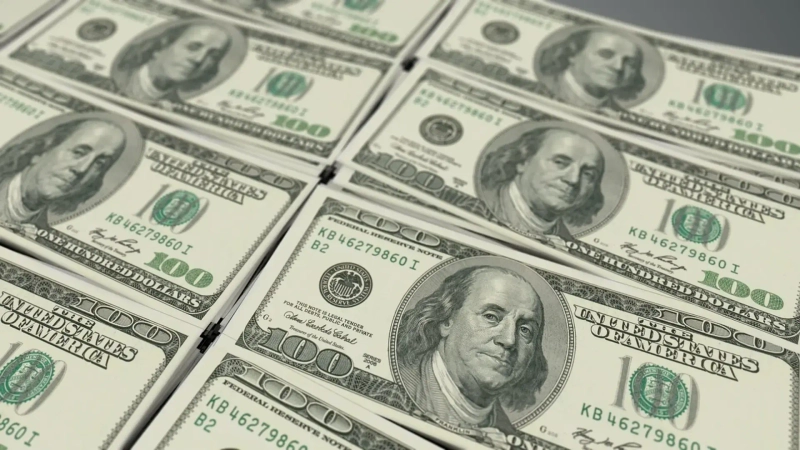
Opinions are divided among securities experts about whether former President Donald Trump's 'dollar shaking' will become a variable for the domestic stock market. Some analysts emphasize the need to closely monitor global asset movements, while others argue that the weak dollar remains at a manageable level.
According to U.S. economic media CNBC on the 8th (local time), the Dollar Index—which measures the value of the dollar against six major currencies—plunged by 10.7% from the beginning of this year to the end of June. Compared to January 13 (110.18), it dropped by 12.06%. This is the largest semiannual decline since the first half of 1973. As of the end of last month, the Dollar Index was 96.87, the lowest since February 2022.
The U.S. central bank (Fed) began calculating the Dollar Index in 1973 when the managed floating exchange rate era began. At that time, the dollar’s value was set at 100. As of the end of last month, the index recorded a level even lower than 50 years ago.
This unprecedented weak dollar phenomenon is largely attributed to Trump's tax cut plan. The 'One Big Beautiful Bill Act' (OBBBA), which comprises the core agenda of Trump's second term, was officially implemented following his signature on the 4th (local time).
This act is expected to increase the U.S. federal deficit by around $3 trillion (approximately ₩4,067 trillion) over the next 10 years. As of last May, the U.S. fiscal deficit reached $36.22 trillion (about ₩49,118 trillion).
Markets point out that a rising fiscal deficit from this act could force the U.S. government to issue more Treasury bonds, causing interest rates to rise and undermining trust in the dollar. This is also why the global credit rating agency Moody's downgraded the U.S. credit rating one notch from the highest AAA in May, citing the ballooning fiscal deficit.
Trump's public pressure on Fed Chair Jerome Powell to cut rates is also contributing to the weak dollar. He has repeatedly called for slashing the current U.S. benchmark interest rate of 4.25–4.5% to 1% or even lower.
Earlier, Trump said, "You (Powell) must significantly lower the benchmark interest rate," and continued, "We're losing hundreds of billions of dollars (hundreds of trillions of won) due to higher national debt service costs," adding, "there’s no inflation in the U.S." Trump's overt intention to pressure Powell over debt repayment has led global central banks to lose trust in the dollar's value.
Sang-Hyun Park, a researcher at iM Securities, forecast, "If June economic indicators fall below market expectations, Trump's pressure on Powell will likely intensify, exerting further downward pressure on the dollar."
This weaker dollar trend is currently benefiting the domestic stock market. Foreign investors, who had net sold over ₩17 trillion worth of domestic stocks between January and April, turned to net buyers in May and June, purchasing ₩1.2658 trillion and ₩2.7615 trillion respectively.
The strengthening of the Korean won against the dollar increases the appeal of Korean stocks to foreign investors converting dollars to won. Dong-Gil Noh, a researcher at Shinhan Investment Corp., analyzed, "There is a strong negative correlation between foreign net buying and the won-dollar exchange rate," and added, "The current foreign buying is largely mechanical inflow driven by the won’s strength."
Some suggest that a sharp drop in the dollar's value could trigger rapid changes in global asset markets, similar to previous periods of significant dollar weakness that led to surges in assets in emerging markets.
Eun-Taek Lee, a researcher at KB Securities, analyzed, "The only time the Dollar Index was weaker than now was 1973, and similar levels were seen in 1986 and 2002," continuing, "The 1973 dollar weakness signaled a tenfold rise for commodities, 1986 for manufacturing emerging markets such as Japan and South Korea, and 2002 for commodity emerging markets like Brazil and Russia."
On the other hand, some argue that unlike in the past, the absence of strong competitors to threaten the U.S. economy today means further dollar weakening is unlikely.
Sang-Hee Han, a researcher at Hanwha Investment & Securities, assessed, "It is true that the drop in the Dollar Index in the first half of this year has been steep, but this has happened before and the pace is still manageable," and added, "Previously, Japan and China structurally contributed to a weaker dollar, but no country seems capable of surpassing the U.S. now, so the dollar’s value is expected to remain firm."
Jung-Dong Noh, journalist at Hankyung.com dong2@hankyung.com

Korea Economic Daily
hankyung@bloomingbit.ioThe Korea Economic Daily Global is a digital media where latest news on Korean companies, industries, and financial markets.