

"If the 25% Trump tariff cannot be prevented... Growth rate 'halved'" Warning from US IB
Summary
- Wells Fargo reported that if the US imposes a 25% reciprocal tariff on South Korea, the country’s GDP growth rate could fall to 0.5–1%, half of the previous forecast.
- Currently, since the beginning of the Trump administration, South Korea’s increase in effective tariff rate is the sixth highest in the world, indicating that additional tariffs would place further downward pressure.
- However, researcher Sang-Hyun Park predicted that depending on future trade negotiations, the actual tariff rate could be eased to between 10% and 20%.
If 25% is imposed, growth rate drops to 0.5%
Critical juncture for negotiations until August
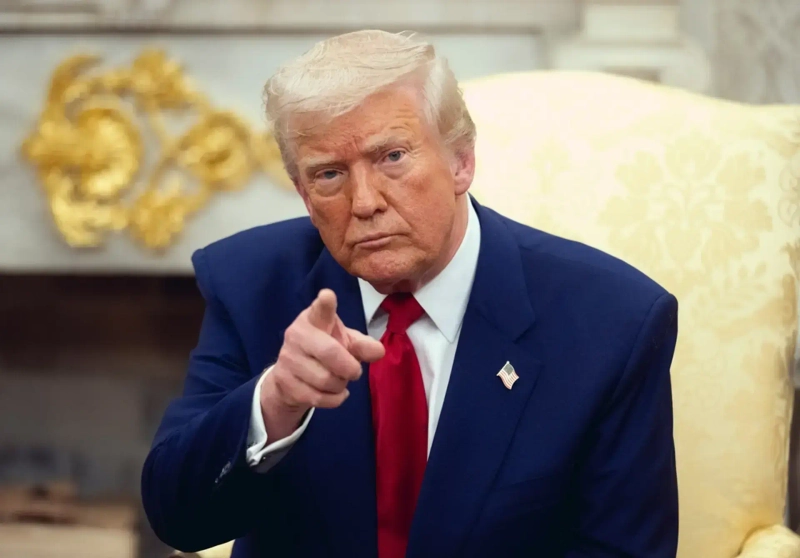
As the United States has announced a 25% reciprocal tariff on South Korea, an analysis suggests that the growth rate could be reduced to half the previous forecast. According to Wells Fargo, a global investment bank (IB), if President Donald Trump imposes a 25% reciprocal tariff, South Korea’s GDP growth rate this year is expected to remain at 0.5–1%. This is about half of the previous forecast in the low 1% range.
The Bank of Korea's growth forecast also faces the threat of being revised downward. Previously, the Bank of Korea projected this year's GDP growth at 0.8%, presuming a 15% US tariff. If a reciprocal tariff rate of 25% is finalized, the tariffs would be much higher than the initial assumption, naturally putting downward pressure on the forecast.
The Korea Capital Market Institute indicated, based on a baseline tariff rate of 10%, that South Korea’s real GDP this year would decline by 0.5% compared to the previous forecast. Of this, 0.3% decline is attributed solely to the 10% base tariff.
Already, South Korea has borne one of the highest effective tariff rates in global trade with the US since the start of Trump’s second trade policy term.
According to the OECD, the increase in Korea's effective tariff rate since the Trump administration took office until mid-May this year is estimated at 14.52%, ranking 6th highest among over 50 countries analyzed. The OECD analyzed this by considering a base tariff of 10%, item-specific tariffs like those on autos and steel, and other exceptions.
The problem is that trade negotiations between Korea and the US are expected to face difficulties until the August 1 deadline for the imposition of the 25% tariff. Nomura, a Japanese investment bank (IB), stated, "Both South Korea and Japan are experiencing ongoing upside surprises in tariffs," and expressed concern over the outcome of the trade talks.
However, there is still ample room to ease the tariff rate through future negotiations. Specifically, there is a high likelihood that the reciprocal tariff rate will be reduced to the 10% range.
Sang-Hyun Park, a researcher at iM Securities, stated, "Given that the US previously set Vietnam’s reciprocal tariff rate at 20%, South Korea and Japan, as key allies and trading partners, are also likely to face a maximum of 20%." He added, "South Korea’s reciprocal tariff rate range will likely be between 10% and 20%. Ultimately, the issue will be how much the tariff can be lowered from the 20% level."
Jae-Gyun Lim, a researcher at KB Securities, explained, "It has been reported that the US could enter into an agreement to fix the EU tariff rate at 10%. This is half the reciprocal tariff (20%) announced in April." He continued, "If this is applied as is, South Korea's tariff would decrease from 25% to 12.5%."
Reporter Song-Ryeol Lee, Hankyung.com yisr0203@hankyung.com

Korea Economic Daily
hankyung@bloomingbit.ioThe Korea Economic Daily Global is a digital media where latest news on Korean companies, industries, and financial markets.