

Trump shifts into 'high gear' with tariff bombs... "Copper 50%, Pharmaceuticals 200%"
Summary
- President Trump is pressing foreign companies and governments as he announces a 50% copper tariff and a 200% pharmaceutical tariff.
- The copper tariff could cause rising costs and supply instability across industries such as home appliances, electric vehicles, and batteries.
- With the possibility of imposing a high pharmaceutical tariff, domestic pharmaceutical companies are considering expanding U.S. production and acquiring local firms.
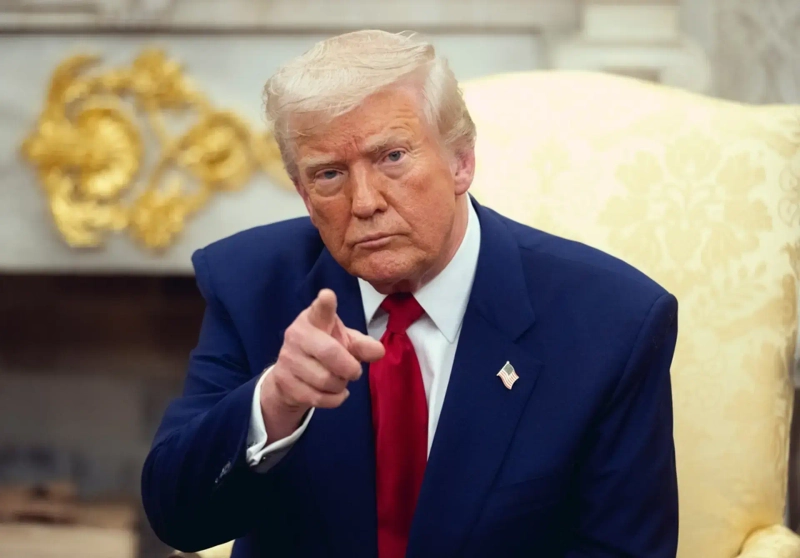
Due to the progress in U.S.-China tariff negotiations and the situation in the Middle East, the 'tariff rampage' of U.S. President Donald Trump, which had been quiet for a while, has resumed. On the 8th (local time), when the temporary exemption period for mutual tariffs by country announced on April 2 was scheduled to end, President Trump began pressing foreign companies and governments, mentioning a 50% copper tariff and a 200% tariff on pharmaceuticals.
At a Cabinet meeting at the White House, he said, "Foreign companies with manufacturing facilities in the United States left because of the wrong policies of previous administrations," adding, "I will not allow this. We will announce (tariff) measures for key sectors."
○Concerns over copper tariffs affecting Korean home appliances
Since its inauguration, the Trump administration has introduced itemized tariffs on steel, aluminum, automobiles, and auto parts, and ordered the Department of Commerce to conduct national security impact investigations for itemized tariffs on semiconductors, copper, lumber, and pharmaceuticals.
Among the pending items, copper was the first to be announced because the Department of Commerce's investigation was completed. Secretary of Commerce Howard Lutnick said, "We have completed the copper-related investigation" and stated that tariffs would take effect at the end of July or on August 1, following President Trump’s announcement.
Unlike steel and aluminum tariffs, which started at 25% and increased to 50%, the copper tariff starts at 50% from the outset. In particular, just as the U.S. government decided to apply a 50% itemized tariff to home appliances such as refrigerators and washing machines that use imported steel in proportion to their content, the scope of copper, too, could stretch to many 'copper derivatives' products.
Copper is a core raw material needed for every product employing a motor or wiring. The United States is the world's second-largest consumer of copper after China but produces only about 55% of its total consumption (approximately $17 billion worth), importing the remainder. Some domestic electronics companies are considering sourcing copper from the United States, but it is expensive and the supply is insufficient. This is due to the boom in data centers fueled by artificial intelligence (AI), growing demand for electric vehicles, and now the addition of tariffs.
On the New York Mercantile Exchange (COMEX), copper futures prices are up 25% this year even excluding the 13% increase seen on August 8-9. The Home Appliances Business Division at LG Electronics spent ₩591.5 billion just on copper purchases last year. It ranks third among raw material costs for home appliances after steel (₩1.7033 trillion) and resin (₩925.6 billion).
Electric vehicle and battery industries are also concerned about the burden of copper tariffs. In EVs, copper is used in charging modules, wiring harnesses, and coils, and in batteries, it is used in copper foil. A 10% rise in copper prices increases production costs by 0.3–0.7%. The wire and cable industry, which could see falling demand if cable prices rise due to tariffs, falls within the impact range too.
○200% tariffs on pharmaceuticals mentioned
President Trump's mention of a 200% high-rate tariff on pharmaceuticals is causing a sense of tension in the sector. He stated, "We will soon announce measures for the pharmaceutical industry," and added, "We will allow about a year to a year and a half, and after that impose a very high tariff of 200%."
Last year, U.S. imports of pharmaceuticals from Korea amounted to $3.97 billion (about ₩5.45 trillion). Domestic pharmaceutical companies have begun considering acquiring local firms or expanding production in the U.S.
Celltrion introduced in its shareholder letter, "As a short-term strategy, we completed a two-year inventory and finalized a contract with our U.S. contract manufacturing (CMO) partner." They also stated that, in the long term, they would consider acquiring a company with production facilities in the U.S. SK Biopharmaceuticals said, "Since we have a production partner in the U.S., if tariffs are confirmed, we can switch to local production."
However, there are also opinions about whether high tariffs will actually be imposed on semiconductors or pharmaceuticals. If a 200% tariff is imposed, U.S. consumers are likely to react against it. For semiconductors as well, given that rapid increase in local production is not feasible, U.S. companies could be the primary victims of arbitrary tariff hikes. The president’s previous classification of electronics like smartphones and laptops as ‘semiconductors’ could lead to instant price jumps for consumers.
○U.S. Treasury: "$300 billion revenue from tariffs"
The Trump administration is emphasizing that the side effects of tariffs, such as expected inflation and economic slowdown, have not appeared immediately, and that tariff revenues are increasing. Secretary of the Treasury Scott Besant stated at the Cabinet meeting that the U.S. had earned $100 billion from tariffs and could reach over $300 billion by year-end. Steven Miran, Chairman of the White House Council of Economic Advisers (CEA), dismissed the inflation risk in a CNBC interview, comparing the likelihood to "the probability of an asteroid striking Earth."
Meanwhile, President Trump posted on social media that "the names of at least seven countries will be revealed on the morning of the 9th, with more added in the afternoon." It was unclear whether 'revealing' meant tariff notices or trade agreement announcements.
He also publicly stated on social media that he would not further delay the mutual tariff imposition, which had been postponed to August 1. According to The Wall Street Journal (WSJ), President Trump wanted to impose tariffs immediately, but Secretary Besant and others advised a slight delay, anticipating trade deals with India and the European Union (EU) soon, and Trump reportedly accepted this advice.
Washington = Sang-Eun Lee (special correspondent)/Ui-Myung Park/Sang-Hoon Sung

Korea Economic Daily
hankyung@bloomingbit.ioThe Korea Economic Daily Global is a digital media where latest news on Korean companies, industries, and financial markets.