

"Ishiba's Biggest Misstep Was Not Having a Deep Conversation with Trump"
Summary
- The Japanese government reported that insisting on 'special treatment' in the tariff negotiations and lack of strategy led to a rise in the tariff rate.
- It was stated that Prime Minister Ishiba’s inability to have deep conversations with President Trump and grasp his true intentions was the main reason for failure.
- Existing strategies, such as protecting the automotive industry, did not work, and domestic factors like the election further limited negotiation options.
Growing Calls for Self-Reflection on 'Tariff Negotiation Failure' in Japan
Trump's negotiation style different from his first term... presenting negotiation cards based on Abe-era experiences
Believing in 'alliance privilege' and insisting on tariff elimination without strategy... tariff rates end up rising
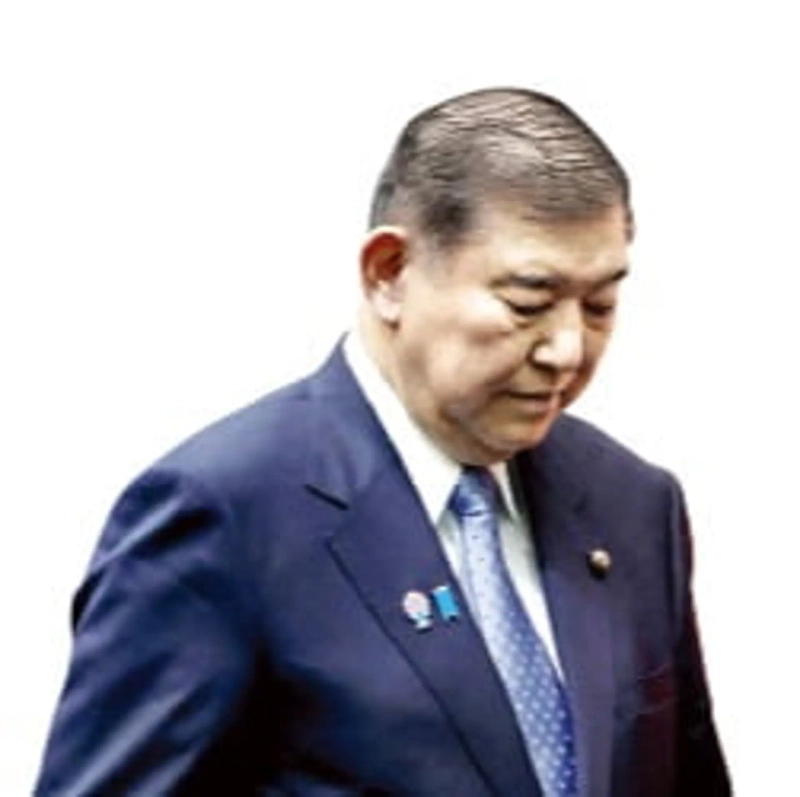
Japan was shocked after receiving a 25% 'tariff letter' from U.S. President Donald Trump. Calls for self-examination over the failure of tariff negotiations are growing. Despite holding seven rounds of negotiations since April this year, the tariff rate is now 1% point higher than was announced in April. In particular, there are voices saying that the largest failure factor was Prime Minister Shigeru Ishiba (pictured) not having an in-depth leader-to-leader conversation in the summit with the U.S., failing to grasp President Trump's true intentions. Japanese media have pointed out the factors behind the failure.
(1) Japan's Obsession with 'Special Treatment'
The first misstep was Japan's insistence on 'special treatment' based on the U.S.-Japan alliance. The first meeting between Prime Minister Ishiba and President Trump was at a summit in Washington, D.C., this February. President Trump did not bring up the tariff issue at the time, and within the Japanese government, there was a mistaken belief that Japan would receive 'special treatment' from the U.S. It was a misstep from the very beginning. The Nihon Keizai Shimbun (Nikkei) reported, "This obsession with special treatment became a misjudgment and led to a deadlock in the negotiations, according to voices within the government."
(2) Misreading Trump's Second-Term Dynamics
Japan also misunderstood the dynamics of Trump's second-term administration. In his first term, President Trump lacked political experience and delegated part of the trade negotiations with Japan to his cabinet members. In his second term, however, President Trump’s influence rose sharply.
Ryosei Akazawa, Minister for Economic Revitalization, visited the U.S. seven times and negotiated with the Treasury Secretary, Commerce Secretary, and USTR representatives, but this did not lead to results. Only later did they realize that the contents of the ministerial-level talks had not been properly conveyed to President Trump. A senior Foreign Ministry official said, "President Trump is a completely different person from when he relied on former Prime Minister Shinzo Abe due to his lack of political experience."
(3) Failure to Grasp Trump's True Intentions
Prime Minister Ishiba was not passive. He held four phone calls with President Trump, and at the June summit in Canada, proposed further cooperation on U.S. investment and economic security. However, President Trump responded, "Present something simpler. This won't do," cutting him off.
During the talks, representatives from both sides debated over agricultural issues, but President Trump supposedly closed his eyes and spoke very little. According to a Japanese government official, "He looked sleepy." The Yomiuri Shimbun wrote, "The biggest failure was the lack of an in-depth conversation between leaders, making it impossible to grasp President Trump's true intentions." There are opinions in the Japanese government that a more straightforward option—such as "eliminating the trade deficit"—may be needed. The method of negotiation needs to be reconsidered.
(4) 'Total Elimination of Tariffs' Backfires
At the tariff policy meeting on the 8th, Prime Minister Ishiba instructed negotiators to keep going, but he avoided using the term 'elimination of tariffs' that he had often employed. From the outset, Japan had anticipated that full elimination of auto, steel, and aluminum tariffs and reciprocal tariffs would be possible.
On the 8th, Takeshi Niinami, chairman of Keizai Doyukai (Japan Association of Corporate Executives), said in a Financial Times (FT) interview, "Insisting on total exemption from tariffs may have made President Trump feel betrayed." He pointed out that the negotiating team should have shown more flexibility. Chairman Niinami also said, "With the House of Councillors (upper house) elections this month, Japan now has less room to close a deal." He further criticized, "Japan’s insistence on protecting the automobile industry without sacrificing rice farmers has undermined former Prime Minister Abe's legacy of warm relations with President Trump."
(5) Past Successes in the First Term Didn't Work
Efforts to replicate successes from Trump's first term negotiations also failed. At that time, the U.S. had just announced its withdrawal from the Trans-Pacific Partnership (TPP). Japan countered by offering to lower tariffs on U.S. beef and pork to TPP levels, successfully sidestepping auto tariffs.
This time, Japan proposed increased U.S. investment, cooperation on shipbuilding and economic security, and importing more agricultural products like corn and soybeans—but various issues like reciprocal tariffs made the situation difficult. The U.S. aimed at opening up the rice market, but with the upcoming election, Japan finds it hard to put rice on the table as a bargaining chip.
Tokyo = Kim Il-kyu, Correspondent black0419@hankyung.com

Korea Economic Daily
hankyung@bloomingbit.ioThe Korea Economic Daily Global is a digital media where latest news on Korean companies, industries, and financial markets.