

PiCK
"Should we just tolerate being looked down upon?"... Countries around the world 'boiling over' at Trump's tariffs [Washington Now by Sang-Eun Lee]
Summary
- It was reported that countries around the world are protesting President Donald Trump's unilateral tariff increases.
- Major countries such as Vietnam, Canada, Japan, and Brazil have expressed astonishment at higher-than-expected tariff rates, and some have begun looking to reduce reliance on U.S. trade and seek new partners.
- It was noted that due to President Trump’s unpredictable tariff policies, uncertainty in trade negotiations is growing, and investors are urged to take a cautious approach.
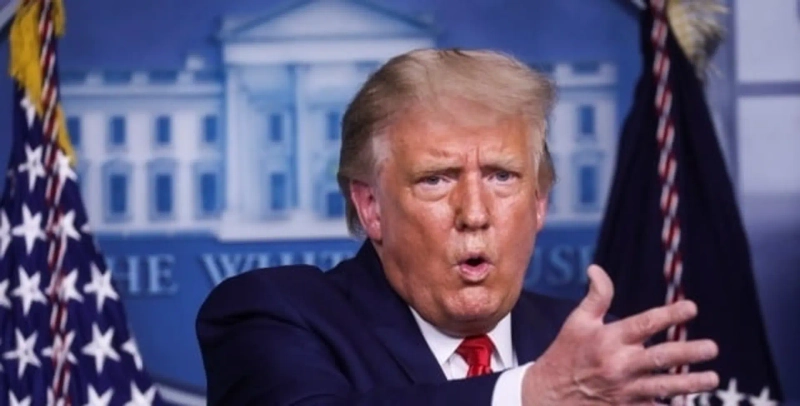
President Donald Trump of the United States is unilaterally deciding and notifying reciprocal tariff rates, which has stirred public opinion in countries across the globe.
The ‘Day of Liberation’ tariff rates, first announced on April 2, were also criticized for being arbitrarily set based on faulty formulas; this new tariff adjustment now incorporates President Trump’s personal judgment. Countries that entered trade talks with goodwill are now caught off guard by the unexpectedly high tariff rates just before the duties are imposed.
There is so much dissatisfaction about the unpredictable tariffs – to the extent that some even say it is pointless to negotiate since nobody knows what the U.S. really wants.
○Vietnam Negotiations Overturned at the Last Minute
On the 10th (local time), President Trump appeared on NBC’s ‘Meet the Press’ via phone and said, regarding the countries that had not yet received letters, "whether it’s 15% or 20%, they will have to pay the tariffs." The previous basic tariff rate was 10%, but he threatened that it could be raised further. He also said that Canada and the European Union (EU) would soon be notified of their tariff rates. After the broadcast, he revealed on social media that he had notified Canada of a 35% tariff rate.
In this interview, President Trump claimed, "the tariffs are being very well received," and mentioned that the U.S. stock market had hit a record high. However, the only countries reportedly to have reached a tariff deal with the U.S. so far are the United Kingdom and Vietnam. The remaining countries are proceeding with negotiations in their own way, but have yet to yield concrete results.
Reports indicate that Vietnam, in particular, has been taken aback by President Trump's unilateral announcement of a deal. On the 2nd, President Trump announced on social media that a 20% tariff would be imposed on Vietnamese exports (40% on circumvented exports) and that the tariff rate for Vietnamese imports into the U.S. would be 0%. However, the Vietnamese government has not publicly commented on these results.
According to Politico, the Vietnamese government was expecting an 11% tariff rate. Negotiations were almost complete until President Trump stepped in at the last minute, changed the terms, and made them public. Even the U.S. side was reportedly surprised by this announcement. The draft agreement with Vietnam obtained by the outlet had contained much more favorable terms for Vietnam.
○Japan: "Should we just tolerate being looked down upon?"
Canada, one of America's closest allies, now faces a 35% tariff rate higher than the previous 25%. Previously, Canada was notified of a 25% tariff due to fentanyl and border issues, but its trade covered by the United States-Mexico-Canada Agreement (USMCA) remains duty-free. The Canadian government stated it would strive to reach an agreement by the 21st. Opposition Conservative leader Pierre Poilievre called Trump’s tariff threats "unjust" and urged unity to defend the Canadian economy.
Within Japan, which along with South Korea was notified of a 25% tariff, increasingly strong remarks are being made. Prime Minister Shigeru Ishiba of Japan stated on the 9th regarding the U.S.-Japan tariff talks, “This is a fight for the national interest,” and questioned, "Should we endure being disregarded?" He implied that although they negotiated in good faith, they were ignored.
After being informed of a 50% tariff rate the previous day, Brazil openly stated it would strengthen alliances with China and other countries instead of the U.S. President Luiz Inácio Lula da Silva of Brazil announced his intention to seek alternative trade partners in place of the U.S. He also said, “We are looking for ways to reduce our dependence on the dollar in international trade and to find new trade currencies with other countries.”
There is growing fatigue regarding President Trump’s aggressive tariff demands and his constantly shifting positions. A Washington lobbyist, referring to the Vietnam talks, told Politico, “President Trump deceived everyone.” Wendy Cutler, vice president of the Asia Society Policy Institute, pointed out, “Even when negotiations are concluded, he leaves room for further changes to the conditions, creating more uncertainty.” Harry Broadman, former deputy U.S. Trade Representative (USTR), commented, “If countries see their negotiated results ignored, they will start asking why they should waste their time dealing with you.”
Washington—Sang-Eun Lee, Correspondent selee@hankyung.com

Korea Economic Daily
hankyung@bloomingbit.ioThe Korea Economic Daily Global is a digital media where latest news on Korean companies, industries, and financial markets.