

PiCK
Markets Hesitant Amid Trump's Broad Tariff Threats... Indices Drop Across the Board [New York Stock Briefing]
Summary
- It was reported that the three major indices on the New York Stock Exchange declined due to former President Trump's announcement of broad tariffs.
- Major tech stocks and crypto-related stocks showed mixed results, with Bitcoin-linked stocks displaying strength.
- Trump's tariff policy, key inflation indicators, and changes in expectations for Fed rate cuts were cited as factors increasing market volatility.
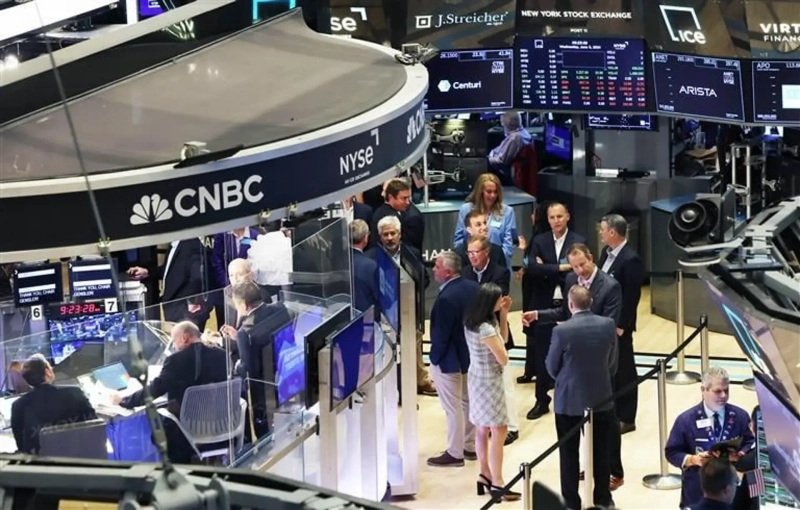
The three major U.S. stock indices on the New York Stock Exchange fell. Risk aversion grew as President Donald Trump announced a 35% tariff on Canada and around 20% on other countries. However, expectations that there is room for negotiation narrowed the declines.
On the 11th (U.S. Eastern Time) at the New York Stock Exchange (NYSE), the Dow Jones Industrial Average closed at 44,371.51, down 279.13 points (0.63%) from the previous session. The S&P 500 Index closed at 6,259.75, down 20.71 points (0.33%), and the NASDAQ Composite Index fell 45.14 points (0.22%) to end at 20,585.53.
On this day, Trump revealed a tariff letter to Canada via his Truth Social account. The letter, addressed to Prime Minister Mark Carney of Canada, set the tariff rate at 35%. A similar tariff letter to the European Union (EU) will be released soon.
Previously, Trump said in a phone interview with NBC that "whether it's 15% or 20%, we will impose tariffs on all other countries, and we are now determining the exact rates," signaling forthcoming broad-based tariffs.
Following this news, the major indices opened lower on the New York Stock Exchange. As bargain hunters bought in, losses were pared by the session's close, but buying sentiment wasn't strong enough to push the indexes back into positive territory. Although there is still time to negotiate before tariffs go into effect on August 1, the fact that most countries will eventually face high tariffs remains a negative for the market.
How high the tariffs will be for the EU is another focus for the market. Given that Trump has consistently called the EU a very tough negotiating partner, talks are likely to proceed slowly. This means a higher risk of steep tariffs.
Next week, the Q2 earnings season begins and the U.S. Consumer Price Index (CPI) along with other major inflation indicators are set to be released. These could further fuel volatility in the market. With Trump imposing tariffs on Brazil and Canada, there have been observations that the Fed may find it harder to cut interest rates.
By sector, all except consumer discretionary and energy were weak. Financials fell by 1%. Among mega-cap tech firms with a market capitalization of $1 trillion or more, the trend was mixed. NVIDIA rose 0.50% and held above the $4 trillion mark in market cap. Amazon, Alphabet, and Tesla also posted gains of over 1%.
On the other hand, Apple, Meta, and Broadcom declined by around 1%. As financials generally underperformed, Visa and Mastercard both fell by more than 2%, while JPMorgan Chase and Morgan Stanley were also slightly lower.
With Bitcoin repeatedly hitting new all-time highs, cryptocurrency-related stocks were strong. Shares of MicroStrategy, the largest corporate holder of Bitcoin, rose 3%, while shares of Bitcoin mining firm Marathon Holdings were also firm. Shares of jeans brand Levi Strauss surged 11% on second-quarter earnings that beat market expectations. British energy company BP climbed 3.55% amid expectations for strong Q2 oil trading results.
Brazilian President Luiz Inácio Lula da Silva emphasized regarding Trump's 50% 'bombshell tariff', "I will fight so that the tariffs imposed by the U.S. on Brazil do not go into effect," adding, "If the tariffs are enforced, we will take corresponding measures."
According to the FedWatch Tool of the Chicago Mercantile Exchange (CME), the federal funds rate futures market reflected a 62.2% probability of a 25bp rate cut in September. Rate cut expectations have dropped compared to the previous day. The Volatility Index (VIX) compiled by the Chicago Board Options Exchange (CBOE) rose 0.62 points (3.93%) to 16.40.
Hye-won An, Hankyung.com Reporter anhw@hankyung.com

Korea Economic Daily
hankyung@bloomingbit.ioThe Korea Economic Daily Global is a digital media where latest news on Korean companies, industries, and financial markets.