

South Korea, Japan, and EU Move Under Trump’s Pressure…"This Time, It’s Real"
Summary
- President Trump announced that major trading partners such as South Korea, Japan, and the EU are opening markets to avoid high tariffs.
- Taiwan has started negotiations to lower its tariff rates, while Japan has remained cautious ahead of its upper house election.
- The White House has increased its pressure, warning that actual tariffs could be imposed on August 1 if an agreement is not reached.
Trump: "Everyone is opening markets to lower tariffs…South Korea wants a deal"
Taiwan begins negotiations to cut tariffs from 32%→15~20%
Japan, ahead of the upper house election, remains cautious despite White House pressure
Nikkei: "Not much time before August 1…Difficult to be optimistic about a deal"
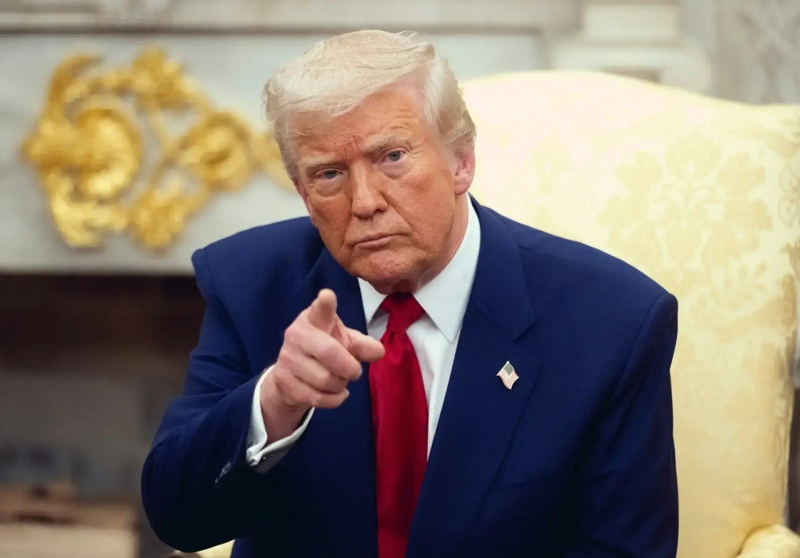
President Donald Trump of the United States stated that major trading partners such as South Korea, Japan, and the European Union are moving to open their markets in order to avoid the high U.S. tariffs. While Taiwan has entered negotiations aiming for tariff rates lower than those of South Korea and Japan, Japan remains reluctant ahead of its upper house election. The White House is increasing its pressure, warning, "If an agreement is not reached, tariffs will truly be imposed on August 1."
On the 13th (local time), President Trump met with reporters at Andrews Joint Base near Washington, D.C., and said, "The EU wants to open up their country," adding, "Japan is much less willing to open its markets; the country exports millions of cars to the U.S. but imports hardly any American cars." He continued, "However, all of them are changing their approach very quickly," and "South Korea wants a deal."
Taiwan, which received a 32% "tariff bomb" notice from the U.S., was reported to have started negotiations targeting a lower rate of 15~20%, compared to South Korea and Japan. After leading the negotiation team as Deputy Minister of Taiwan’s Executive Yuan, Cheng Li-chun returned from talks with the U.S. on the 12th and stated, "Both sides hope to reach an agreement before the tariff implementation date on the 1st of next month, at which point the final result will be revealed."
Local Taiwanese media, including United Daily News and China Times, reported that Taiwan’s state-owned petroleum company, CPC Corporation, Taiwan (CPC), is considering the purchase of U.S. shale gas assets. In March, CPC signed a letter of intent for the purchase and investment in Liquefied Natural Gas (LNG) with the Alaska Gasline Development Corporation (AGDC).
Some analyses see this as a high-risk investment aimed at currying favor with the U.S. CPC has recorded losses for five consecutive years through last year, with accumulated losses reaching NT$69.1 billion (around ₩3.26 trillion).
The Japanese government was reticent in response to President Trump's remarks. Keiichiro Tachibana, Deputy Chief Cabinet Secretary, stated in a press conference on the morning of the 14th, "I will refrain from commenting on specific remarks," and added, "We will energetically seek a mutually beneficial agreement while protecting our national interests." With the House of Councillors election on the 20th, the Japanese government and ruling party are in a situation where it is difficult to actively engage in negotiations with the U.S.
Nihon Keizai Shimbun pointed out, "It is highly likely that any deal will be concluded after the election," and "there is little time left until the 25% reciprocal tariffs on Japan are imposed on the first of next month." The paper further added, "There is no room for optimism about the outcome of future negotiations," and "Japan needs to devise new negotiation cards that may lead to a reduction in the trade surplus with the U.S."
The backdrop of such swift responses by each country is also due to the hardline stance of the White House. Kevin Hassett, Chairman of the White House National Economic Council, said in an interview with ABC News on the 13th that, in response to the question of whether tariff notices were a bargaining chip or an actual measure, "If the agreement does not reach the level the President wants, the tariffs will indeed be imposed."
Reporter Dayeon Lim allopen@hankyung.com

Korea Economic Daily
hankyung@bloomingbit.ioThe Korea Economic Daily Global is a digital media where latest news on Korean companies, industries, and financial markets.