

‘Dollar Coin’ Poised for Global Debut...‘Won Coin’ Still Stagnant
Summary
- It was reported that dollar stablecoins are on the verge of being accepted into the regulatory mainstream in the US.
- In contrast, discussions about won-denominated stablecoins in Korea remain sluggish.
- There are analyses suggesting that using stablecoins for internal corporate transactions could bring significant cost savings.
The Onslaught of Stablecoins
Strong Prospect for US 'Three Crypto Bills' to Pass This Week
Stagnation in Korea Despite Growing Demand
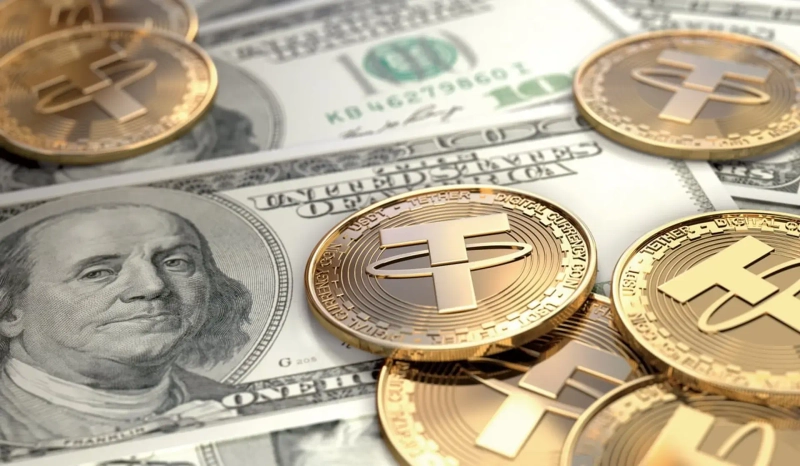
The entry of dollar stablecoins into the regulatory mainstream in the US is imminent. If dollar stablecoins emerge as a key means for international trade transactions and settlements, there are expectations that the impact on the sovereignty of the Korean won will be significant. Although a won-denominated stablecoin is being considered as an alternative, related discussions in Korea are not progressing swiftly.
According to the US Congress on the 14th, the House has designated this week (the 14th to the 18th) as 'Crypto Week,' reviewing three cryptocurrency-related bills. These include the GENIUS Act, a framework for regulating stablecoins; the Clarity Act, which clarifies supervisory authority over digital assets; and a bill that prohibits the Federal Reserve (Fed) from issuing a Central Bank Digital Currency (CBDC). Of these, the GENIUS Act is seen as a turning point, enabling dollar stablecoins to become fully integrated into the global financial market. Fueled by expectations of these bills passing, Bitcoin surpassed $120,000 for the first time ever on this day.
Korea is now in a pressing situation. Last year, over 80% of Korea’s trade transactions were conducted in dollars. Even though about $60 billion worth of transactions are settled in won annually, there are concerns that dollar stablecoins may erode the demand for won-based settlements. Kim Minseung, Director of the Korbit Research Center, commented, “If transactions become faster and cheaper with dollar stablecoins, companies will have little reason to insist on using the won.”
There are also forecasts that the demand for stablecoins will rise in internal company transactions. According to an analysis by Professor Hyunggu Kang, Department of Finance and Management at Hanyang University and advisory member of the National Planning Committee, Samsung Electronics could save more than $100 million annually if it utilizes stablecoins for internal transactions, including those with overseas subsidiaries.
Reported by Mihyun Cho / Hyunggyo Seo mwise@hankyung.com

Korea Economic Daily
hankyung@bloomingbit.ioThe Korea Economic Daily Global is a digital media where latest news on Korean companies, industries, and financial markets.