

PiCK
European Stocks, US Futures Fall on Trump’s 30% Tariff Threats Against EU and Mexico
Summary
- President Donald Trump’s threat to impose a 30% tariff on the EU and Mexico led to declines in US stock index futures and European markets.
- Some experts analyzed that this tariff threat may ultimately be a negotiation tactic, but they also highlighted the resilience of the US stock market.
- A Deutsche Bank official emphasized that the possibility of Fed Chair Powell being dismissed is underestimated, and if it happens, there may be negative impacts on the US dollar and Treasury markets.
Asian Markets Rise Except Japan Thanks to Strong Chinese Exports
This Week: US CPI, Corporate Earnings Announcements, and Continued Pressure on Powell’s Dismissal
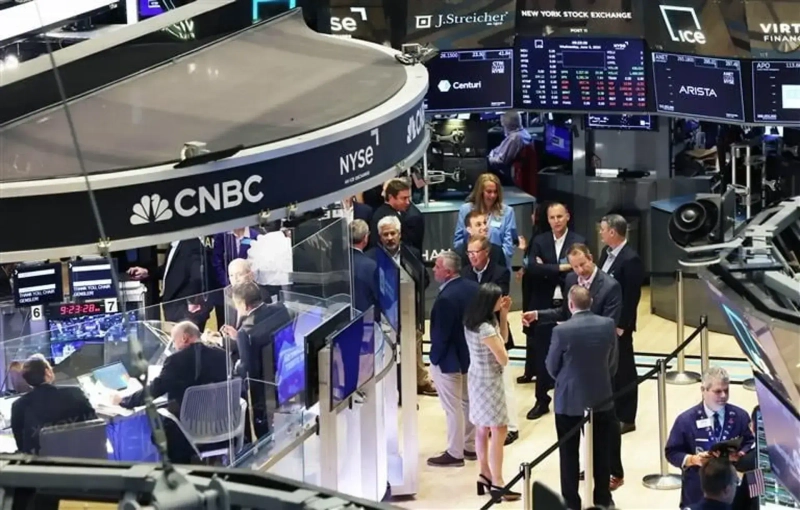
President Donald Trump continued to threaten 30% tariffs on goods from the European Union (EU) and Mexico. On the 14th (local time), both US stock index futures and European stocks declined.
That day, S&P 500 futures dropped 0.5%. Nasdaq futures and Dow Jones Industrial Average futures also each fell 0.5%.
Europe’s broad STOXX 600 index fell 0.6%. The news of robust Chinese exports lifted Asian markets, with the Shanghai Composite Index rising by 0.27% and the Hang Seng Index by 0.26%. The Nikkei 225 fell 0.28%, but Korea’s KOSPI rose 0.8%.
Bitcoin surpassed $120,000 for the first time, climbing almost $14,000 just this month. Silver reached its highest level in 14 years.
The dollar rose 0.1% against major currencies, while the euro fell 0.2% and traded at $1.1667. Japanese long-term government bonds extended losses due to fiscal concerns ahead of local elections.
Last week, Trump announced a 50% tariff on Canada to Brazil, followed by a 30% tariff on the EU and Mexico, putting the resilience of global markets to the test. Nevertheless, investors, recalling Trump’s past actions, expect that he will ultimately back down from the initial tariff rates, which has led US stocks to all-time highs.
Brian Jacobsen, Chief Economist at Annex Wealth Management, pointed out, “Investors should not dismiss Trump’s 30% tariff threats as mere bluster.” He remarked, “Such a level of tariffs is punitive and likely to hit the EU harder than the US.”
In financial markets, stocks and US Treasuries sold off in response to reciprocal tariffs announced on April 2, but since then, as many of the tariff measures were postponed, those sell-offs have largely reversed.
Michael Brown, Senior Research Strategist at Pepperstone, said in a report, “This is clearly a negotiating tactic to worsen the situation.” He noted, “For now, it’s likely a way to force negotiating parties to make bigger concessions in a short period.”
George Saravelos, a strategist at Deutsche Bank, emphasized, “The possibility of Trump dismissing Fed Chair Powell is highly underestimated, and this could trigger major risks, including selling of the US dollar and Treasuries.” Saravelos predicted that, if Trump forcibly removes Powell, the dollar could fall at least 3–4% within 24 hours, and a selloff in Treasuries could lead to 30~40 basis points (1bp=0.01%) surge in yields.
President Trump and his aides have stepped up criticism of Jerome Powell, Fed Chair, and the Fed’s building renovation project since late last week. This is interpreted as an attempt to build justification for removing Powell from the Fed Board. Trump reiterated his criticism of Powell late the previous day, saying Powell stepping down “would be a good thing.”
This week, various economic data, including inflation figures for Europe and the US, will be released. Major companies also begin reporting their Q2 earnings this week. Wall Street is expecting the weakest set of results since mid-2023.
Junga Kim, Guest Reporter kja@hankyung.com

Korea Economic Daily
hankyung@bloomingbit.ioThe Korea Economic Daily Global is a digital media where latest news on Korean companies, industries, and financial markets.