

EU to Strengthen Trade Agreements with Asian Countries Amid US Tariff Threats
Summary
- The European Union (EU) announced plans to strengthen trade agreements with India and Asia-Pacific countries in response to the threat of Trump's tariffs.
- The EU stated that it is preparing additional export control measures and countermeasures worth €72 billion if US tariffs are implemented.
- Goldman Sachs analyzed that if the US 30% tariff is enforced, the Eurozone GDP could cumulatively decrease by 1.2% by the end of 2026.
Seeking Joint Response to Trump's Tariffs
"Partnerships Beyond Negotiations with the US Needed"
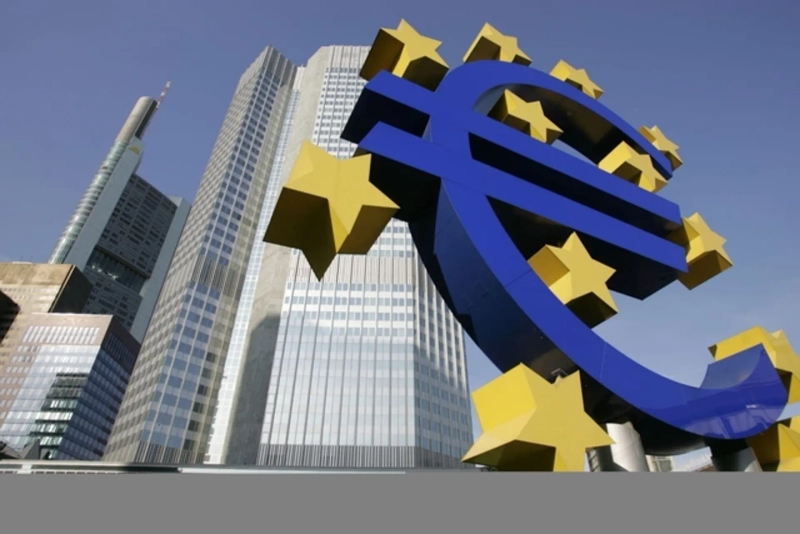
The European Union (EU) is planning to strengthen trade agreements with India and Asia-Pacific nations in preparation for tariffs imposed by Trump.
EU Commissioner for Competition Teresa Ribera said in an interview with Bloomberg TV on the 14th (local time), "We need to consider how far and how deep we go in the Pacific region." Commissioner Ribera emphasized that ongoing free trade agreement negotiations with India by the end of this year are very important.
The EU is stepping up cooperation with other countries affected by tariffs after US President Donald Trump published a letter last weekend threatening a 30% tariff. She stated that while the EU will continue negotiations with the US, it will make further efforts to sell goods to other countries if the tariffs become a reality.
Ribera, Vice President of the European Commission, said, "We will strive to build partnerships with other partners who are willing to uphold the rule of law and have an open mind—namely, other allies around the world."
Next week, an EU-China summit is scheduled, where EU and Chinese leaders are expected to discuss critical issues such as trade and geopolitics. China has pursued strengthening its relationship with the EU, but the EU has expressed concerns over China's overproduction, lack of market access for EU companies, insufficient protection of intellectual property, and China’s support for Russia following the invasion of Ukraine.
Recently, China's new export control measures on rare earth magnets, which have impacted European industries, have also been listed as a grievance for the EU. There has been little progress in resolving disagreements regarding the EU's decision to impose tariffs on Chinese electric car manufacturers, arguing that they have received unfair subsidies.
The previous day, Ursula von der Leyen, President of the European Commission, announced that the trade retaliation measures against the US would be postponed until August 1. This was in response to President Trump's tariffs on steel and aluminum, which were scheduled to take effect starting midnight on the 15th.
According to Bloomberg, existing EU countermeasures affect roughly €21 billion (about ₩33.88 trillion) worth of US goods. The EU is preparing additional countermeasures worth about €72 billion (about ₩116.15 trillion), along with some export control measures, which could be announced to all member states as soon as Monday.
However, President von der Leyen noted that the EU’s most powerful trade instrument, the anti-coercion instrument (ACI), requested by French President Emmanuel Macron, would not be used at this point. She added, "The ACI was designed for emergencies and we have not reached that situation yet." President Macron of France urged swift action, including anti-coercion measures, if an agreement is not reached by August 1 following Trump’s tariff letter to the EU and Mexico.
Economists from Goldman Sachs Group stated that if Trump's proposed 30% tariff rate, along with existing sector-specific tariffs, are implemented, the effective US tariff rate on the EU could rise to 26 percentage points. If these measures are implemented and maintained, it is estimated that the Eurozone GDP could cumulatively decrease by 1.2% by the end of 2026.
They analyzed, "The EU is likely to retaliate progressively against the US 30% tariff, raising the risk of further trade conflicts." Nevertheless, they maintained that Trump’s latest threats are "likely part of a negotiation strategy" and their baseline scenario is that an agreement will be reached for a 10% tariff across all items, and 25% on steel, aluminum, and automobiles.
President Trump has been sending letters to various trading partners—starting with South Korea and Japan—informing them of the new tariff levels and pressuring for additional negotiations. In the letter released last Saturday, Trump warned that if the EU and Mexico fail to reach a better agreement, tariffs of 30% would be imposed starting next month.
Jung-A Kim, Guest Reporter kja@hankyung.com

Korea Economic Daily
hankyung@bloomingbit.ioThe Korea Economic Daily Global is a digital media where latest news on Korean companies, industries, and financial markets.