

"Russia faces 100% tariff if no ceasefire within 50 days"
Summary
- President Trump announced that if a ceasefire in the Ukraine war is not agreed within 50 days, he would impose a 100% tariff on Russian products.
- He also stated an intention to impose secondary tariffs on countries importing Russian oil, especially forecasting direct impact on China and India.
- It remains uncertain whether tariffs will actually be enforced, drawing attention to possible shifts in trade and the global energy market with countries closely tied to Russia.
Trump pressures Putin for ceasefire deal
Secondary tariffs also on Russian oil importers
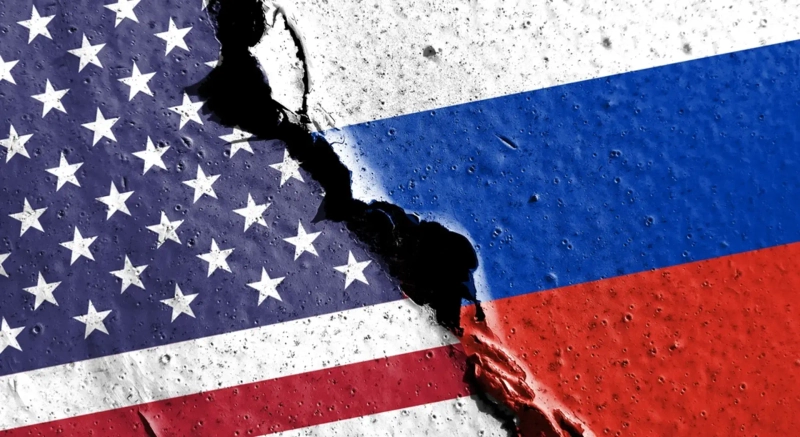
Donald Trump, President of the United States, warned on the 14th (local time) that if Russia does not agree to a ceasefire in the Ukraine war within 50 days, "harsh tariffs will be imposed."
President Trump made this statement during a meeting at the White House with Mark Rutte, Secretary General of the North Atlantic Treaty Organization (NATO). White House officials explained that this means a 100% tariff would be imposed on Russian products and secondary tariffs would also be levied on countries purchasing Russian oil. It is expected that China and India, which import large volumes of Russian oil, will be directly affected.
President Trump also declared that the United States would provide not only defensive weapons such as Patriot missiles to Ukraine, but also offensive weapons. He added, "Today, we signed an agreement with the North Atlantic Treaty Organization (NATO)," and "NATO will bear the costs." The U.S. online media Axios reported that the scale of weapons sold to NATO allies is estimated at about $10 billion. Secretary General Rutte commented on the agreement, saying, "This means Ukraine will be able to acquire large-scale (offensive) military equipment, including air defense systems, missiles, and ammunition."
Observers note that President Trump’s move is a result of disappointment over Vladimir Putin, President of Russia, being passive about a ceasefire in the Ukraine war. Notably, the shift in President Trump’s stance—from being conciliatory toward Russia after taking office to now adopting a hardline approach—is viewed as a pivotal turning point in U.S. policy on the Ukraine war.
Trump pressures for ceasefire with tariffs… ‘Bromance’ with Putin falls apart
On the 14th (local time), President Donald Trump announced not only providing defensive weapons but also offensive weapons to Ukraine and strengthening sanctions against Russia. This has also put cracks in the ‘bromance’ with Russian President Vladimir Putin. As President Trump, who had previously taken a conciliatory tone with Russia, shifts to a hardline strategy, there is growing attention on whether this will alter the course of the Ukraine war.
◇‘Maximum pressure’ on Russia
On this day, President Trump, meeting with Secretary General Mark Rutte of the North Atlantic Treaty Organization (NATO) at the White House, stated, "I am disappointed in President Putin," and complained, "I thought the negotiations would be concluded two months ago, but that hasn’t happened." He continued, "We will produce the world’s best military equipment," and referenced the use of bunker busters against Iranian nuclear facilities.
Since taking office, President Trump tried to pressure Ukraine into negotiating a ceasefire, rebuked President Volodymyr Zelenskyy of Ukraine at the White House, concluded a mineral agreement, and at one point suspended military aid. He believed the war persisted because Ukraine was resisting unnecessarily.
However, despite what seemed like success in pressuring Ukraine, there were still no signs of a ceasefire. Even after hours of talks with President Putin, there was no progress, leading President Trump to switch to maximum pressure. Especially on this day, President Trump stated that unless a peace agreement is reached within 50 days, "severe tariffs" would be imposed—"approximately a 100% tariff, which can be called a secondary tariff," he said.
Europe is already welcoming President Trump's change in stance. Kaja Kallas, the EU's High Representative for Foreign Affairs and Security Policy, said, "It’s very desirable to take a tough stance on Russia." President Zelenskyy wrote on social media, "We are grateful for the willingness to support Ukraine."
However, there is some criticism that President Trump’s 50-day deadline is excessively long. Representative Kallas noted, "Considering that Russian troops are killing innocent civilians every day, 50 days is a very long time." There are concerns that during the next 50 days, Russia may try to expand its occupied territories in Ukraine.
◇Implementation of sanctions is key
The question is whether this pressure will actually have an impact. Since February 2022, when Russia officially began its invasion of Ukraine, the United States and other Western nations have imposed around 25,000 large-scale economic sanctions on Russia. As a result, trade between the U.S. and Russia has sharply declined. According to UN statistics, in 2021, the U.S. imported $30.8 billion worth of goods from Russia, but last year this figure dropped to about one-tenth. The only Russian products the U.S. still imports are cheap fertilizers.
Therefore, although a 100% tariff may seem harsh, in reality, it will be difficult to seriously damage Russia. Last year, the U.S. export volume to Russia was just $526.1 million. Analysts believe President Trump’s mention of secondary sanctions is related to this: In order to put real pressure on Russia, sanctions would need to be imposed on the countries trading with Russia as well. Previously, Senator Lindsey Graham, a pro-Trump Republican, along with Democratic senators, introduced a bill to impose a 500% tariff on products from countries that purchase Russian oil and uranium.
However, implementing secondary sanctions through tariffs is not simple. Russian oil is mainly sold to China (47%) and India (38%). The European Union (EU) and Türkiye each purchase around 6%. It's not easy to levy high tariffs solely on these countries for buying Russian oil or natural gas. The U.S. could also suffer from rising prices as a side effect. Furthermore, ongoing tariff negotiations are progressing slowly for various reasons, and imposing additional tariffs as secondary sanctions could complicate matters further. This could result in mere threats without actual enforcement, or even if imposed, the tariffs might quickly be withdrawn and become a "paper tiger."
President Trump has already pledged a secondary tariff (25%) on Venezuela, but thus far, he has never actually imposed tariffs on countries like China or India that import Venezuelan oil.
By Donghyun Kim / Sang-eun Lee, Washington Correspondent 3code@hankyung.com

Korea Economic Daily
hankyung@bloomingbit.ioThe Korea Economic Daily Global is a digital media where latest news on Korean companies, industries, and financial markets.