

Goldman Sachs and Morgan Stanley: Wall Street Banks Enjoy a Boom in the Second Quarter
Summary
- Goldman Sachs and Morgan Stanley reported significant increases across profits, equity trading revenues, and investment banking fees in the second quarter.
- Market volatility and investor portfolio rebalancing drove equity trading to record highs.
- There are concerns about whether this boom will last, given recent uncertainty over trade policy.
Surge from Early April Lows Driven by Soaring Securities Trading
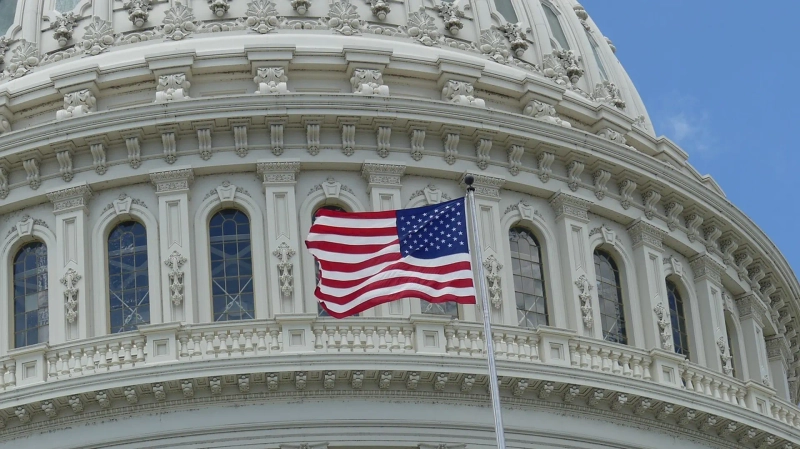
Wall Street investment banks experienced their peak boom in the quarter from April to June, when U.S. markets exhibited extreme volatility.
On the 16th (local time), Goldman Sachs and Morgan Stanley both reported a sharp increase in second-quarter profits. Elevated market volatility drove equity trading revenues to historic highs and invigorated the investment banking sector.
According to Reuters, this was interpreted as a result of investors adjusting their portfolios to manage risks related to tariffs, which led to increased trading activity on Wall Street.
Goldman Sachs posted a 36% surge in equity trading revenues to $4.3 billion, while its fixed income, currency, and commodities division recorded $3.47 billion, up 9% from the previous year. Investment banking fees rose 26% year-on-year to $2.19 billion. Advisory fees also jumped, buoyed by strength in the Americas, Europe, the Middle East, and Africa.
Overall profit for the three months ended June 30 was $3.7 billion, or $10.91 per share—up from $3.04 billion, or $8.62 per share, a year ago.
Morgan Stanley also reported a 23% jump in equity trading revenues and a 9% increase in fixed income revenues for the day.
For the June quarter, the investment bank reported net income of $3.5 billion, or $2.13 per share, up from $3.1 billion, or $1.82 per share, a year earlier.
CEO Ted Pick stated in a release that "strength and balance were achieved across business areas and regions. Asset management continues to deliver results."
Other major banks like JPMorgan Chase and Citigroup, which announced their earnings the previous day, also reported strong results.
The second quarter began with a steep drop in U.S. stocks in early April, after President Donald Trump announced reciprocal tariffs; later, the market rebounded amid tariff suspensions and a trade truce with China. However, increased uncertainty over trade policy in recent weeks has raised concerns about how long this momentum can last.
Jungah Kim, Special Correspondent kja@hankyung.com

Korea Economic Daily
hankyung@bloomingbit.ioThe Korea Economic Daily Global is a digital media where latest news on Korean companies, industries, and financial markets.