

PiCK
U.S. Stock Market Rises on Strong Wall Street Bank Earnings and Moderate Wholesale Price Index
Summary
- Major U.S. banks reported earnings that beat expectations.
- While hopes for rate cuts had declined the previous day, the outlook for a rate cut in September rose slightly amid a modest increase in wholesale prices (PPI).
- Despite Trump’s threats of tariffs on pharmaceuticals and semiconductors, related stocks did not react sharply.
Previously Declining Treasuries Rebound, 10-year at 4.455%
Markets Unfazed by Trump’s Tariff Threats on Pharmaceuticals and Semiconductors
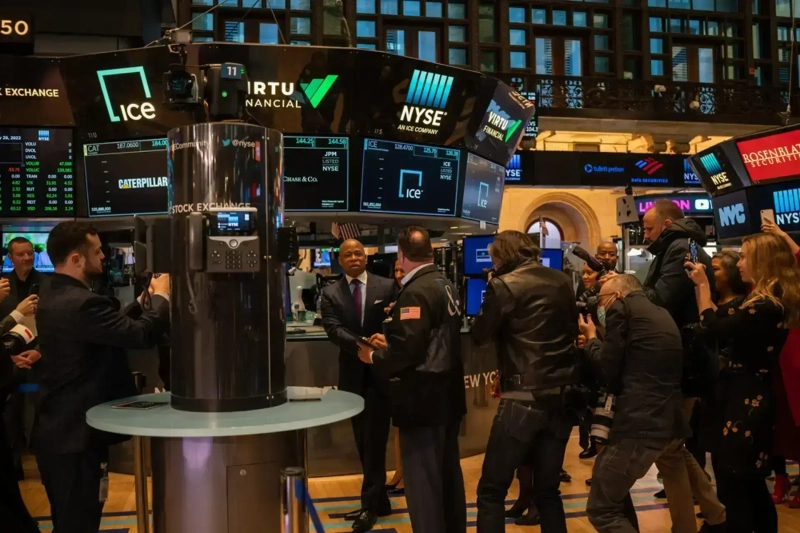
Major banks reported unexpectedly solid earnings and a milder-than-expected Producer Price Index (PPI), leading U.S. stocks to open higher on the 16th (local time) before turning mixed later in the session.
As of 10:20 a.m. Eastern Time, both the S&P 500 and NASDAQ Composite were fluctuating at similar levels to the previous day, while the Dow Jones Industrial Average was up 0.1%.
After the previous day’s Consumer Price Index (CPI) release dampened hopes for rate cuts, U.S. Treasury yields had risen (indicative of selloff), but on this day, the yield dropped by 3 basis points (1bp = 0.01%) to 4.455%.
In the interest rate swap market, expectations for a Federal Reserve rate cut in September slightly increased. According to CME Group’s FedWatch Tool, the odds for a September rate cut, which dropped to 50% after the CPI announcement the previous day, rose to 54% in just one day.
Major banks such as Bank of America, Goldman Sachs, and Morgan Stanley, which announced their earnings before the market opened, each reported better-than-expected Q2 results or record earnings. JPMorgan Chase, Wells Fargo, and Citigroup, which reported a day earlier, also posted quarterly results that exceeded market expectations.
NVIDIA, which surged the previous day, slid 0.3% to trade at $170, while AMD, up 6.4% the day before, was trading around the same level as the previous session. Tesla, which Cathie Wood’s ARK Fund disclosed it bought more of, rose 1.6%. ASML, a semiconductor lithography equipment maker, warned that it might see no revenue growth next year, causing its stock to drop over 10%.
President Trump announced that tariffs would be applied to pharmaceuticals starting August 1. However, the stocks of pharmaceutical importers like Eli Lilly, Pfizer, and Merck, which manufacture abroad and import to the U.S., barely reacted and even rose slightly. Instead, Johnson & Johnson’s better-than-expected sales report and an upward revision of its annual outlook had a greater influence on the market than the tariff news.
The PPI released that day was unchanged from the previous month after the figure for May was revised upward to a 0.3% gain, resulting in an annual rate of 2.3%. A steep decline in travel-related service costs offset higher goods prices, resulting in a moderate overall increase.
Jamie Cox of Harris Financial Group said, "As long as the labor market remains strong and resilient, there’s little chance for rates to drop meaningfully—which is a positive sign."
President Trump reiterated his tariff threats on pharmaceuticals and semiconductors and also announced a new trade agreement with Indonesia. The agreement includes a 19% tariff on Indonesian exports, zero tariffs for U.S. industrial goods exported to Indonesia, and the sale of Boeing aircraft.
Jung-A Kim, contributing reporter kja@hankyung.com

Korea Economic Daily
hankyung@bloomingbit.ioThe Korea Economic Daily Global is a digital media where latest news on Korean companies, industries, and financial markets.