

Summary
- The GENIUS Act passed by the US House of Representatives stipulates the incorporation of stablecoins into mainstream regulatory frameworks and mandates strong reserve asset requirements for issuers.
- With the possibility of large institutional investors in America, such as retirement pensions, being able to invest in stablecoins and virtual assets, significant capital movement is expected to be triggered in global financial markets.
- The spread of stablecoins is expected to strengthen dollar hegemony and increase demand for Treasuries, though concerns remain over potential systemic risks and instability in foreign exchange markets.
Stablecoin Onslaught
US 'Virtual Asset 3 Laws' Pass Congress
Stablecoin Incorporated into Mainstream Regulation
Retirement Pension Investment Also Likely To Be Allowed
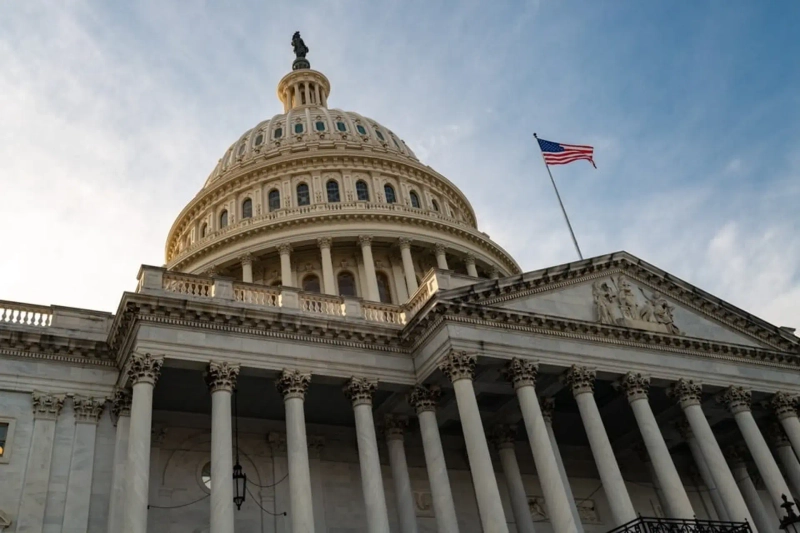
The so-called 'Coin 3 Laws', which include provisions bringing stablecoins into regulatory frameworks, were passed by the United States House of Representatives on the 17th (current time), putting them on the verge of legalization. Cryptocurrencies, which had been treated as non-mainstream assets in financial markets, have now been elevated to mainstream investment assets.
On this day, the House of Representatives passed the 'GENIUS Act', regulating stablecoins within legal frameworks, with 308 votes in favor and 122 against. The core of the bill is making it mandatory for stablecoin issuers to deposit an amount equivalent to the issued coins in stable assets like US dollars or short-term US Treasuries. The GENIUS Act successfully passed the Senate on the 17th of last month, and has now cleared the House within a month. President Donald Trump has declared, "I will make the United States the world’s cryptocurrency capital," and Congress has now passed the law to support this proclamation. President Trump will sign the bill into law on the 18th.
The House also approved the 'Clarity Act' — classifying cryptocurrencies as securities — with 294 votes in favor and 134 against, and the 'Anti-CBDC Surveillance State Act', which prohibits the Federal Reserve from issuing central bank digital currencies (CBDCs), with 219 votes in favor and 210 against. Not only the ruling Republicans, but also a significant number of Democratic lawmakers, voted in favor. However, some members criticized the legislation, claiming that it "plants the seeds for the next financial crisis."
The Financial Times (FT), citing sources familiar with the matter, reported that President Trump may sign an executive order as early as this week that would allow Americans to invest their individual retirement accounts (401K) in assets other than traditional stocks and bonds, including cryptocurrencies, gold, and private equity funds (PEF). If major institutional investors, such as pension providers, include cryptocurrencies in investable assets, it is expected to bring about a seismic shift in global financial markets.
Treasury Demand Creation, Strengthening Dollar Hegemony…Stablecoin is 'America’s Big Picture'
Historic Turning Point for Digital Assets…Coin Run → Global Liquidity Squeeze

The passage of legislation regulating stablecoins in the US is likely to go down as a historic milestone in global financial and monetary order. It is expected to trigger a structural transformation not only for the institutionalization of virtual assets, but also for global capital flows and the international payments system. In particular, as dollar hegemony expands into the digital realm, there are predictions that this will profoundly affect the monetary sovereignty of various countries.
◇ Stablecoin Enters Official Regulation
The 'GENIUS Act', passed by the House of Representatives on the 17th (local time), is America’s first federal-level law regulating the issuance conditions, reserve management, and disclosure requirements for stablecoins pegged to legal tender like the US dollar. It restricts issuance of stablecoins to bank subsidiaries or specially approved institutions and makes it mandatory to hold reserves equivalent to the total issuance amount. The law also provides regulatory mechanisms to ensure market trust, such as requiring annual audit reports by accounting firms.
The greatest significance of this law is that the dollar stablecoin has secured legal legitimacy as a 'digital dollar'. As 99% of stablecoins used around the world are pegged to the dollar, the dominance of the dollar is expected to become even more solid. The Financial Times (FT) evaluated that "the institutionalization of dollar stablecoins will expand the dollar’s role in the global payments network into the digital environment, making it pivotal to maintaining global dollar leadership."
◇ A New Source of Demand for Treasuries
Stablecoins are also seen as a trump card for alleviating the US’s astronomical debt problems. The lack of buyers for Treasuries has been a major concern for the US, as countries like Japan and China have been reducing their holdings. If this persists, Treasury yields rise and the US government’s interest burden increases. According to the GENIUS Act, stablecoin issuers must hold reserves equivalent to the total issuance amount in safe assets, such as cash or US Treasuries maturing in less than 93 days. This means a foundation has been created for the private sector, in addition to foreign governments, to absorb US Treasuries. In fact, US Treasury holdings by major stablecoin issuers like Tether (USDT) and Circle (USDC) exceed $180 billion, far surpassing the holdings of South Korea ($125.8 billion). US Secretary of the Treasury Scott Besant stated, "If stablecoins become more active, demand for Treasuries could expand to around $2 trillion."
While it presents opportunities for fintech, it could pose risks for traditional banks, as stablecoins may replace banks’ primary functions such as remittance and payments. The GENIUS Act prohibits the payment of interest on stablecoins, aiming to prevent a 'money move' (capital shift) from bank deposits to stablecoins. However, stablecoins offer the advantages of 24-hour transfers and low transaction fees. Minseung Kim, head of the Korbit Research Center, predicted, "existing banks’ non-interest income streams could be encroached upon."
◇ Emerging as a Systemic Risk
Some believe that yet another systemic risk has arisen in the global financial market. If trust in stablecoin issuers breaks down or rumors spread in the market, a 'coin run' (mass withdrawal event) could occur, resulting in a large volume of Treasuries being dumped onto the market. In this scenario, Treasury yields would surge, causing a liquidity shock throughout the global financial system.
In South Korea, it has emerged as a real variable for FX liquidity management and macroeconomic policy. As dollar stablecoin transactions proliferate, cross-border capital flows disconnected from banks and the FX market may become more frequent, undermining exchange rate stability and making monetary policy less predictable. In times of crisis, the speed and scale of capital flows could go beyond controllable limits, significantly weakening the government’s ability to respond. There are also concerns that 'dollarization'—the replacement of the won with the dollar—will accelerate. If dollarization proceeds rapidly in emerging economies, it is expected that dollar strength in the FX market will become structurally entrenched.
Washington, D.C. = Sangeun Lee, Correspondent / Mihyun Cho, Reporter selee@hankyung.com

Korea Economic Daily
hankyung@bloomingbit.ioThe Korea Economic Daily Global is a digital media where latest news on Korean companies, industries, and financial markets.