

Earn Rental Income in Dubai and Tokyo with an Investment of Hundreds of Thousands of Won…A Paradigm Shift [Kim Yongnam's Real Estate Asset Management]
Summary
- It was reported that tokenization investments using blockchain and cryptocurrency are actively being carried out in the global real estate market—especially in Dubai, Japan, and the US.
- Investors can participate in high-end real estate with small amounts, enjoying both liquidity and transparency through the distribution of rental income and real-time trading.
- However, investors should be aware of variations in each country’s tax laws and digital asset classification, as well as potential technical and security risks, and should thoroughly verify all relevant information beforehand.
Hankyung.com The Moneyist
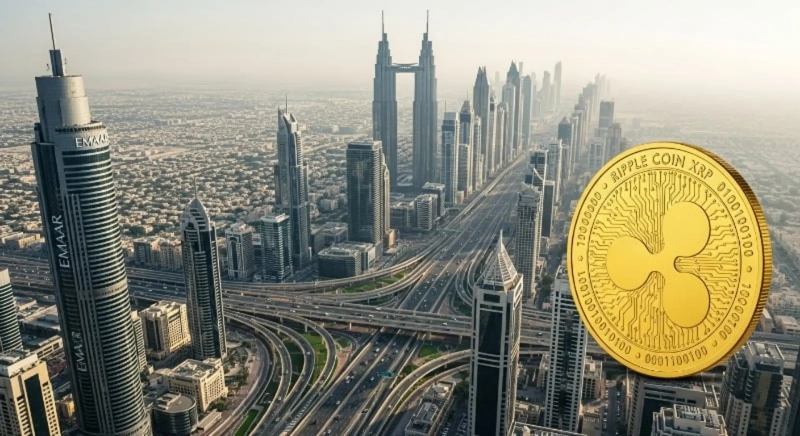
The global real estate market is undergoing a quiet revolution. This is because cryptocurrency and digital technology are transforming not only payment methods but also the processes of trading and owning real estate itself. In key markets such as Dubai, Japan, and the United States, cases of dividing and trading real estate as digital assets are rapidly increasing.
Blockchain technology and cryptocurrencies are shattering long-held notions in the real estate market. Dubai, led by the government, Japan with its institutional foundation, and the United States through private sector innovation, are ushering in a tokenization investment market by dividing physical assets into digital pieces.
Real estate tokenization is a method of converting ownership or income rights of real estate into a digital format, enabling anyone to invest by acquiring fractions, much like slices. In the past, access to premium real estate required tens or hundreds of millions of won, but now it is possible to invest in properties around the world with just hundreds of thousands of won. The digital method allows for automatic income distribution and real-time 24-hour trading, providing both liquidity and transparency to investors.
At the heart of this change is Dubai. By May 2025, the scale of Dubai's digital real estate transactions had already exceeded $18 billion (about ₩25,083,000,000,000). The Dubai Land Department has established a system that divides ownership of physical real estate and enables seamless trading for all using a blockchain-based platform. With the 'Prypco Mint' project driven by Ripple and Ctrl Alt, investors can own a portion of high-end real estate and receive a share of rental income for as little as a few hundred thousand won. This is particularly noteworthy as it operates under a clearly defined regulatory framework led by the government.
Japan is also moving swiftly. Real estate investment firm GATES Inc. plans to sequentially tokenize its assets—starting with luxury properties in central Tokyo valued at $75 million (about ₩104,500,000,000)—and open up ownership of approximately $20 billion (about ₩27,870,000,000,000) in assets to global investors. In 2020, the Japanese government revised the Financial Instruments and Exchange Act to include digital assets under institutional oversight, and the current market size has reached about ¥140 billion (about ₩1,310,000,000,000). Tokenization based on such institutional foundations is creating easier paths for foreign investors to access the Japanese market.
The US is also undergoing rapid change in digital asset-based real estate transactions. In California, there are plans to sell luxury multifamily residences worth $12 million (about ₩1,600,000,000) using Bitcoin and digital dollars, and Detroit-based platform RealT allows investment in small and medium-sized housing from $50. To date, over 65,000 investors have received more than $24 million (about ₩3,300,000,000) in rental income, earning an annual stable return of 6-16%.
This global trend opens up new opportunities for investors. Dubai’s commercial assets, residential properties in Tokyo, and the short-term rental market in the US each have different revenue structures, enabling diverse portfolio construction. In addition, with just one digital wallet, anyone can now participate in overseas real estate investment without complex paperwork or legal consultation.
Caution is also needed. Tax laws vary by country, and tax burdens may differ depending on the classification of digital assets. As technical errors or security threats have not been fully eradicated, investors need to thoroughly verify information in advance.
South Korea is also showing signs of change. Certain platforms are increasingly offering fractional investments in small and medium-sized buildings in Seoul and the capital area, and the government is preparing for full-scale market entry by refining relevant regulations.
Ultimately, real estate tokenization signifies a fundamental transformation in asset trading. The key is now ‘trust’, and the value of real estate is no longer assessed solely by area or location—it is entering an era where properties can be traded transparently and fairly from anywhere in the world. This appears to mark a significant paradigm shift for investors.
<Hankyung.com The Moneyist> Kim Yongnam, CEO & President of GlobalPMC Co., Ltd.
"The views expressed by outside contributors do not necessarily reflect the editorial direction of this publication."
Reader inquiries: thepen@hankyung.com

Korea Economic Daily
hankyung@bloomingbit.ioThe Korea Economic Daily Global is a digital media where latest news on Korean companies, industries, and financial markets.