

EU Scrambles for Tariff Talks With United States...Prepares for Retaliation if No Agreement Is Reached
Summary
- The United States has warned of tariffs up to 30% on EU exports and is maintaining high tariffs, particularly for key sectors like automobiles and steel.
- The EU has stated it could accept an asymmetrical agreement in trade talks with the United States, but if talks break down, swift retaliatory tariffs and countermeasures are being prepared.
- Depending on the outcome, significant effects are expected for both countries' import/export industries, especially in automobiles, aviation, and semiconductors.
EU Seeks to Expand Quota Exemptions for Automobiles, Aviation, Steel, and More
FT: "United States Considering 15~20% Tariffs on EU; Maintains 25% on Automobiles"
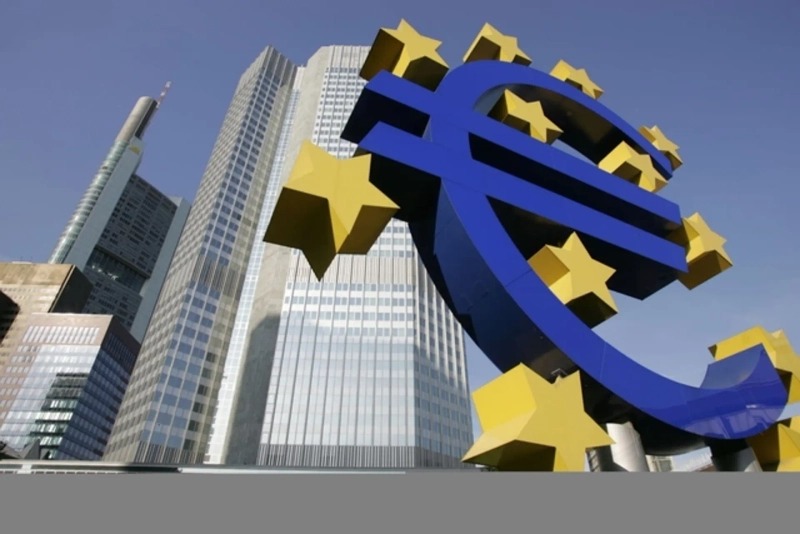
The European Union (EU) and the United States will enter into intensive negotiations this week in an effort to finalize a trade deal. At the same time, reports indicate that preparations are underway for retaliatory measures in the event the negotiations end in failure.
According to foreign news sources on the 21st (local time), EU officials have indicated a willingness to accept unbalanced agreements in favor of the United States in order to break a deadlock before the deadline. Meanwhile, EU envoys are reportedly set to prepare contingency measures for failure in an upcoming meeting as early as this week. President Donald Trump is said to be taking a hardline stance as the deadline approaches.
French Finance Minister Éric Lombard, ahead of a business meeting in Paris, stated, "If a balanced agreement with the United States cannot be reached, we have the right to take balanced measures to protect the EU’s interests."
Speaking on the condition of anonymity, a source with direct knowledge of the closed-door discussions noted that the United States is currently imposing universal tariffs of over 10% on nearly all EU products, and that exemptions for aircraft, certain medical devices and generic drugs, alcoholic beverages, and specific manufacturing equipment critical for the United States are being gradually decreased.
Both sides are also discussing potential export caps in select sectors, quotas for steel and aluminum, and ways to protect supply chains from major sources of metal oversupply. The source added that even if a deal is reached, President Donald Trump's personal approval will be necessary, with the outcome still unclear.
Earlier this month, President Donald Trump sent a letter to the EU, warning that 30% tariffs would be placed on most EU exports starting August 1. He previously imposed 25% tariffs on automobiles and auto parts and 50% tariffs on steel and aluminum. Trump further threatened to impose new tariffs on pharmaceuticals and semiconductors early next month and recently announced a 50% tariff on copper. The EU estimates that the existing tariffs announced by the United States already cover approximately 70% of its exports to the US, amounting to €380 billion (about ₩615 trillion).
EU officials said that the EU has been demanding broader exemptions than those offered by the United States and anticipated that any agreement would be asymmetrical, favoring the US. However, they also noted that rapid retaliatory measures will begin to be prepared if no agreement is reached.
In response to US steel and aluminum tariffs, the EU has already approved tariffs on $21 billion (€21 billion/₩34 trillion) worth of American products, although implementation has been postponed. These tariffs specifically target politically sensitive US states, including agricultural products such as soybeans from Louisiana, the home state of House Speaker Mike Johnson, as well as poultry and motorcycles.
Additionally, to counter reciprocal tariffs and auto tariffs, the EU has prepared an additional list targeting $72 billion (€72 billion/₩116.3 trillion) worth of American products, which includes a ban on imports of Boeing aircraft, American automobiles, and Bourbon Whiskey. Beyond tariffs, the EU is also exploring potential measures such as export controls and restrictions on public procurement contracts.
US Secretary of Commerce Howard Lutnick expressed confidence in an interview with CBS on Sunday that a deal with the EU will succeed. He added, "All countries will realize that opening their markets to the United States is preferable to paying significant tariffs."
Last weekend, the Financial Times (FT) reported that President Donald Trump is pushing for the imposition of at least 15% to 20% tariffs on EU imports as part of negotiations, and that the 25% tariff on the automobile sector will be maintained. The Wall Street Journal and Bloomberg both reported over the weekend that EU member states have expressed growing support for tougher countermeasures, which are seen as the bloc's most powerful trade weapon. The European Commission is being empowered to take wide-ranging retaliatory action against the United States.
Contributing journalist Kim Jeong-ah kja@hankyung.com

Korea Economic Daily
hankyung@bloomingbit.ioThe Korea Economic Daily Global is a digital media where latest news on Korean companies, industries, and financial markets.