

US to Focus More on High-Quality Negotiations Than a Deal by August 1... Seeking Greater Concessions?
Summary
- US Treasury Secretary Scott Besant stated he is focusing more on achieving high-quality negotiations than on a deal by August 1.
- The US has signaled it is demanding greater concessions from its negotiating partners.
- A bill proposing up to a 100% secondary tariff on Russian oil is reportedly enjoying bipartisan support in Congress.
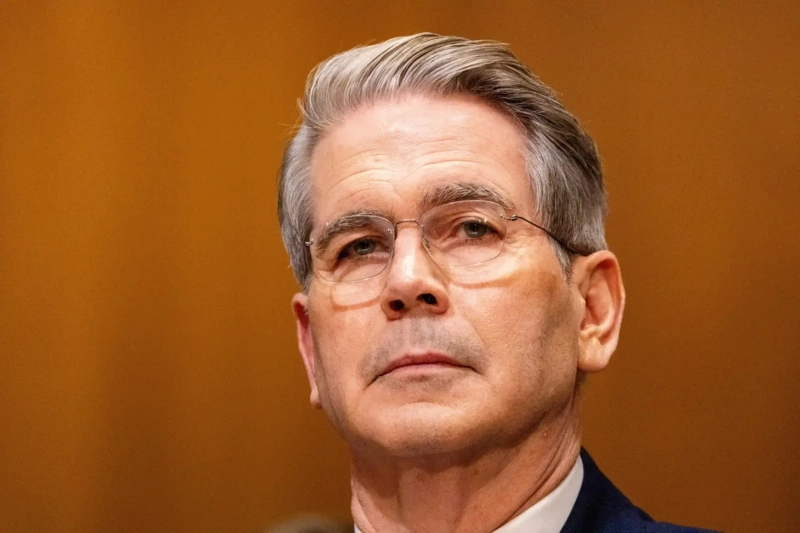
US Treasury Secretary Scott Besant stated on the 21st (local time), "We are more focused on achieving high-quality negotiations than on simply concluding a deal by August 1."
Appearing on CNBC's 'Squawk Box', he remarked, "We are proceeding with negotiations swiftly, but we will not rush just for the sake of negotiations." As major figures such as National Security Advisor Wi Sung-rak and Deputy Prime Minister Koo Yoon-chul have visited Washington, D.C. for talks, the US has conveyed a message that it expects greater concessions from negotiation partners, including South Korea.
Secretary Besant, while discussing the progress with major countries, said, "In these kinds of negotiations, surplus countries are affected more than deficit countries like the United States," and assessed, "Tariff levels have a greater impact on counterparts such as the European Union (EU), and they tend to seek faster negotiations." He added that negotiations with the EU, a bloc of 27 member countries, "started off slowly, but are gradually becoming more engaged."
After visiting the Osaka Expo in Japan, Secretary Besant mentioned meeting Japanese Prime Minister Shigeru Ishiba and Minister for Economic Revitalization Ryosei Akazawa, but said, "We did not discuss trade." He emphasized, "The US priority is not the internal affairs of the Japanese government, but rather achieving the best negotiation outcome for the American people." He drew a line, saying that the Japanese government refusing to concede on key issues due to domestic opposition is solely their own problem.
Regarding China, he said the US is "in a positive position" in negotiations, noting that "additional talks are scheduled in the near future, and issues such as China’s large-scale purchases of sanctioned items from Iran and Russia can be discussed." He also referred to bipartisan support in Congress for a bill imposing up to a 100% secondary tariff on any country purchasing sanctioned Russian oil, stating, "The US Senate agreed with President Trump’s use of tariffs for political purposes." He called this a "revolutionary change" and urged allied nations in Europe to follow suit with secondary tariffs. The main buyers of Russian oil are China, India, and Turkey.
Washington = Sang-eun Lee, Special Correspondent selee@hankyung.com

Korea Economic Daily
hankyung@bloomingbit.ioThe Korea Economic Daily Global is a digital media where latest news on Korean companies, industries, and financial markets.