

"Jensen Huang Surpasses Tim Cook and Musk in Influence in Washington"
Summary
- NVIDIA CEO Jensen Huang is reported to be rising as the most politically influential business leader in the Trump administration’s second term.
- CEO Huang is said to be driving the AI revolution and skillfully navigating both the U.S. and Chinese markets, strengthening NVIDIA’s position.
- However, it is pointed out that if the Trump administration’s semiconductor export restrictions continue, it is uncertain how long NVIDIA’s business and influence can be sustained.
"Exercising political skill while adeptly navigating between the U.S. government and Chinese market"
Tim Cook lost power during Trump’s first term, and Musk ended his association
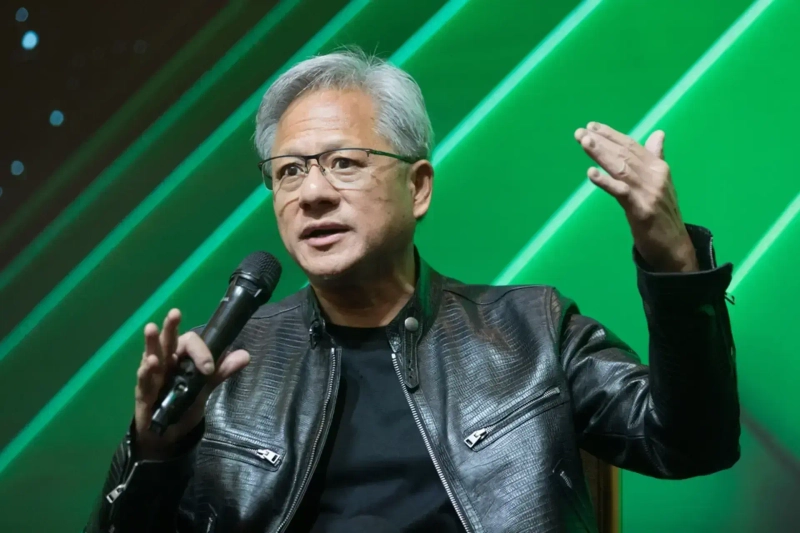
Jensen Huang, CEO of NVIDIA, is emerging as the most influential business figure in the Trump administration’s second term. He is being recognized for his image as an innovative entrepreneur leading the AI revolution and for his political acumen, skillfully maneuvering amid trade tensions between the U.S. and China.
According to CNBC on the 22nd (local time), Jensen Huang, the CEO of NVIDIA, is surpassing the influence that Apple’s CEO Tim Cook and early second-term Elon Musk had during Trump’s first administration.
During Trump’s first term and the U.S.-China trade war, Apple’s Tim Cook managed to avoid tariffs on iPhones produced in China and imported into the U.S. At that time, Cook successfully convinced Trump that imposing tariffs on Chinese iPhones would give an advantage to Samsung Electronics’ smartphones, which aren’t made in China, in the U.S. market. As a result, Cook also gained a reputation as America’s business envoy to Beijing.
However, in the second Trump administration, Apple gave up its position as America’s most valuable company to NVIDIA. Technology experts also note that Jensen Huang’s charismatic leadership is now surpassing Cook in terms of political influence.
Dan Ives, an analyst at Wedbush Securities, said, "Chairman Huang has become a global figure through his success in the AI revolution, and he’s also taken on a new political role." Ives also stated, "Huang, who possesses the only chip driving the AI revolution, is in a very advantageous position to navigate political circumstances."
Last week, Jensen Huang announced during a visit to Beijing that sales of the H20 chip, an AI chip tailored for China, would soon resume there.
In April, after the Trump administration banned exports of the H20 chip to China, CEO Huang has been lobbying publicly. Shortly before visiting China, Huang met with President Trump in Washington, D.C.
Ives called the resumption of H20 chip exports a "historic victory for NVIDIA and Jensen Huang," adding, "It shows Huang’s increasing political influence within the Trump administration."
Jensen Huang has met with President Trump several times this year, and in May, he also accompanied him on a Middle East tour. During this trip, NVIDIA signed a large-scale AI contract to supply hundreds of thousands of advanced AI chips to the United Arab Emirates.
After visiting the Middle East, Huang argued that U.S. semiconductor export restrictions to China were a "failure" and warned that they erode America’s technological leadership while benefiting Chinese companies.
Paul Triolo, head of technology policy at DGA-Albright Stonebridge Group, mentioned in an interview with CNBC that Huang’s views align with those of David Sacks, head of AI and cryptocurrency at the White House. He said, "Both Sacks and Huang have argued that restricting U.S. tech exports to China will only encourage Chinese companies to use domestic alternatives."
When Trump won the November presidential election and was inaugurated for his second term, many expected that Elon Musk of Tesla, who operates the largest factory in China, would serve as a bridge between the two countries. However, Musk publicly severed ties with Trump after June.
Tim Cook also drifted apart from the Trump administration in the second term. Even though Apple announced a $500 billion investment in the U.S. in February, Trump still suggested that tariffs could be imposed if iPhones weren’t manufactured domestically. Trump’s trade policy advisor, Peter Navarro, also criticized Cook for moving iPhone production out of China too slowly.
Triolo said, "Huang is navigating between the U.S. government and Chinese market quite adeptly," and "President Trump seems to be a big fan of his," but added that it is not yet clear how far the Trump administration will draw the line on semiconductor export controls.
Reva Goujon, director at Rhodium Group, added, "NVIDIA has shifted from being a main target of chip export controls to a major influencer, but how long this will last remains to be seen."
The U.S. is currently conducting a broad investigation into semiconductors, aiming to impose tariffs across the sector. This sets up another confrontation between the goals of the Trump administration and NVIDIA’s business interests. While major suppliers like TSMC are expanding domestic manufacturing, most production remains outside the U.S.
Contributing journalist Kim Jung-ah kja@hankyung.com

Korea Economic Daily
hankyung@bloomingbit.ioThe Korea Economic Daily Global is a digital media where latest news on Korean companies, industries, and financial markets.