

U.S. Tariff Rates Becoming More Predictable… '15%', '20%', '40%'
Summary
- The final tariff rate range for the U.S.'s major trading partners has mostly been set at 15%, 20%, and 40%.
- It was noted that countries like South Korea and Taiwan still face the risk of tariffs on major items such as semiconductors and pharmaceuticals.
- With tariff rates for Asian countries remaining higher than past levels, companies are advised to consider ways to minimize the impact on sales, such as restructuring supply chains.
South Korea faces '15%' challenge, with tariffs on semiconductors and pharmaceuticals also on the table
Southeast Asian region trends toward approximately 19~20%
Tariffs on semiconductors and pharmaceuticals remain a risk factor
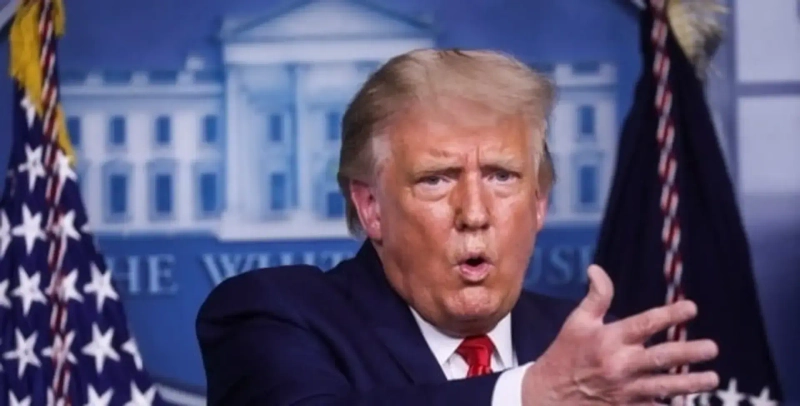
The overall outline of U.S. tariffs on Asia is becoming clearer as the U.S.-Japan trade agreement has been concluded. As recently as April, mutual tariffs between the U.S. and China surged as high as 145% and 125%, and tariffs for some Asian exporters reached 50% during the early tariff war—but the situation has since shifted to something more predictable.
In final negotiations with major trading partners ahead of the August 1 deadline, President Trump’s agreed-upon tariff range was usually 15%, 20%, or 40%. The UK agreed to 10%, but given that the UK has a trade deficit with the U.S., this is considered a special case.
15%
In the trade agreement announced by the U.S. and Japan on the 23rd (local time), tariffs on Japanese goods, including automobiles, were set at 15%. The U.S. halved the existing 25% tariff on Japanese cars to 12.5%. Including the base tariff of 2.5% that was in place before Trump’s tariff war, this totals 15%. Contrary to his previous uncompromising stance on sectional tariffs, President Trump agreed to a significantly reduced rate in the negotiations with Japan. This was largely due to Japan offering a massive investment package of $550 billion (about ₩758 trillion) in the U.S., far exceeding initial expectations. Automobiles account for the largest share of Japan’s trade surplus with the U.S.
Since South Korea and the EU, where negotiations have yet to be concluded, also count automobiles among their primary exports, this is set to become a benchmark. For South Korea, a tariff higher than 15% on automobiles could put its competitiveness in the U.S. market at a disadvantage. The same goes for the EU. It is expected that the EU will strongly resist any tariff rate higher than that imposed on Japan, its biggest competitor in the auto sector.
The U.S. auto makers known as the Detroit Big 3 are opposing the 15% duty on Japanese cars. Since cars and parts imported from Canada and Mexico—where their supply chains are primarily located—face a 25% tariff if they don’t meet the criteria of the USMCA (United States–Mexico–Canada Agreement), this leaves them at a disadvantage compared to Japan.
However, this could open the door for Canada and Mexico to push for a 15% lower tariff on non-USMCA compliant cars and auto parts in the future.
19% and 20%
Previously, President Trump set a 19% tariff in a deal with the Philippines, matching the rate he agreed on with Indonesia two days earlier. Vietnam, the first Asian country to sign a trade agreement with the U.S., had a 20% tariff.
According to Bloomberg, this suggests that most Southeast Asian trading partners such as Malaysia and Singapore may see tariffs in the 19% to 20% range.
40%
President Donald Trump announced that, beyond the standard 20% tariff on Vietnam, a 40% tariff would be levied on transshipped goods from third countries. Although China was not explicitly named, the move targets the frequent use of countries like Vietnam as transshipment points to disguise the Chinese origin of exports. Thus, the 40% is seen as something of a guide number for products from China under U.S. consideration.
U.S. Treasury Secretary Scott Besant stated that he would hold a third round of talks in Stockholm next week with Chinese officials to discuss extending the tariff truce and broadening the negotiations. Recently, the U.S. relaxed export restrictions on AI chips for China, and China resumed rare earth exports. Relations between the U.S. and China are steadily stabilizing.
Nevertheless, because U.S. trade war tensions are largely motivated by a desire to keep China’s massive export economy and its technological ambitions in check, tariffs on Chinese products are expected to remain higher than those on most other Asian countries.
Bloomberg recently pointed out that tariffs on individual items remain a risk for Asian countries.
The Trump administration is still reviewing the imposition of tariffs on a range of sectors—including semiconductors and pharmaceuticals—separately from reciprocal tariffs. This may significantly affect countries with large semiconductor and pharmaceutical export volumes, like South Korea, Taiwan, and India. In South Korea, major exports such as semiconductors, which are already exposed to sectoral tariffs, have been joined by pharmaceuticals, whose U.S.-bound exports are rising.
With a high ratio of U.S. auto exports and sharing negotiation issues like agricultural market opening and defense cost sharing, South Korea finds itself under pressure to achieve results on par with Japan’s in negotiations.
As the tariff levels start becoming more defined, companies with complex Asian supply chains and significant U.S. market exposure are starting to look for ways to minimize the impact on their sales.
As with Trump’s first trade war in 2018, recent tariff announcements are expected to further encourage companies to shift production bases out of China. China’s average tariff rate remains the highest in Asia.
Although tariff rates on Asian countries are lower than the threats President Trump made in April, they are still much higher than before he took office.
Barclays analysts stated in a report, “Recent agreements continue the trend of tariff rates moving into the 15%~20% range preferred by President Trump as a uniform tariff,” adding that this is likely to dampen GDP growth projections for Asia.
Contributed by Kim Jeong-a, guest reporter kja@hankyung.com

Korea Economic Daily
hankyung@bloomingbit.ioThe Korea Economic Daily Global is a digital media where latest news on Korean companies, industries, and financial markets.