

Buying Homes With Cryptocurrency: Global Real Estate Markets Accelerate Integration of Virtual Assets
Summary
- It was reported that virtual assets and tokenization are being rapidly adopted in the global real estate market.
- It was stated that the use of virtual assets as collateral assets for real estate transactions and mortgages is becoming mainstream in Dubai, the U.S., and Australia.
- On the other hand, it was noted that Korea’s lack of legal and institutional foundations will likely delay market entry for investors.
Acceleration of Virtual Asset Integration in Real Estate Markets
Tokenized Transactions in Dubai… U.S. and Australia Recognize as Collateral
Korea Needs Legal and Institutional Adjustments
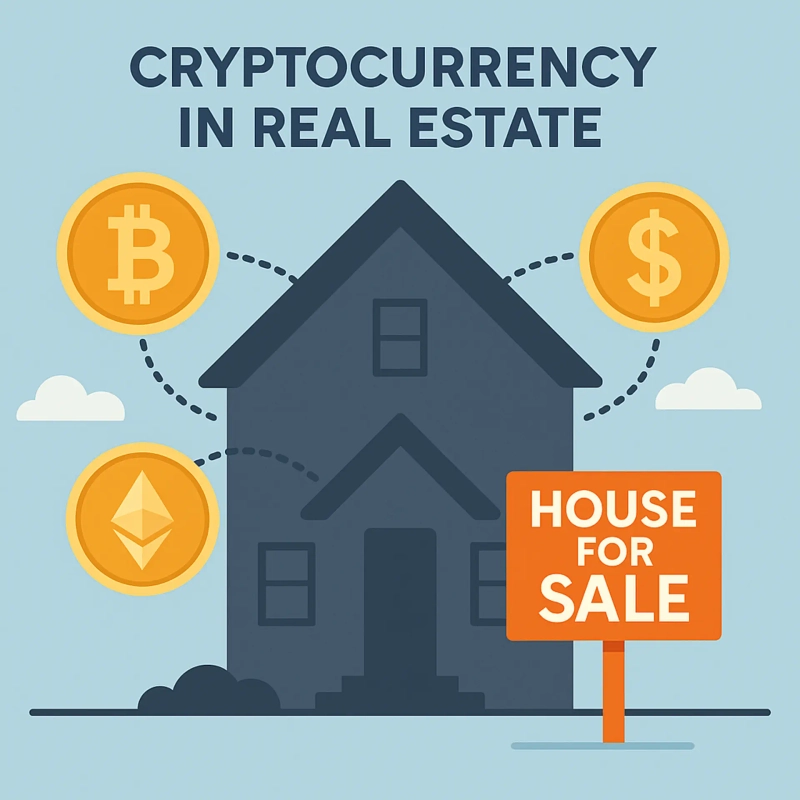
The integration of virtual assets (cryptocurrencies) into the global real estate market is accelerating. Dubai has permitted tokenized real estate transactions, and the United States has begun to recognize virtual assets as collateral for mortgages. In Australia, a Bitcoin mortgage product has been launched. In contrast, Korea is still struggling to keep up with this trend due to inadequacies in the legal and institutional foundations for virtual assets.
'Real Estate Tokenization' in Dubai… 'Crypto Mortgages' in the U.S. and Australia

The Dubai Land Department announced earlier this month that it would collaborate with the global cryptocurrency exchange Crypto.com to create an environment enabling real estate transactions using virtual assets. Through this partnership, both parties aim to advance real estate tokenization technologies and accelerate the development of virtual asset-based real estate platforms.
This collaboration is considered an extension of the Government of Dubai’s 'Real Estate Tokenization Project.' Dubai's regulatory authority for virtual assets, Virtual Assets Regulatory Authority (VARA), provided regulatory clarity in May for the launch and trading of tokenized real estate. Following this, the Dubai Land Department (DLD), the Central Bank of the United Arab Emirates (UAE), and the Dubai Future Foundation jointly launched the real estate transaction platform 'Prypco Mint.'
Dubai’s real estate tokenization policy has resulted in increased transaction volumes across the entire real estate market. According to The Real Estate report, last month’s real estate transaction volume in Dubai reached 64.68 billion dirham (approx. $17.7 billion, around ₩24 trillion), representing a 13.5% year-on-year increase. As of the third week of July, the share of off-plan (pre-sale) transactions reached 66.4%, indicating a shift in the market toward sale-type assets with high tokenization potential. Scott Thiel, co-founder of Tokenvest, commented, "The increase in transaction volume in Dubai’s real estate market owes itself to innovative technologies such as tokenization."
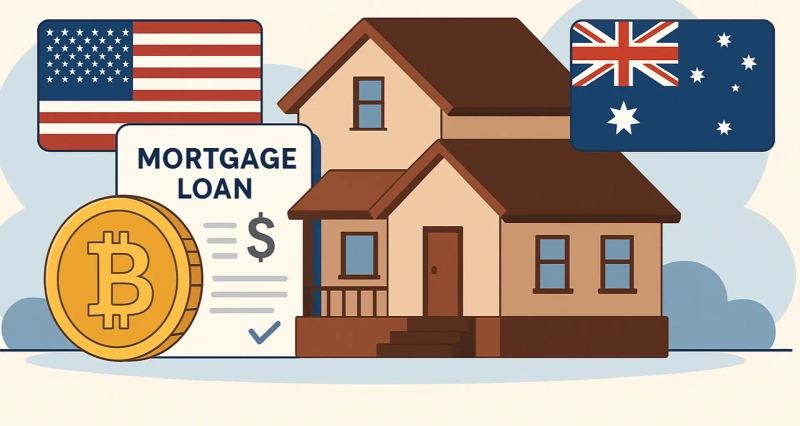
The United States has also taken steps to incorporate virtual assets into its real estate market. At the end of last month, the Federal Housing Finance Agency (FHA) directed government-sponsored mortgage institutions Fannie Mae and Freddie Mac to recognize virtual assets held by borrowers as assets during mortgage evaluations. These institutions assess income and assets to guarantee mortgage loans, and previously, borrowers had to liquidate their virtual assets to have them recognized as assets.
On July 17, Australian virtual asset lending firm Block Earner launched the country’s first 'Bitcoin mortgage.' Block Earner was able to introduce this Bitcoin-backed mortgage product—without a separate license—after winning a legal battle against the Australian Securities and Investments Commission (ASIC) that lasted more than two years.
Institutional Gaps in Korea…"Legal Grounds Needed"
Debates on institutionalizing virtual assets are ongoing in Korea; however, it seems that it will take considerable time before virtual assets are incorporated into the real estate market. While legislative discussions are underway in the National Assembly concerning the Basic Act on Virtual Assets, tokenized securities (STOs), and stablecoins, legislation focusing on real-world asset tokenization (RWA) still lags behind.
Kim Hyo-bong, an attorney at Taepyeongyang, stated, "In Dubai, real estate tokenization is operated within a regulatory sandbox. This has enabled the creation of a separate ownership entity and a legal structure linking token ownership to property ownership," adding, "On the other hand, Korea’s regulatory sandbox is limited to temporary regulatory relaxations and thus falls short of allowing a new system to be designed or fully revamped as in Dubai."
He also mentioned that although Korean financial authorities do not currently recognize virtual assets as collateral, existing regulations do not explicitly prohibit it, meaning future adoption is possible. Kim added, "If there are policy changes at the government level in the future, virtual assets could also be recognized as collateral," emphasizing the need for clear government guidelines. He continued, "It is necessary to develop detailed standards, such as recognizing only a certain proportion of market value as collateral while taking volatility into account when evaluating virtual assets as owned assets."

Suehyeon Lee
shlee@bloomingbit.ioI'm reporter Suehyeon Lee, your Web3 Moderator.