

EU Says 'Trade Imbalance Must Be Corrected'...Xi Jinping Responds 'Not China's Fault'
Summary
- At the recent summit, the EU demanded that China correct the trade imbalance between the two sides.
- China emphasized the openness of the trade and investment market, asserting that the EU's challenges are not caused by China.
- There were no tangible results in resolving trade issues such as tariffs, rare earth controls, and public procurement restrictions between the two sides.
Summit held to mark 50 years of diplomatic relations...Differences in views on key issues such as trade and security
Even traveling all the way to Beijing...
Also accepted China's request to change venue
EU committed significant effort to talks with Xi Jinping
Will conflicts deepen after the summit?
EU sought to resolve rare earth controls and anti-dumping tariffs, among others
No resolution, only confirmation of differences
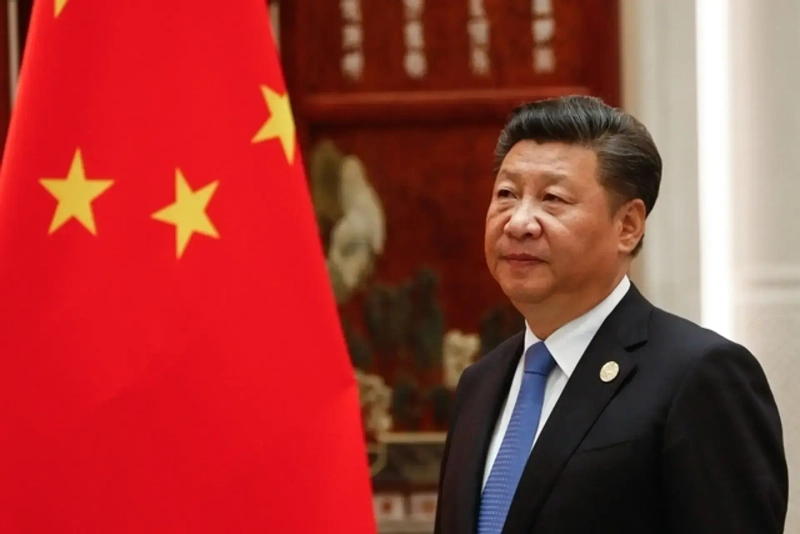
China and the European Union (EU) held a summit for the first time in one year and seven months, but revealed differences on issues such as trade and security. The EU demanded, "The trade imbalance with China is severe, and it must be corrected." China responded, "The challenges Europe faces do not originate from China," urging the EU to "make the right choice." This is analyzed as pressure against the EU to side with China rather than the United States amid ongoing US-China conflict.
China-EU differences apparent from the outset
According to the Xinhua News Agency on the 24th, China and the EU held a summit at the Great Hall of the People in Beijing that day. Representing China was President Xi Jinping, while the EU was represented by António Costa, President of the European Council, and Ursula von der Leyen, President of the European Commission. President Xi stated, "The relationship between China and the EU stands at another important historical intersection," and that "faced with a global situation intertwined with historic changes and turmoil unseen in a century, the leaders of China and Europe must once again demonstrate insight and responsibility, respond to the expectations of their peoples, and make the right strategic choices capable of withstanding the test of history."
He added, "China and Europe are constructive forces advocating multilateralism and open cooperation," emphasizing, "the graver and more complex the international situation gets, the more both sides should strengthen communication, boost mutual trust, and deepen cooperation." He continued, "The challenges Europe currently faces do not originate from China," and, "There is no fundamental conflict of interest or geopolitical rivalry between the two sides; cooperation outweighs competition, and consensus exceeds disagreement."
Despite the EU’s efforts toward China
President von der Leyen said, "Bilateral relations are at a turning point," and "trade and other imbalances must be readjusted." She added, "As our cooperation has deepened, the imbalances have also grown," concluding, "because we have reached a turning point, it is essential to rebalance relations between the two sides."
President Costa called upon China to exert influence over Russia in order to end the Russia-Ukraine war. He stated, "As a permanent member of the United Nations Security Council, China should exercise its influence over Russia so that Russia respects the UN Charter and brings an end to the war in Ukraine."
This year marks the 50th anniversary of diplomatic relations between China and the EU. Over the years, both sides have traveled back and forth for summits. Originally, this meeting was supposed to be held in Brussels, Belgium, where the EU headquarters is located. However, at China’s request, the venue was changed to Beijing. It is known that the EU agreed to this change since President Xi was reluctant to travel abroad and it was expected that the Premier would attend instead. This shows how much effort was put into the meeting.
Growing China-EU trade disputes
Currently, China and the EU have been embroiled in conflicts regarding various issues. On the 4th, the Ministry of Commerce of the People's Republic of China announced it would impose anti-dumping tariffs of 27.7~34.9% on EU brandy for the next five years. Last month, it also decided to extend the anti-dumping probe on EU pork, which had been initiated earlier, until December of this year. Last year, the EU raised issues regarding subsidies for Chinese electric vehicles, deciding to impose tariffs of up to 45.3%.
There are many other disputes beyond tariffs. China’s control over rare earths is considered an urgent issue for the EU. The two sides are also clashing over public procurement. Last month, the EU barred Chinese companies from bidding for medical device public procurements over €5 million (about ₩7.9 billion) and restricted the proportion of Chinese-made components in winning bids to under 50%. In response, earlier this month, China declared that if central or local governments spent over 45 million yuan (about ₩8.5 billion) on medical devices, EU companies would be barred from participating, instituting retaliatory measures.
President Xi pointed out, "I hope Europe maintains openness in its trade and investment markets and refrains from using economic and trade regulatory tools that could be restrictive, so that Chinese companies can invest and conduct business in Europe in a supportive business environment."
The fundamental gap in stances remains unbridged due to trade deficits. Last year, the EU recorded a trade deficit of €304.5 billion with China. The deficit grew by 67% compared to four years prior.
Although there were expectations that this summit, marking the 50th anniversary of diplomatic relations, would serve as a major turning point for improving China-EU relations, continued trade disputes have recently lowered expectations. In fact, it is said that there were few tangible outcomes from the summit. The EU leaders' visit to China was also shortened from two days to one.
There are also analyses that differences over the Russia-Ukraine war led the EU to take a harder stance against China. The EU believes that China has not criticized Russia’s responsibility for the war, but rather has provided indirect support by exporting drone parts, among other means.
Beijing = Eunjeong Kim, Special Correspondent / Juwan Kim, Reporter kej@hankyung.com

Korea Economic Daily
hankyung@bloomingbit.ioThe Korea Economic Daily Global is a digital media where latest news on Korean companies, industries, and financial markets.