

PiCK
"Perhaps Korea is thinking, 'Oh, what should we do,' and will come to my office today"
Summary
- "With the '2+2 ministerial meeting' between Korea and the U.S. postponed, it was reported that trade negotiations, especially concerning automobile tariffs, have emerged as a key issue."
- "It was stated that if Korea cannot secure similar terms as Japan, after Japan agreed with the U.S. on tariff reductions and investments, Korea may lose competitiveness in exports to the U.S."
- "There is an analysis that the U.S. side may use Korea’s impatience in the negotiations, and that the capability of the Korean negotiation team is now being tested."
Howard Lutnick, U.S. Secretary of Commerce, Interview with CNBC
"Korea, like Europe, is very eager to conclude negotiations
Koreans likely uttered expletives upon hearing the Japan deal"
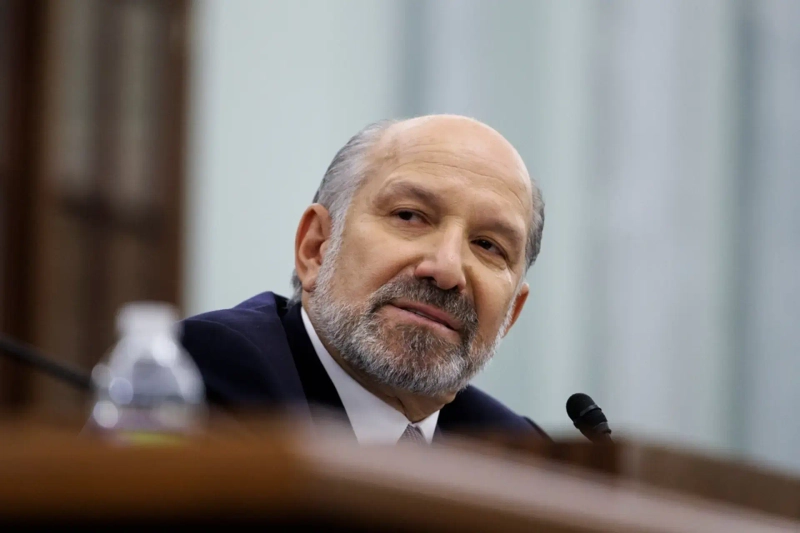
As the '2+2 ministerial meeting' between Korea and the U.S. in the economic and trade sectors has been postponed, on the 24th (local time) Kim Jeong-gwan, Minister of Trade, Industry and Energy of South Korea, and Yeo Han-gu, Deputy Minister for Trade Negotiations, will meet with Howard Lutnick, U.S. Secretary of Commerce, in Washington, D.C.
The negotiation takes place just one day after Scott Besant, U.S. Secretary of the Treasury, postponed the meeting due to scheduling issues. Secretary Lutnick said in a CNBC interview that "today, Koreans will visit my office regarding trade."
Lutnick added, "Korea, like Europe, is very, very eager to close a deal, and when Korea read about the Japan deal, you could hear expletives coming from the Koreans," noting that "Korea and Japan are wary of each other." He went on, "So you can imagine what Korea must have been thinking when they saw Japan reach a deal. They probably thought, 'Oh, what should we do,' and of course, Korea will come to my office today to talk."
Earlier, Japan promised $550 billion in investment into the U.S. and agreed to lower existing mutual and automobile tariffs from 25% to 15% in exchange for opening up its automotive and rice markets. In particular, since autos are a major export to the U.S. for both Japan and Korea, if Korea cannot negotiate tariffs down to at least the same level as Japan, Korean car companies may be disadvantaged in U.S. exports compared to their Japanese competitors.
This suggests Secretary Lutnick might be able to leverage Korea's sense of urgency. Even when Secretary Besant unilaterally notified Korea via email that the '2+2 meeting' was postponed, the U.S. began creating an atmosphere that could make the Korean negotiation team feel intimidated.
The U.S. Treasury said, "Secretary Besant's bilateral meeting with Korea is being rescheduled due to a scheduling conflict and the Secretary looks forward to soon meeting with his Korean counterpart." However, there are concerns that the U.S. may have abruptly postponed the negotiations due to dissatisfaction with Korea's proposal.
Secretary Besant is scheduled to attend U.S.-China trade negotiations in Stockholm, Sweden, on the 28th–29th, and as of the 25th, his other commitments are still unclear. Park Jong-seo, reporter.

Korea Economic Daily
hankyung@bloomingbit.ioThe Korea Economic Daily Global is a digital media where latest news on Korean companies, industries, and financial markets.