

PiCK
'Bedlam' in Nepal… Stablecoins and other virtual assets surge amid political turmoil
Summary
- It reported that due to political turmoil and social media blocks in Nepal, virtual assets have emerged as a major payment method.
- Protesters are using Bitcoin and Tether (USDT) and other stablecoins on P2P trades and decentralized exchanges (DEXs).
- About 4.5% of Nepal's population own virtual assets, and the utility of stablecoins is highlighted during political instability.
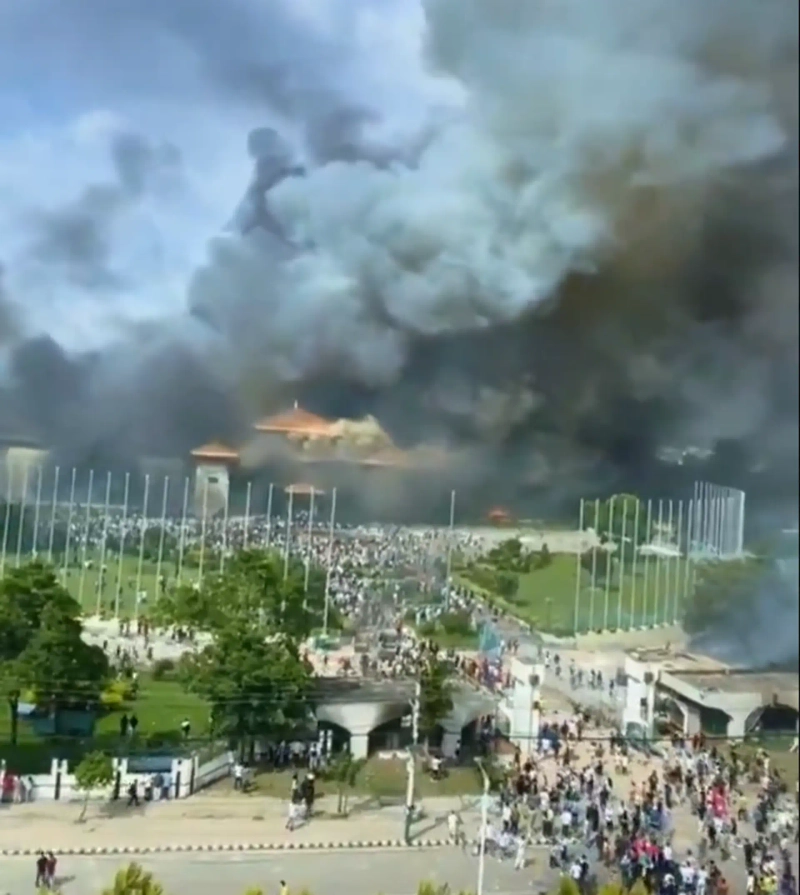
In Nepal, as large-scale anti-government protests spread nationwide after the government blocked access to social media, virtual assets (cryptocurrencies) are emerging as a major payment method.
On the 16th (Korean time), TheStreet reported that amid intensifying anti-government protests in Nepal, protesters are using virtual assets including Bitcoin (BTC) and Tether (USDT), a stablecoin (a virtual asset whose value is linked to fiat currencies), for transactions instead of banks.
During the protests, posts for buying and selling Tether were confirmed to have been uploaded on various communities such as Telegram and Reddit, and they mainly traded Tether through P2P transactions or decentralized exchanges (DEXs).
Although the Nepal central bank completely banned virtual asset trading in 2022, virtual assets still appear to be used among Nepalis. According to AAA Research, as of 2024, out of Nepal's total population of 30.9 million, approximately 1.4 million, or about 4.5%, were found to own virtual assets.
Jeong Seok-mun, director of the Prestori Research Center, said, "The Nepal situation is a clear example that demonstrates the utility of stablecoins," and explained, "If political systems fail, blockchain-supported solutions can become a lifeline."

Uk Jin
wook9629@bloomingbit.ioH3LLO, World! I am Uk Jin.