

"Buy it and you'll make money" Retail investors flock... swept up 400 billion won worth
Summary
- Individual investors reportedly net-bought 426 billion won worth of gold on the KRX Gold Market over the past month.
- It reported that gold prices are hitting record highs day after day due to the U.S.'s possibility of additional rate cuts and geopolitical conflicts.
- Experts forecast that gold prices could rise to $4,000–$5,000 per troy ounce next year.
Nearly 230 billion won invested in gold ETFs
Gold prices repeatedly hitting record highs
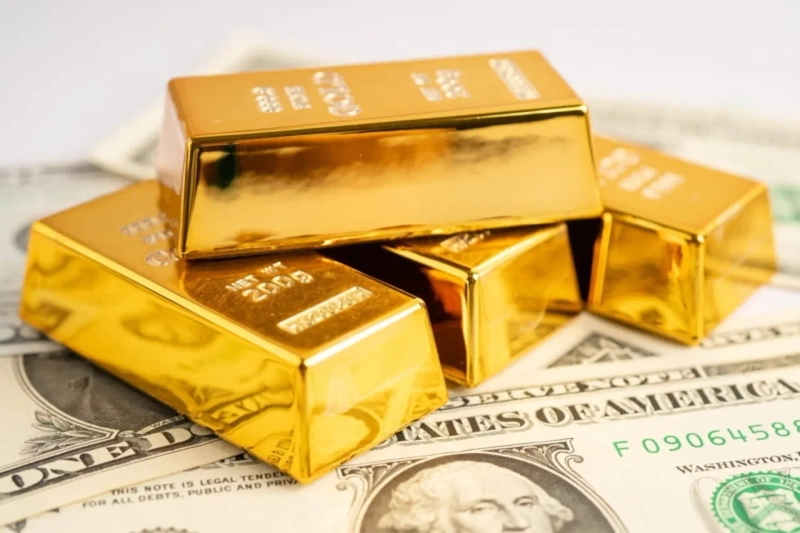
Domestic investors are increasing investments in gold-related products. As gold prices jumped amid the possibility of additional rate cuts by the U.S. central bank (Fed) and the Trump administration's uncertain tariff policies, funds are concentrating on gold.
On the 24th, according to the Korea Exchange, individual investors net-bought 426 billion won worth of gold on the 'KRX Gold Market' over the past month. Institutions also bought 342 billion won. Investment money is pouring into gold exchange-traded funds (ETFs) as well. Over the same period, the third and fifth largest net purchases by individual investors were the 'ACE KRX Gold Spot' (127.8 billion won) and 'TIGER KRX Gold Spot' (101.3 billion won) ETFs, respectively. Returns during this period were 16.97% and 17.16%, outperforming the KOSPI index (8.14%) return over the past month. Net buying by individuals on the KRX Gold Market was 26 billion won in July, 85 billion won in August, and jumped to 411 billion won this month. This accounts for more than half — 54.28% — of the total individual net purchases (899 billion won) in the first half of this year.
U.S. rate cuts are pushing up gold prices. Gold typically becomes more attractive when interest rates fall because yields on bonds and deposits decline. Investors are closely watching whether further rate cuts will occur within the year. According to the CME's FedWatch tool, the federal funds futures market currently reflects a 77% probability that the policy rate will be cut by 50bp by December. This is a slight rise from 75.4% at the close of the previous trading day. Steven Myron, the new Fed director regarded as one of President Trump's economic advisers, recently stated that the policy rate is excessively high and should be cut aggressively.
Geopolitical conflicts such as the Russia-Ukraine war, the Israel-Hamas clash, and the Myanmar civil war are also pushing up gold prices. The Trump administration's uncertain tariff policies since taking office have also increased interest in gold. According to the '2025 Central Bank Gold Holdings Survey' conducted by the World Gold Council (WGC), 95% of officials from 73 central banks worldwide expect global gold holdings to increase this year.
Meanwhile, gold prices are on a strong run. On the 23rd (local time), the December gold futures price on the New York Mercantile Exchange (COMEX) closed at $3,815.70 per troy ounce. It rose 1.07% from the previous trading day, setting another record high. Jim Wyckoff, senior analyst at Kitco Metals, said, "With geopolitical tensions such as the Russia-Ukraine war unresolved, demand for safe-haven assets is increasing," and added, "Expectations of further Fed cuts are further supporting gold prices."
Experts believe the upward trend in gold prices will continue for some time. Deutsche Bank predicted that next year gold could surge to $4,000 per troy ounce. Goldman Sachs judged that if the Fed's independence is undermined, gold could rise to as much as $5,000 per troy ounce. In its base scenario, it expects gold to reach $4,000 per troy ounce by mid-2026, and in a 'tail risk' scenario, to rise to $4,500. It calculated that if individual investors sold 1% of their government bonds and bought gold, prices could reach $5,000 per troy ounce. That would be 30% higher than current prices.
Reporter Jo Ara rrang123@hankyung.com

Korea Economic Daily
hankyung@bloomingbit.ioThe Korea Economic Daily Global is a digital media where latest news on Korean companies, industries, and financial markets.