

Finally under Trump's pressure… China gives up developing-country special treatment
Summary
- It reported that China announced it will give up developing-country special treatment at the WTO, signaling that it will take a more conciliatory stance in trade negotiations with the United States.
- China said it will maintain developing-country status but will not seek additional special treatment.
- Experts interpreted China's decision as a strategic judgment to avoid U.S. criticism and to accelerate trade negotiations.
Li Qiang "Will not seek WTO special treatment"
A step to remove obstacles in negotiations with the U.S.
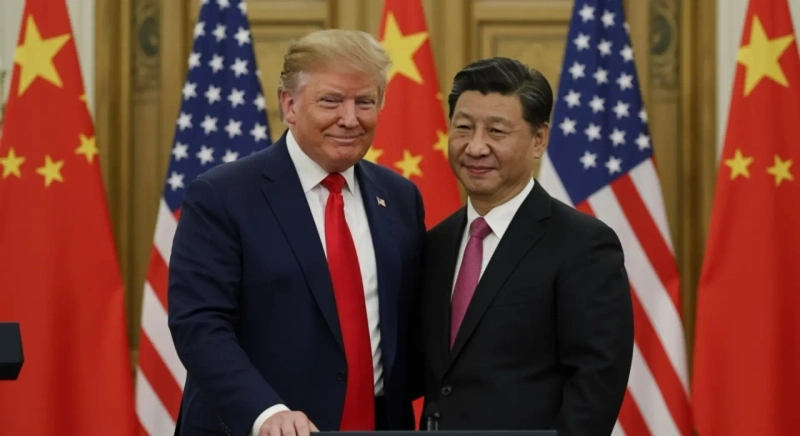
China has decided to abandon the special treatment granted to developing countries in World Trade Organization (WTO) negotiations. It is six years since U.S. President Donald Trump demanded during his first term that China give up its developing-country status. This is a conciliatory gesture sent ahead of trade negotiations with the United States.
On the 24th, according to China's Xinhua News Agency, Li Qiang, who was visiting the United States to attend the UN's 80th anniversary special assembly, said at a high-level meeting of the Global Development Initiative (GDI) held in New York the previous day, "We will no longer seek new special and differential treatment in all current and future WTO negotiations."
Li Chenggang, China's Ministry of Commerce representative for international trade negotiations and vice minister, said in an official briefing that "this is an important statement of position issued externally with both domestic and international situations in mind." However, he said that China's "developing-country status" has not changed and that it will work with relevant countries to pursue WTO reform.
The WTO provides various special and differential treatments (SDT) to developing countries, such as deferred implementation of rules, relaxation of trade liberalization obligations, technical and financial assistance, and agricultural protection. There are more than 150 benefits that developing countries can enjoy. However, there is no official criterion for developing-country status. The structure allows member countries to declare or relinquish developing-country status themselves.
The Trump administration pressured China to give up its developing-country status starting in 2019, during Trump's first term, arguing that China was engaging in unfair trade by relying on developing-country benefits. China's decision to give up developing-country benefits now — after resisting the Trump administration's pressure — is interpreted as a signal that it will take a more conciliatory approach in trade negotiations with the United States. Reuters reported that it was "a decision that came after the U.S.'s broad imposition of tariffs and sanctions on China, which intensified U.S.-China trade conflicts." Ngozi Okonjo-Iweala, the WTO director-general who is seen as friendly to China, welcomed it on social media, saying, "I applaud China's leadership."
China makes conciliatory move ahead of trade talks with the U.S... Trump's efforts to weaken the WTO likely to continue
150 developing-country benefits will not apply… Controversy over "maintaining" developing-country status
Analysts say China's decision to give up WTO developing-country benefits stems from a judgment that rapid trade negotiations with the United States are necessary. As the world's second-largest economy and a technological power that rivals the United States in many advanced industries as well as a large share of manufacturing, the need for developing-country benefits has diminished. However, since China drew a line saying it will maintain developing-country status itself, it is uncertain how quickly the WTO reforms advocated by the United States will proceed.

◇ "Considering trade negotiations with the U.S."
U.S. President Donald Trump, during his first term in 2019, demanded that economically powerful countries such as China give up their developing-country status, saying they were receiving unfair trade advantages by using that status. At the time, South Korea, Taiwan, Singapore, and Brazil relinquished developing-country status. But China held out. The WTO grants preferential measures that allow developing countries to provide subsidies to domestic products or impose high tariffs on imports, among other things. There are more than 150 preferential provisions that developing countries can apply. One of the reasons China achieved rapid economic growth after joining the WTO in 2001 was its developing-country status.
China's decision to give up developing-country benefits this time is interpreted as a conciliatory move sent to the United States ahead of trade negotiations. Another factor cited is that the practical benefits of maintaining developing-country status have diminished as trade with the U.S. has sharply declined due to the tariff war. Moreover, since reform and opening up, China has passed through the "world's factory" and "world market" phases and grown into a global economic power in both quality and quantity. In electric vehicles, artificial intelligence (AI), and robotics, it has already surpassed advanced countries in some respects. In this context, the reason for being criticized by the U.S. for allegedly abusing developing-country status to obtain unfair trade benefits has also, to some extent, disappeared.
It is possible that China judged it would be more advantageous to speed up trade negotiations by giving up the developing-country benefits that President Trump had criticized.
◇ Did it aim to be a 'multilateral trade leader' against the U.S.?
However, China says it will maintain developing-country status. On this, Li Chenggang, China's Ministry of Commerce representative for international trade negotiations and vice minister, said at an official briefing on the 24th that "this is an important measure to firmly defend the multilateral trading system and actively implement the Global Development Initiative and the Global Governance Initiative." The Global Development Initiative and the Global Governance Initiative are among the diplomatic strategies that Chinese President Xi Jinping emphasizes to the international community. They focus on supporting the sustainable development of developing countries and pursuing a fair and reasonable international order.
Vice Minister Li said, "Voices in the international community calling for the preservation of the multilateral trading system are growing stronger, and expectations that the WTO will play a more active role are rising," and added, "Against this background, China announced it will not seek new preferential or discriminatory treatment in WTO negotiations." This can be seen as a calculation to maintain the WTO while retaining developing-country status without demanding special benefits. Wendy Cutler, vice president of the Asia Society Policy Institute, told Bloomberg that "this will help demonstrate China's continued commitment to the multilateral trading system and will stand in stark contrast to the United States, which is not fulfilling its obligations to the WTO."
However, even with China's abandonment of developing-country benefits, it is highly likely that U.S. attempts to undermine the WTO will continue. Jamieson Greer, a representative of the U.S. Trade Representative (USTR), wrote in an op-ed in the New York Times last month, "The WTO was launched to pursue economic efficiency and to regulate the trade policies of its 166 member countries, but it has reached a point where it is neither sustainable nor manageable," and criticized, "The United States has lost manufacturing jobs and economic stability as a result of this system, other countries have not implemented necessary reforms, and the biggest beneficiaries were state-owned enterprises and China, which has five-year plans." During Trump's first term, the U.S. refused to appoint members to the WTO Appellate Body, the dispute settlement body, arguing that the panels did not help resolve conflicts, and the panel function is now effectively suspended.
Beijing = Kim Eun-jung, correspondent

Korea Economic Daily
hankyung@bloomingbit.ioThe Korea Economic Daily Global is a digital media where latest news on Korean companies, industries, and financial markets.