

U.S. government shutdown imminent…public safety maintained, economic data releases delayed
Summary
- Major economic data releases are highly likely to be delayed in a U.S. federal government shutdown.
- Delays in data releases increase financial market uncertainty and could lead to wider sell-offs among investors.
- Past shutdowns produced statistical distortions in employment and inflation data and market turmoil; similar effects are a concern this time.
National security, air traffic control, and law enforcement duties will continue
Nonessential federal employees on unpaid leave
State governments operate on their own budgets, impact limited
Various economic data releases delayed…concern over a gap in the investment "compass"
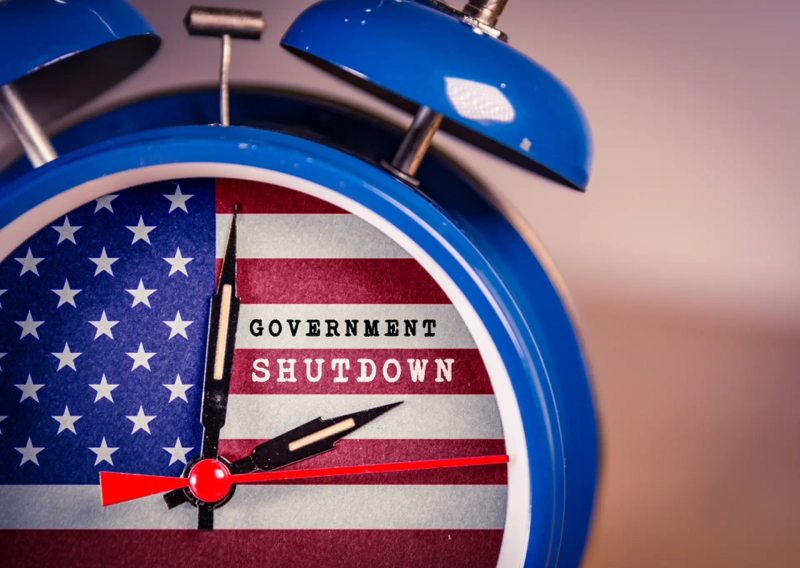
With a federal government shutdown looming, hundreds of thousands of federal employees may not receive pay, and major economic data releases are increasingly likely to be delayed. Congress must pass 12 detailed appropriations bills for the new fiscal year by the 30th, but not a single one has been approved so far.
The Republican Party is pushing for passage of an unconditional 'clean' temporary budget bill. Here, a 'clean' budget bill means extending existing budget levels without attaching additional policy conditions or provisions. The Democrats, by contrast, insist that measures to protect health insurance—such as extending enhanced premium tax credits under Obamacare—be included. A budget bill needs 60 votes in the Senate, making it impossible without bipartisan agreement.
President Trump canceled meetings with Democratic leaders to increase pressure, and the White House Office of Management and Budget issued guidance to departments to prepare for large-scale furloughs in the event of a shutdown, heightening tensions.
If a shutdown materializes, nonessential federal employees will be placed on unpaid leave. In practice they will not be working, but essential personnel must continue duties such as national security, air traffic control, and law enforcement. Pay may be delayed and later paid retroactively. State and local governments operate on their own budgets, so there is no direct impact, but some programs that heavily rely on federal funding could face disruptions.
Administrative services will also inevitably be disrupted. National parks and museums will close, veterans services will be reduced, and immigration court proceedings may be delayed. In addition, food and public health safety inspections such as sanitary inspection could be suspended, creating risks of gaps in food safety management.
Economic shocks are also a concern. The September employment report scheduled for release on October 3 and the Consumer Price Index (CPI) release on October 15 are likely to be delayed. This is because nonessential staff at statistical agencies such as the Bureau of Labor Statistics (BLS) and the Department of Commerce would go on unpaid leave, halting data collection, processing, and release. During the 2013 shutdown, employment and price data releases were delayed by about two weeks, and in 2018 GDP and retail sales releases were delayed by nearly a month.
Such delays in economic data releases can inflict shocks on financial markets and the real economy beyond mere administrative disruptions. Employment and inflation statistics serve as essential "compasses" for the Federal Reserve's (Fed) monetary policy decisions and for corporate and investor decision-making. If data do not arrive on time, markets face heightened uncertainty and investors may sell off assuming worst-case scenarios. Indeed, during the 2013 shutdown financial markets experienced turmoil due to a 'data blackout.'
A shutdown can also create temporary statistical distortions. The unemployment rate is based on whether a person has a job, so federal employees on unpaid furlough are not classified as unemployed. However, nonfarm payrolls count based on whether pay was received, meaning unpaid furloughed workers can be reflected as a decline in employment for that month. In 2013 government payrolls fell sharply during the shutdown, but recovered after pay was issued retroactively once the shutdown ended.
Political leaders continue to trade blame, but in reality broad damage across federal employees, key services, and economic data is expected, making repercussions inevitable.
Since 1980 there have been 14 federal government shutdowns to date (as of September 2025). Budget gaps occurred before that as well, but from the 1980s the practice of officially closing government operations became established. The most recent shutdown was the 35-day shutdown from December 2018 to January 2019 during President Trump's first term, the longest in U.S. history, triggered by disputes over funding for a border wall with Mexico.
New York=Park Shin-young, correspondent nyusos@hankyung.com

Korea Economic Daily
hankyung@bloomingbit.ioThe Korea Economic Daily Global is a digital media where latest news on Korean companies, industries, and financial markets.