

Summary
- Major New York stock indexes started lower due to the U.S. government's shutdown.
- Weak ADP employment data caused bond yields to fall sharply, and economic uncertainty is increasing amid the possibility of mass firings of federal employees.
- Experts, citing past cases, forecast that the impact of this shutdown on the stock market will be limited.
Bond yields fall on sharp drop in ADP private payrolls
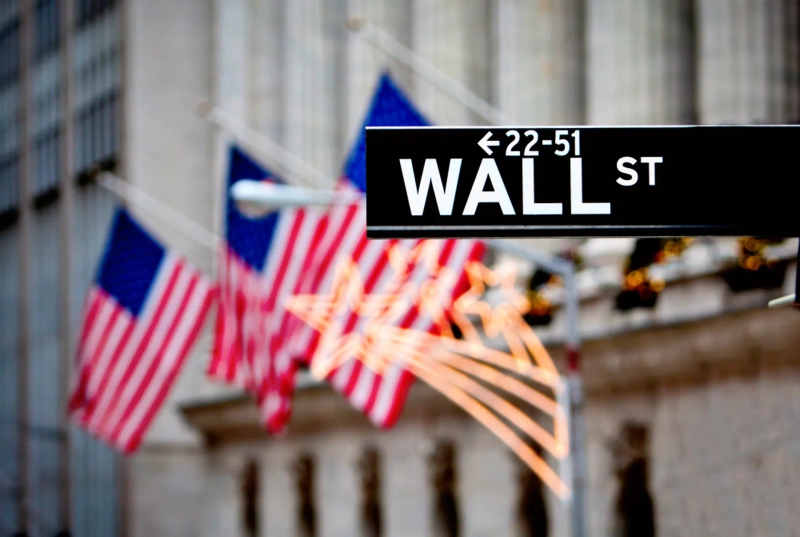
U.S. markets opened lower on the first day of the U.S. government shutdown.
As of 10:10 a.m. Eastern Time, the S&P 500 was down 0.2%, the Nasdaq Composite was down 0.3%, and the Dow Jones Industrial Average was down 0.1%.
The ADP report showed an unexpected decline in September employment, reviving hopes for further rate cuts and sending government bond yields sharply lower.
The 10-year Treasury yield fell 6 basis points (1 bp = 0.01%) to 4.092%, and the 2-year Treasury yield also fell 6 bp to 3.539%.
Spot gold rose 0.4%, trading at 3,874.72 dollars per ounce.
The Bloomberg Dollar Spot Index fell 0.2%, and the Japanese yen rose 0.8% against the dollar to 146.66 yen.
Tesla, which is expected to see improved third-quarter delivery numbers, was trading at 453 dollars, up 1.9.
AI-related tech stocks that had risen recently, including Nvidia, Broadcom and Palantir, and Oracle were in decline.
Pfizer agreed the previous day to cut drug prices by up to 85% and to sell directly to U.S. consumers, thereby avoiding the drug tariffs threatened by President Trump. Pfizer shares rose 2.5% that day. Other major global pharmaceutical companies are expected to follow suit.
ADP said private-sector payrolls fell by 32,000 last month. This is far below the 40,000–50,000 increase that Wall Street economists had expected.
U.S. markets have not typically been greatly affected by government shutdowns, but this time there are expectations that there could be an impact because U.S. economic conditions are already fragile.
The nonpartisan Congressional Budget Office (CBO) estimates that the shutdown will place about 750,000 federal employees on unpaid leave. In addition, President Trump has threatened he could mass-fire thousands of federal employees, and confrontations between the Trump administration and both parties in Congress are raising concerns about a prolonged shutdown.
Jay Woods, chief market strategist at Freedom Capital Markets, said, "The background of this shutdown is very different from the 2018 shutdown, which was the longest in history."
Despite market uncertainty, some argue that historically government shutdowns have not had a large impact on the stock market, so this one will likely be broadly similar.
Thomas Ryan, North America economist at Capital Economics, said, "What is characteristic of this shutdown is the threat of mass firings of federal employees." He added, "That could be political bluster or it could pose legal problems."
Stuart Kaiser, head of U.S. equity trading strategy at Citigroup, told Bloomberg TV, "Unless it is prolonged or mass firings occur, a federal government shutdown will not cause major damage to stocks."
Guest reporter Jeong-A Kim kja@hankyung.com

Korea Economic Daily
hankyung@bloomingbit.ioThe Korea Economic Daily Global is a digital media where latest news on Korean companies, industries, and financial markets.