

Kim Wooseok LineNext CSO "Won stablecoin, a means to enable national wealth preservation"
Summary
- Kim Wooseok, LineNext CSO, said stablecoins are core infrastructure that can enable the inflow of national wealth.
- He said that if a won stablecoin is introduced, domestic companies can avoid up to 15% cost losses such as PG company fees and currency exchange fees.
- Kim CSO emphasized that Wonsco issuance and regulatory easing could contribute to preserving national wealth by returning added value created in the global market to won.
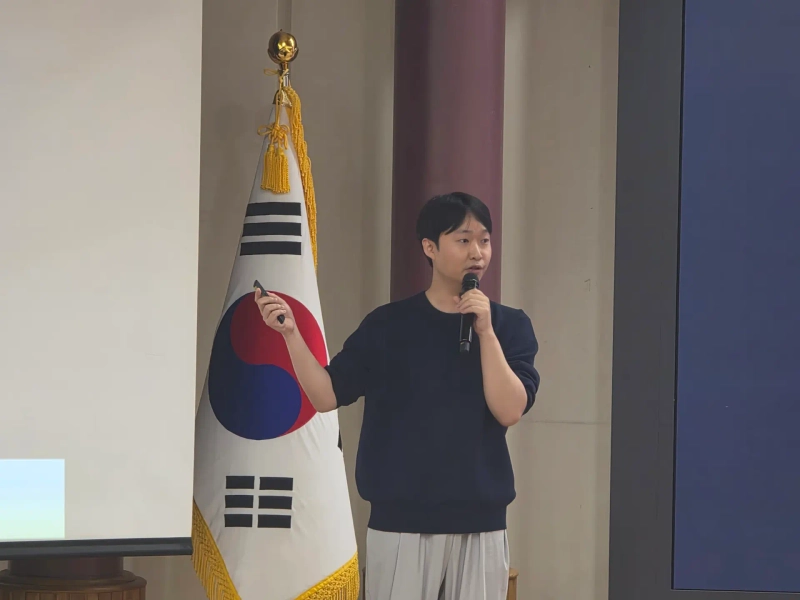
"Stablecoins (virtual assets pegged to fiat currencies) are core infrastructure that can enable the inflow of national wealth. Therefore, they must be launched to preserve the Korean economy."
Kim Wooseok, LineNext Chief Strategy Officer (CSO), made these remarks on the 2nd while attending the 'Seeking Stablecoin Governance' seminar held at the National Assembly Members' Office Building in Yeouido, Seoul.
Kim, the CSO, noted in his presentation that the growth rate of stablecoins has been very rapid. He compared the annual average growth rates of each asset over the past 10 years, saying, "Digital gold Bitcoin (BTC) grew 94%, and the digital dollar stablecoin market grew 286% annually," adding, "it has now climbed to about 1% of the total dollar circulation."
As dollar stablecoins have done, Kim CSO believes that won-denominated stablecoins (Wonsco) can also achieve similar growth. He explained, "Analyzing the cash-based global settlement structure shows that Korean companies suffer up to 15% cost losses from PG company fees and currency exchange fees," and "if Wonsco is introduced, real-time settlement can prevent these losses."
These losses caused by the absence of Wonsco are precisely the outflow of national wealth. Kim CSO emphasized, "There are voices concerned about national wealth outflow in discussions related to Wonsco, but Wonsco is the very means that can enable the preservation of national wealth."
Kim CSO explained this with actual stablecoin use cases. LineNext already collaborates with Tether to operate the stablecoin-based payment and item trading service 'Next Market' in the Asian market. He said, "After introducing the stablecoin payment system, the share of stablecoin payments rose to 40%," adding, "this is evidence that users directly feel stablecoin payments in global services are already cheaper than the existing financial network." He continued, "If Wonsco issuance and domestic regulatory easing occur, Korean gamers can stop leaving the added value they create in the global market overseas and settle directly in won to return it to the national coffers."
Kim CSO then proposed policy tasks including ▲evaluation of national wealth inflow via public blockchains, ▲securing global liquidity, ▲regulations mandating the use of Wonsco, and ▲fostering on-chain investment products (RWA·STO). He said, "Although blockchain is said to be decentralized, analyzing nodes can show which country gains profits from that blockchain," and "it is necessary to closely analyze node profits of public blockchains to determine which blockchains are suitable for Wonsco issuance."

Uk Jin
wook9629@bloomingbit.ioH3LLO, World! I am Uk Jin.