

Bank of Korea ahead of rate decision…"Chuseok holiday housing prices and consumption trends are crucial"
Summary
- The Bank of Korea said real estate decisions during the Chuseok holiday could affect the decision on the policy rate.
- It said that increases in overseas travel and the effect of consumption coupons make domestic consumption patterns a key variable.
- Markets view the possibility of a policy rate hold this month as high.
Increased overseas travel affects domestic consumption
Consumption coupon effect also 'under close watch'
Market expects 'policy rate hold' this month
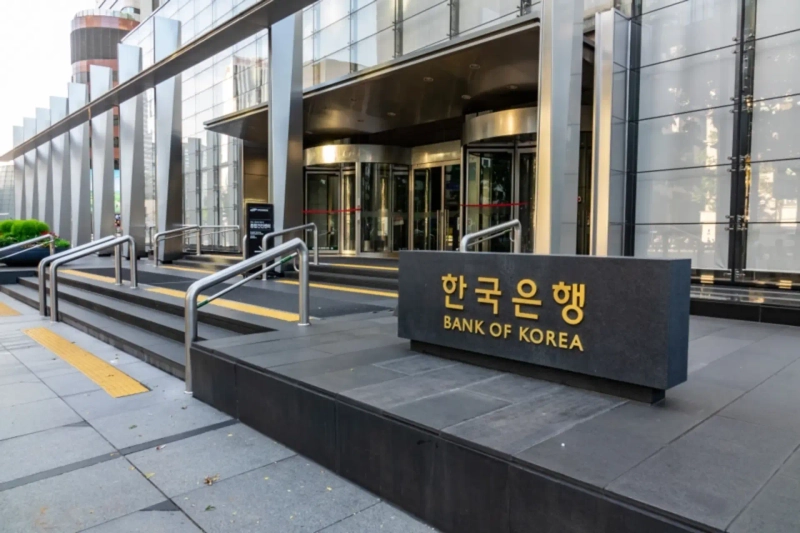
The Chuseok holiday period, lasting up to 7 days, has emerged as an important variable in the Bank of Korea's policy rate decision this month. With the upward trend in housing prices widening again, the Bank of Korea sees a high possibility that household decisions related to real estate during the holiday could affect subsequent trends. Attention is also focused on whether domestic consumption will increase during this period due to effects such as consumption coupons.
On the 3rd, the Bank of Korea said that ahead of the Monetary Policy Board meeting scheduled for the 23rd of this month, related departments are on alert for various economic indicators that will be released after the Chuseok holiday. The housing market flow after Chuseok is the biggest variable. Hwang Geon-il, a member of the Bank of Korea's Monetary Policy Board, when asked about financial stability at a recent meeting with reporters, said, "Chuseok seems important," and added, "Families will gather and likely make many (housing transaction-related) decisions, so we need to look at that in more detail."
Whether domestic consumption will increase during the holiday is another variable. Incheon International Airport Corporation projected that during this year's Chuseok holiday (Oct. 2~12) the average daily number of passengers at Incheon Airport will be 223,000, an 11.5% increase from last year's Chuseok (200,000). The reason for the forecast is that more people traveling abroad could have a negative impact on domestic consumption.
Attention is also focused on whether the government's consumption coupon effect will continue. The Ministry of Economy and Finance analyzed sales in industries eligible to use the coupons for 6 weeks after the recent distribution of consumption coupons and found that consumption increased by 2.1073 trillion won. It explained that of the 5 trillion won in consumption coupons used via credit and debit cards during this period, 42.5% led to overall sales promotion. However, some interpret this as only a short-term phenomenon immediately after distribution. A Bank of Korea official said, "The effect of the consumption coupons needs to be observed further." The Bank of Korea plans to check trends in card usage and gauge economic trends through surveys related to consumption coupons.
The market sees a high likelihood that the Bank of Korea will hold rates this month. In a recent survey by the Korea Financial Investment Association of 100 bond market participants, 47% expected the base rate to be held. 34% expected a rate cut. Kim Jin-wook, a Citi economist, in a recent report mentioned the rise in Seoul apartment prices and the possibility of failed tariff negotiations and said, "We revise the expected timing of the Bank of Korea's rate cut from October to November."
Reporter Kang Jin-gyu josep@hankyung.com

Korea Economic Daily
hankyung@bloomingbit.ioThe Korea Economic Daily Global is a digital media where latest news on Korean companies, industries, and financial markets.