

"We'll only know after the Chuseok holiday ends"…Bank of Korea, reason it's in deep dilemma [Kang Jin-gyu's BOK Watch]
Summary
- The Bank of Korea said it views post-Chuseok real estate indicators and consumption trends as important variables for its policy rate decision.
- The market said that reflecting recent rising house prices and financial-stability issues, the consensus is leaning toward a hold on the policy rate this month.
- Experts expect a rate cut only after the effects of real estate policies and actual price-data stabilization are confirmed.
"Policy rate decision hinges on Chuseok"
Bank of Korea deeply concerned over house prices and the economy
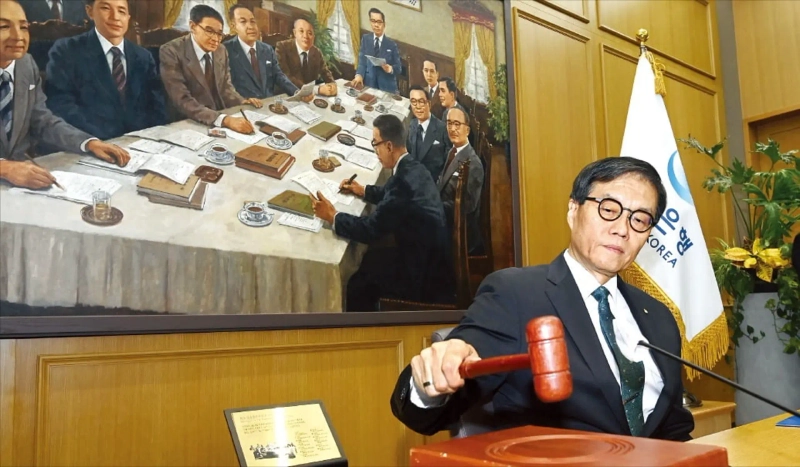
The Chuseok holiday, lasting up to 7 days, has emerged as an important variable for the Bank of Korea's policy rate decision this month. This is because household real estate decisions during the holiday could significantly affect subsequent trends amid a renewed rise in house prices. The Bank is also watching whether domestic consumption will increase during the holiday period.
○Bank of Korea "Check housing price trends after Chuseok"
On the 3rd, the Bank of Korea said that ahead of the Monetary Policy Board meeting on the 23rd of this month, related departments are closely watching various economic indicators that will be released after the Chuseok holiday. Given the difficulty of gauging economic trends during a long holiday, they plan to analyze indicators that can be used before the MPB meeting from multiple angles.
The most important thing is housing market trends after Chuseok. The Bank views the holiday as potentially having a significant impact on the real estate market and financial stability. Since house price growth has widened again despite the government's high-intensity measures, the decisions families make when gathering during the holiday could change the subsequent trajectory.
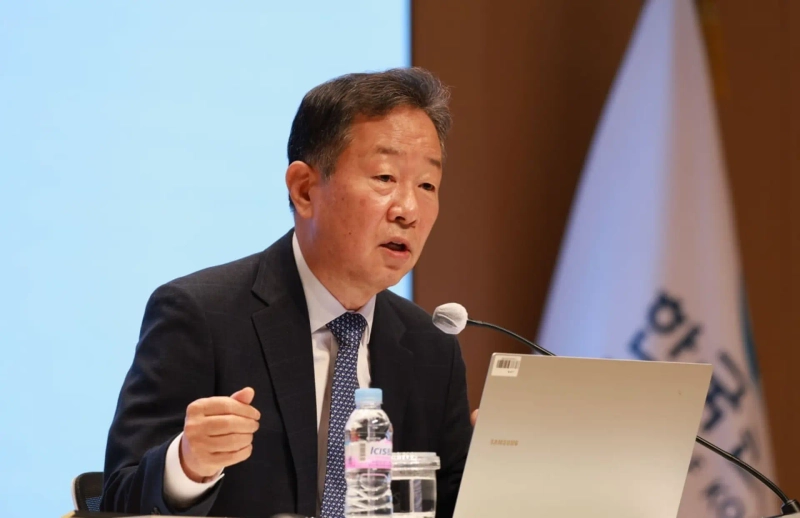
Hwang Geon-il, a member of the Bank of Korea's Monetary Policy Board who participates in deciding the policy rate, recently told reporters when asked about financial stability, "Chuseok seems important," adding, "Families will gather and may make many decisions, and I'd like to see that part more concretely." The Bank said it will consider the Korea Real Estate Board's weekly apartment price sales index and transaction volume trends released after Chuseok, and the resulting possibility of household debt expansion.
Whether domestic consumption will increase during the holiday is also a variable. According to Incheon International Airport Corporation, during this year's Chuseok holiday (October 2–12) Incheon Airport passengers are expected to total 2,453,000 (daily average 223,000). This is projected to be 11.5% higher than last year's Chuseok, when a daily average of 200,000 people went abroad. A rise in people going abroad could negatively affect domestic consumption.
The effect of the government's consumption coupons is also likely to weaken. The first-round coupons have been mostly used up, and the second-round coupons are smaller in amount and have fewer recipients than the first round, so many expect a limited stimulative effect on consumption. The Bank plans to check card spending trends and conduct surveys related to the consumption coupons to gauge economic momentum.
Attention is also on the potential for increased volatility in the foreign exchange market. If market concentration occurs while the U.S. government is in a shutdown, issues could be reflected in Korea all at once after the holiday, causing large swings in the exchange rate. Earlier this year during the Lunar New Year holiday, issues such as the 'Deepseek new product announcement', 'the U.S. central bank (Fed) holding rates', and 'the Trump administration mentioning tariffs' were reflected all at once after the holiday, and the exchange rate rose by more than 20 won immediately after the holiday.
○Experts: "November rather than October"
The market largely expects the Bank to keep rates unchanged this month. In a recent survey of 100 bond market participants by the Korea Financial Investment Association, 47% expected the policy rate to be kept unchanged. Those who expected a cut were 34%, fewer than those expecting no change.
Experts have pushed back expectations for a rate cut to November. Citi recently revised its forecast, citing △a continued rebound in Seoul apartment prices △recent hawkish comments by Monetary Policy Board*MPB) members △asymmetric downside risks to the won, among other reasons.
Kim Jin-wook, a Citi economist, said, "Even if the government announces additional real estate measures in mid-October, the Bank of Korea is likely to avoid a cut until it confirms stabilization in actual price data," adding, "Since the outcome of U.S.-Korea tariff negotiations may determine whether the U.S.-South Korea leaders meet on the sidelines of APEC, postponing a policy rate cut seems reasonable."
Kim Sung-su, a researcher at Hanwha Investment & Securities, said, "Considering recent house price rises in parts of Seoul, the Monetary Policy Board will likely focus on domestic financial stability issues including real estate," and assessed, "For now, a hold is more likely."
Reporter Kang Jin-gyu josep@hankyung.com

Korea Economic Daily
hankyung@bloomingbit.ioThe Korea Economic Daily Global is a digital media where latest news on Korean companies, industries, and financial markets.